



SM Air Grease Pump
| Reservoir | 2L |
| Discharge | 8cc/stroke |
| Pressure ratio | 18:1 |
| Pressure | 4MPa-15Mpa |
| Maximum stroke per minute. | Eight stroke/min |
| Lubricant | #000-NLGI #2 |
| Level switch | option |
| Lubrication System | Injector |
Diaphragm Pump
| BODIES | Aluminum or Polypropylene Stainless Steel |
| SEALS/ELASTOMERS | PTFE |
| PUMP FLOW RATES | 13L-120L/min |
| INLET/OUTLET | 1/4″, 3/8″, 1/2″, 3/4″, 1″, 1-1/2″, 2″ and 3″ |


Air Grease Pump
| Reservoir | 20kg/50kg/200kg |
| Discharge | 0.85L/min |
| Pressure ratio | 50:1 |
| Length | 396mm/740mm/940mm |
Barrel Grease Pump
| Reservoir | 20kg/50kg/200kg |
| Discharge | 0.85L/min |
| Pressure ratio | 50:1 |


Pneumatic Inductor Pump
This pump is excellent for when you need a little extra pressure. It can be used in cold temperatures with low air pressure but can still handle NLGI-2 grease. This pump can be used with large distribution systems, such as simultaneous operating outlets. The pumps are suitable for mount covers up to 120 pounds (50kg), and horizontal or side mounts up to 400 pounds (185 kg).
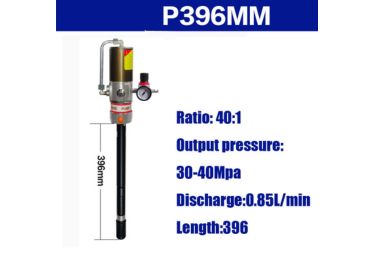
- Ratio: 40:1;
- Working pressure: 40-50 MPa;
- Discharge: 0.85 L/min;
- Length:396mm;

- Ratio: 50:1;
- Working pressure: 40-50 MPa;
- Discharge: 0.85 L/min;
- Length:396mm;

- Ratio: 55:1;
- Working pressure: 40-50 MPa;
- Discharge: 0.85 L/min;
- Length:396mm;
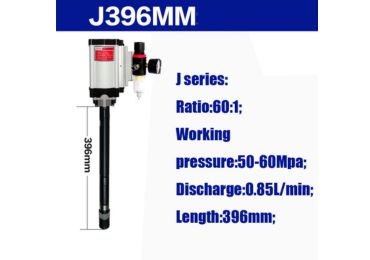
- Ratio: 60:1;
- Working pressure: 40-50 MPa;
- Discharge: 0.85 L/min;
- Length:396mm;

- Ratio: 40:1;
- Working pressure: 40-50 MPa;
- Discharge: 0.85 L/min;
- Length:740mm;

- Ratio: 50:1;
- Working pressure: 40-50 MPa;
- Discharge: 0.85 L/min;
- Length:740mm;
Automotive Use Air Pump System (2)
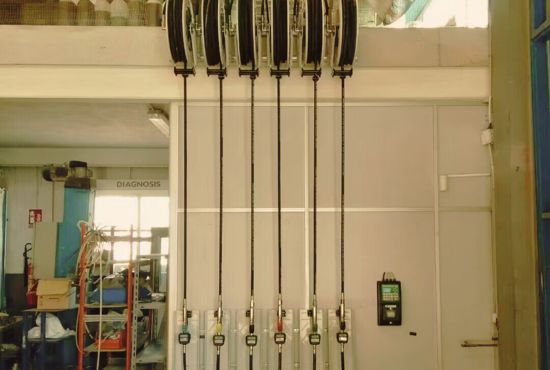
The wall-mounted oil pump kits are for 180-220 kg oil drums. They are a complete modular solution. They can be used in a fixed position or with a centralized dispensing system. Including one air oil pump (5:1 ratio) with accessories for one dispensing point. This digital oil flow meter gun can measure liters (counter liters). It has a 10-meter hose reel, 1 drip tray, and 1 wall bracket. It is very useful for working in the car 4S shop, oil changing center, and other oil areas.

This manual oil meter gun has digital metering and a swivel joint. The pump can be used in oil and antifreeze distribution kits. Otherwise, the gun can be used in any fixed or mobile system.

Frequently Asked Questions
An air-operated grease pump dispenses grease for industrial use. These pumps use compressed air to drive a piston or diaphragm. This forces grease through a hose to the application. They come in many sizes and types to meet specific needs. They are popular in the automotive, manufacturing, and heavy machinery industries. These industries require precise and efficient lubrication.
A grease pump dispenses grease or lubricant to machinery, bearings, and other parts that need regular lubrication. Grease pumps are common in factories, auto repair shops, and heavy equipment maintenance. Lubricating machinery and equipment keeps them running well. It extends their life and cuts downtime from breakdowns. Grease pumps range in size and style. They include manual hand pumps and air-operated ones. They can be used for greasing various equipment.
Several types of grease pumps are available, each with its own features and benefits. Some of the most common types of grease pumps include:
- Manual Grease Pumps: These hand-operated pumps are suitable for small-scale use.
- Air-Operated Grease Pumps: These pumps use compressed air. They deliver grease at high pressure and volume. This makes them ideal for heavy-duty industrial jobs.
- Electric Grease Pumps: These pumps are ideal for precise, steady grease delivery tasks.
- Lever-Action Grease Pumps: These pumps have a lever to pump grease manually.
- Battery-Powered Grease Pumps: These pumps are portable and convenient. They run on batteries and need no external power source.
- Pneumatic Grease Pumps: They are for high-viscosity greases. They have a built-in large-capacity grease reservoir.
- Hand-Operated Grease Guns: These tools are not pumps. But they are used to dispense small amounts of grease in hard-to-reach areas.
The pressure for an air-operated grease gun can vary depending on the model and manufacturer. These guns can usually generate pressures of 3,000 to 10,000 psi. The pressure range of an air-operated grease gun depends on the air pressure supplied to it, the size of the grease delivery hose, and the grease’s viscosity. Use an air-operated grease gun with the proper pressure rating for the task. A gun not rated for the required pressure may damage the equipment. It may also cause inadequate lubrication.
An air-operated pump uses compressed air to drive a piston or diaphragm within the pump. The compressed air supplied to the pump creates pressure. This causes the piston or diaphragm to move back and forth. It creates a vacuum that draws fluid into the pump. As the piston or diaphragm moves back, it compresses the fluid. This forces it out of the pump through a discharge port.
Air-operated pumps are used in many areas. These include oil and gas production, chemical processing, and water treatment. The pumps are popular. They can generate high pressures and fluid volumes with low operator effort. They are efficient and reliable. They need little maintenance and perform well for a long time.
The air supply must be clean and dry when using an air-operated pump. Moisture or contaminants can damage the pump and reduce its performance. Also, it is essential to size the pump for the application. Consider fluid viscosity, pressure, and flow rate.
An air-driven or pneumatic pump uses compressed air to drive a piston or diaphragm inside it. Air pressure on the pump makes the piston or diaphragm move. This creates suction that draws fluid into the pump. Then, it pushes the fluid out through a discharge port.
The pump typically gets compressed air from an external source, like an air compressor. The pressure and flow rate of the air supply can be adjusted to control the output of the pump. The pump may have different components depending on its use. This includes the type of fluid, the required flow rate, and the operating pressure.
Air-driven pumps are used in many industries. They include chemical processing, oil and gas production, and water treatment. They are popular. They are efficient and reliable. They can generate high pressures and fluid volumes with little operator effort. However, they need a clean, dry air supply. Proper maintenance is also required for optimum performance.
A barrel pump is a hand-operated rotary pump. It transfers fluids, liquids, and chemicals from drums, barrels, and containers. They are designed to transfer fluids by creating a vacuum. This draws the liquid up a hose and discharges it into another container. Barrel pumps come in two types: hand-operated and electric.
Hand-operated barrel pumps have a vertical rod with a handle. The handle rotates a helical impeller within a tube. This creates suction and draws the fluid into the tube and the pump body. The liquid is discharged into a hose or container through an outlet port.
Electric barrel pumps work like hand-operated pumps. They use an electric motor to power the impeller instead of manual operation. This makes them ideal for transferring large volumes of fluid quickly and efficiently.
Barrel pumps are used in many applications. These include chemical processing, food and beverage production, and industrial fluid transfer. They are popular in agriculture and auto industries for transferring fuels and other fluids.