



On a CNC machine tool, the lubrication pump rarely fails silently — the machine tells you. A low-lube-pressure alarm, a dry slideway, a axis that starts to drag: somewhere between the pump and the bearing, oil has stopped flowing.
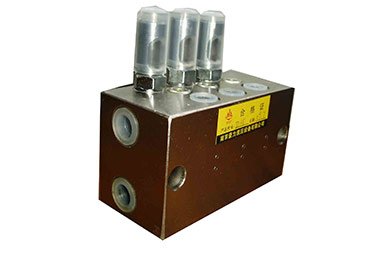
Very often the culprit is the smallest component in the chain: the lubrication metering unit screwed into a distribution block, or the block’s own internal passages, clogged with varnish, grease contamination, or debris.
Machinist forums are full of these failures on older Okumas, Bridgeports, Dean Smith & Grace lathes, and other iron: “the metering units are probably blocked up and not letting the oil through — they’re in the distribution blocks.” This guide walks through how metering units work, how to tell a clogged unit from the four other faults that mimic it, and what to do when you find one.
What a Lubrication Metering Unit Does
A metering unit is a calibrated dispensing element installed at each lubrication point (or in a distribution manifold). Each cycle of the pump, the unit meters a fixed volume of oil toward its bearing, bushing, or way.
Manufacturers grade metering units by discharge rating — different points on the same machine get different sizes, because a spindle bearing and a way wiper do not need the same oil per cycle. When you replace one, you match the rating of the original unit; an oversized unit floods, an undersized one starves the point.
Two families cover most machines:
- Restrictor / metering units (Bijur-style) — fixed-displacement cartridges in a distribution block, typical on way-oil systems. This is the style most often found clogged.
- Progressive divider blocks — pistons that cycle in sequence inside one housing. A different beast: when one outlet blocks, the whole block stalls. Covered separately in our grease block troubleshooting guide.
If you are deciding what to install rather than fixing what failed, start from the metering unit and pump element selection guide.
Symptoms of a Clogged Metering Unit
No single symptom is conclusive — a low-lube-pressure alarm, for example, can also come from a worn pump, a leaking line, a stuck pressure switch, or an empty reservoir. But the pattern below points strongly at the metering side:
- One point runs dry while its neighbors oil normally. The classic signature. Pump pressure is fine, the sight glass flows, but one way or bearing stays dry — the blockage is downstream, at that point’s unit.
- Low way-lube pressure alarm that persists after refill and pump checks. When pump, oil level, and lines are verified, remaining suspects are the pressure switch and the metering circuit. (Alarm code specifics are covered in our CNC lubrication alarm handbook.)
- Ways show no fresh oil film after a manual lube cycle. Actuate the pump by hand and inspect each point: a healthy point shows a fresh film of oil; a dry point after several cycles has a blocked unit or line.
- Hardened oil varnish around a unit. Old oil cooked onto a cartridge or block is both symptom and cause — varnish flakes loose and jams the next element downstream.
- Machine was sitting for years. Oil dries to shellac inside idle machines; forum threads on resurrecting dormant lathes report metering units and block passages solid with it.
Step-by-Step Diagnosis
- Rule out the reservoir and pump first. Oil level, correct oil type, pump runs and builds pressure. No point chasing cartridges if the supply side is empty.
- Actuate a manual lube cycle and watch every point. Fresh oil film at a point = unit and line are open. Dry point = blockage at the unit, the block passage, or the tube.
- Isolate the dry point. Disconnect its oil tube at the block and cycle the pump: oil at the block outlet means the block passage is open and the blockage is downstream (tube or fitting); no oil means the block passage or an upstream unit is blocked.
- Remove and bench-test the suspect metering unit. Unscrew it, look through it against light, and try gentle air or oil flow. A unit that passes nothing is done.
- Inspect the block itself. With units out, check passages for varnish and debris. Never drill out a block to “clear” a passage — drilled blocks crack and leak under every future cycle, a mistake machinists report finding on used machines.
- Re-check pressure switch operation before declaring victory, so a marginal switch does not re-trigger the same alarm next week.
Clean or Replace?
Field consensus is blunt: a clogged metering unit is a replace item, not a rebuild item. Match the discharge rating stamped on the old unit, screw in the new one, and re-test.
Aggressive cleaning attempts (solvent soaking, wire probes) are more likely to shift debris into the next passage than to restore calibration — and a half-cleared unit meters the wrong volume without looking failed. Keep spares of the common ratings for your machines; the parts are inexpensive against the downtime they prevent.
For blocked distribution block passages and tubes, removal and high-pressure air flush is the practical route where accessible; lines that stay blocked after flushing are replaced. And whatever you do, keep grease out of the oil circuit: a single grease slug introduced by a shared gun or a contaminated funnel is one of the classic ways an oil gallery dies.
Prevention: Keeping Metering Circuits Alive
- Run the machine’s own oil, nothing else. Wrong-viscosity or additive-mismatched oils leave deposits; slideways are especially sensitive. Choosing correctly is covered in the way oil guide.
- Keep the reservoir covered and filled. Varnish forms fastest in warm, half-empty tanks exposed to air and swarf dust.
- Use dedicated oil dispensing tools. Never share funnels or guns between grease and oil.
- Exercise dormant machines. Before putting stored iron back to work, cycle the lube system and confirm oil at every point — dry-starting ways on solidified units is how saddles get scored.
- Filter at fill-up. Pour new oil through a filter funnel; debris you never introduce is debris you never flush.
For system-level design — sizing, layouts, and how metering fits the bigger picture — see our CNC machine lubrication systems guide, and browse progressive distributor blocks or the metering unit product line for replacement elements.
Frequently Asked Questions
What are the symptoms of a clogged metering unit?
One lubrication point runs dry while others oil normally; fresh-oil checks after a manual cycle come up empty at that point; and in some machines a persistent low-lube-pressure alarm after the pump and reservoir check out. Confirm by isolating the point and bench-testing the removed unit.
Can you clean a clogged metering unit instead of replacing it?
Cleaning attempts are unreliable — solvent soaking and probing can shift debris into the next passage and rarely restore the original discharge rating. Field practice is to replace the unit with one of the same rating, which is fast and inexpensive compared with the downtime.
Why does only one bearing point stay dry?
Because each point has its own metering unit. The pump supplies pressure to all of them at once; if one unit or its tube is blocked, only that point starves. That pattern — dry point, healthy neighbors — is the strongest single clue that the fault is a metering element, not the pump.
What is the difference between a metering unit and a progressive divider block?
A metering unit is a single calibrated element for one point. A progressive divider block is a multi-outlet housing whose pistons feed outlets in sequence — so one blocked outlet stalls every outlet downstream of it. Metering units suit way-oil dispensing; progressive blocks suit grease systems feeding many points from one pump.
How do I know which metering unit rating to buy?
Match the discharge rating marked on the unit you removed (often a stamped code). If the marking is gone, the machine’s lubrication manual lists the rating per point. Installing a different rating changes the oil volume that point receives every cycle.
Related Reading
- Metering Unit & Pump Element Selection Guide
- Troubleshooting Common Grease Block Problems
- CNC Machine Lubrication Systems Guide
- Way Oil Guide: Choosing the Right Oil
| What you observe | Test that separates it | If the test says this | Then do this |
|---|---|---|---|
| One point runs dry while its neighbours oil normally | Actuate a manual lube cycle and check every point for a fresh oil film | Pump and supply are healthy; the blockage is downstream, at that point only | Isolate that one point — leave the pump and reservoir alone |
| Every point is dry, but the pump runs | Check oil level, oil type and whether the pump builds pressure | A supply-side fault: empty reservoir, wrong oil, or a worn pump | Restore the supply side before chasing any cartridge |
| Low way-lube pressure alarm returns after refill and pump checks | Inspect lines and fittings for leaks and confirm pump output | A leaking or blocked line, not the metering circuit | Repair or replace the line, then re-test the alarm |
| Same alarm, with supply and lines verified good | Exercise the pressure switch, or substitute a known-good switch | A stuck or marginal switch — or genuinely the metering circuit | Replace a marginal switch, then inspect the units |
| One point still dry after several manual cycles | Disconnect that point’s oil tube at the block and cycle the pump | Oil flows at the block outlet: the block passage is open | The fault is downstream — the tube or its fitting |
| Same test, but the block outlet stays dry | Block-outlet flow test, as above | No oil: the block passage or an upstream unit is blocked | Pull the unit, bench-test it, and inspect the block passages |
| Unit removed from the block | Hold it against light and try gentle air or oil flow | It passes flow: the unit is not the fault | Re-check the tube, the fitting and the lubrication point itself |
| Same bench test on the removed unit | Gentle air or oil flow through the cartridge | It passes nothing: the unit is clogged | Replace it with the same stamped rating, re-test, and never drill the block |

