


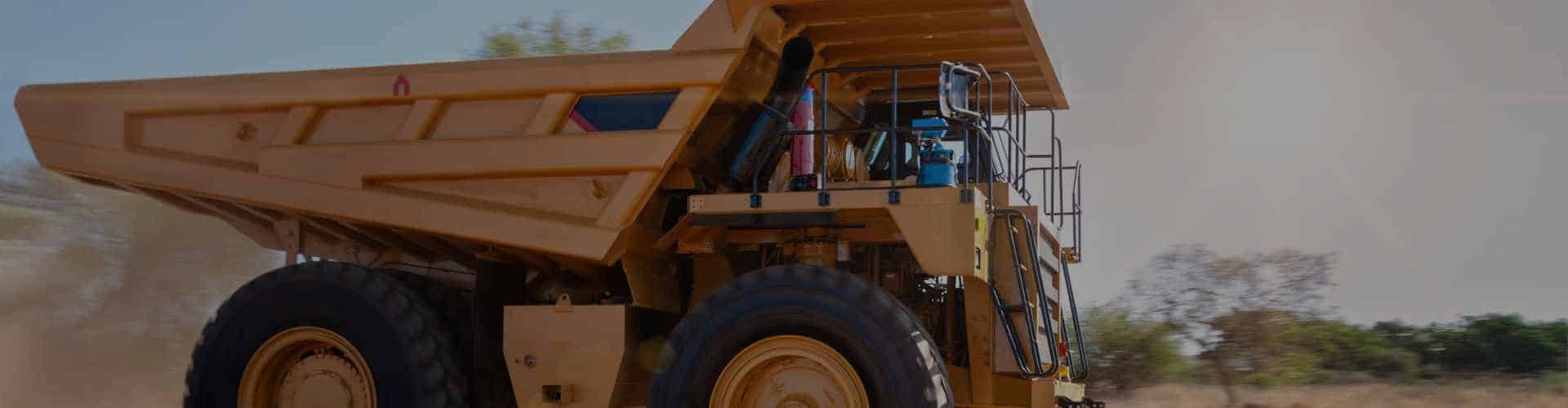

Why Haul Trucks Need Automatic Lubrication?
Mining haul trucks operate in abrasive dust, shock loads, and long duty cycles. Manual greasing misses hard-to-reach pins during short maintenance windows—and over-greasing wastes lubricant while under-greasing accelerates pin bore wear on steering, suspension, and dump body articulation.
Automatic systems apply small, frequent doses while the truck idles or drives slowly in the service loop, keeping a fresh grease film that excludes contaminants. Maintenance teams focus on oil sampling and component inspection instead of crawling under 400-ton payloads with a grease gun.
ARE YOU LOOKING FOR AN AUTOMATED LUBE SYSTEM?
Automatic greasing on haul trucks and wheel loaders keeps dust and grit out of pin and bearing interfaces while the machine runs—without technicians climbing under loaded equipment. A centralized auto grease pump + progressive divider circuit delivers metered NLGI grease to steering kingpins, suspension pins, dump body hinges, and articulation joints on a timer or machine-hour schedule.
Typical kit: electric or mobile FS grease pump · progressive blocks · high-pressure hose · hose ends · controller/timer.
- Recommended Architecture for Haul Truck
- Grease Pump
- Progressive Block Sizing (Important)
- Hose & Fitting Parameters

| Layer | IsoHiTech component | Notes |
|---|---|---|
| Pump | FS grease pump, CSK, or DZGK-L | 12/24 VDC for mobile; 220 V for shop-fed skids; reservoir 4–8 kg typical |
| Metering | Progressive divider blocks (SSV / JPQ / DJF series) | Fixed displacement per outlet per cycle; sequence to all points |
| Distribution | 9×4 mm or 11×6 mm hose; Pt 1/8 or 1/4 grease nipples | Protect runs with covers in rock impact zones |
| Control | Lubrication timer or machine interlock | Lubricate while engine running; pause allows block reset |
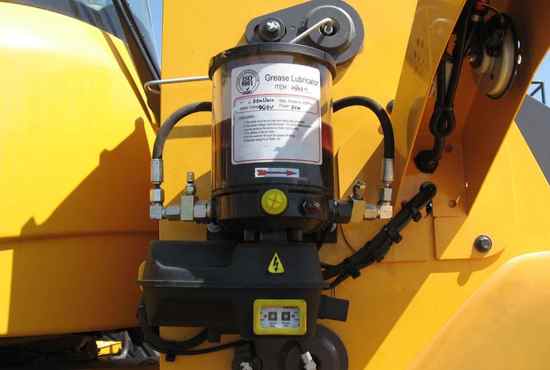
The CSK Lubricator is a multiple-outlet(Maximum up to 3) lubrication unit powered by an electric motor, suitable for use with progressive divider valve systems. This model comes with up to three separate pumping elements and can also be fitted with 24 VDC motors, making it ideal for mobile applications. It has an integral controller or can be managed through our internal timers
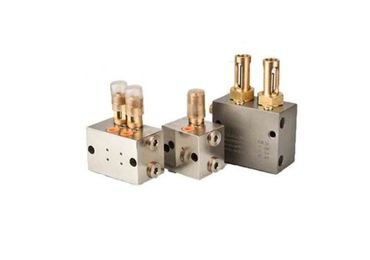
 Mono Divider
Each progressive outlet delivers a fixed volume per pump cycle. To increase grease at one point:
- Add another outlet line to that bearing (parallel feed), or
- Select a block section with higher cc/cycle, or
- Use a cycle multiplier section in the block stack
Do not “plug unused progressive outlets to force more grease elsewhere”—unused ports on progressive blocks should follow OEM plug codes; blocking active sequence ports stops downstream points from receiving grease.

- 9 mm OD / 4 mm ID — secondary runs to pins
- 11 mm OD / 6 mm ID — main headers from pump
- Nipples: Pt 1/8 and Pt 1/4 per OEM chart
- Working pressure class: match pump rating (often 16–30 MPa on mobile FS units)
Related: mining lubrication · road & off-road equipment · progressive systems guide.
Related Products


Critical Lubrication Points on Haul Trucks
| Zone | Typical points | Auto-lube fit | Manual / oil bath |
|---|---|---|---|
| Steering & front axle | Kingpins, tie rods, wheel bearings | High — frequent grease | Inspect seals |
| Rear axle / differential | Pinion, axle shafts | Medium — some points | Gear oil service |
| Suspension | Equalizer pins, trunnion, bushings | High — dust ingress | Visual wear check |
| Dump body | Hinge pins, hoist cylinders | High — articulation | Hydraulic fluid separate |
| Frame articulation | Center pivot, oscillation bearings | High on articulated trucks | Torque specs on rebuild |
| Engine / transmission | Bearings internal | Oil systems — not grease auto-lube | Oil analysis program |
System Type Selection
| Architecture | Best for haul trucks | Why |
|---|---|---|
| Progressive (FS + divider blocks) | Primary choice — 20–80 grease points | Sequential proof-of-delivery; one pump; proven in mining |
| Dual-line (ZVB/VSG class) | Very large spreads, redundant lines | Override on line failure; higher engineering cost |
| Single-line injectors | Small add-on zones (5–15 points) | Supplement progressive header |
| Manual gun only | Low-duty or legacy fleet | Labor, safety, inconsistency |
BOM Example — 45-Point Articulated Haul Truck
- FS grease pump — 4 kg reservoir, 12/24 VDC, IP67, 1–3 pump outlets to header
- Primary progressive block — feed from pump; size total cc/cycle for header fill
- Secondary blocks — 3–5 slices covering steering (12 pts), suspension (18 pts), dump/articulation (15 pts)
- Controller — lubricate 3–8 min every 4–8 operating hours (OEM to validate)
- Hose kit — 11×6 mm main, 9×4 mm branches, protection in frame rails
- Indicators — cycle pin or switch on primary block for “no grease” alarm
- Spares — block repair kit, hose ends, one spare slice
Installation Best Practices
- Route hose away from exhaust and tire blast zones; use steel spring guards at rub points
- Mount blocks where vibration is lowest but still accessible for indicator check
- Label every outlet with point ID matching maintenance manual
- Commission with pressure test and verify each point receives grease in sequence
- Integrate low-level switch on reservoir to PLC or cab alarm
- Do not lubricate while high-speed road haul unless OEM permits—idle or slow crawl only
Maintenance Schedule (Template)
| Interval | Task |
|---|---|
| Daily (operator) | Check reservoir level; glance for hose leaks; confirm last cycle indicator moved |
| Weekly | Verify timer settings; inspect block indicators; clean grease fitting mud caps |
| 250–500 h | Sample engine/axle oils separately; inspect hose chafing; torque check pump mount |
| Quarterly | Block teardown inspection if cycle pin stalls; replace crushed hose sections |
| Annual | Full system audit; update point list if body/modifications added |
Troubleshooting
| Symptom | Likely cause | Action |
|---|---|---|
| One point dry, others OK | Blocked fitting, kinked hose, frozen progressive piston | Replace fitting; isolate block section; do not plug other outlets |
| No points receive grease | Empty tank, pump fault, air lock, timer not calling | Fill; verify voltage; bleed header; test manual pump cycle |
| Cycle pin not moving | Block stuck, grease too stiff, cold ambient | Use correct NLGI grade; warm grease; rebuild block |
| Excessive grease at one pin | Wrong block section, duplicate feed lines | Review cc/cycle map; fix plumbing |
| Hose burst near frame | Abrasion, pressure spike | Add protection cover; check relief setting |
Safety & Environmental Notes
High-pressure grease injection can cause serious injury—use lockout when servicing fittings. Capture waste grease during block service; mining sites often require spill kits at maintenance bays. Biodegradable grease options may apply near water catchment—confirm with site EHS before switching products.
Hub links: automatic lubrication · grease pump hub · quote.
Frequently Asked Questions
Steering kingpins, wheel bearings, suspension pins, dump body hinges, and frame articulation joints—any pin exposed to dust and load cycling.
Controller intervals often run every few operating hours with short lubricate cycles; exact settings follow OEM and climate. Daily reservoir checks remain mandatory.
FS or CSK class 12/24 VDC pumps with 4–8 kg reservoirs and progressive blocks—IP-rated for outdoor mounting.
Progressive is most common for 20–80 point chassis grease. Dual-line suits very large machines needing line redundancy.
No. Progressive outlets are sequenced—blocking active ports stops downstream delivery. Size blocks or use multiplier sections instead.
Common: 11×6 mm mains and 9×4 mm branches to fittings; match pump pressure class.
NLGI #2 lithium or calcium complex in moderate climates; softer grades in cold mines—follow OEM temperature range.
No—engine, transmission, and hydraulics need separate oil programs and sampling. Auto-lube addresses chassis grease points.
Watch the cycle indicator pin on the primary progressive block or use a switch input to the controller.
Yes—pump, progressive blocks, hose, fittings, timer, and OEM integration support. Send point count, voltage, and machine model.