




High-Pressure Lubrication Hose for Centralized Grease & Oil Systems
Quick Answer: High-pressure lubrication hose transmits grease or oil from the pump to divider valves and bearings at 10–28 MPa working pressure. For mining, construction, and steel applications, choose a steel-braided hose with a burst pressure at least 3× the working pressure.
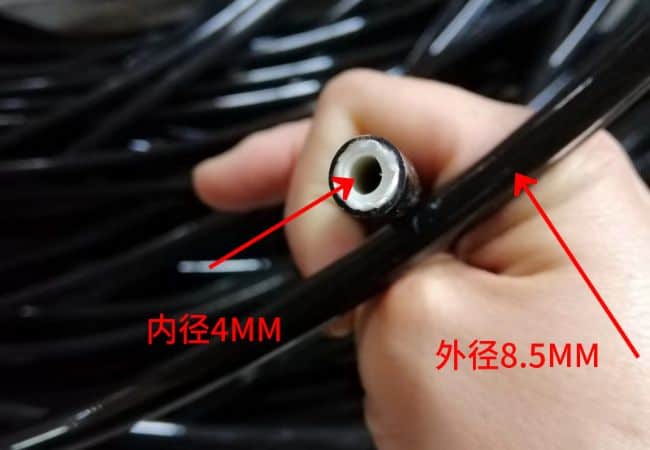
Featured product: 8.6×4 mm steel-braided hose — 80 MPa burst / 28 MPa working.
What Is a High-Pressure Lubrication Hose?
A high-pressure lubrication hose carries grease or oil from a central pump or manifold to remote bearing points in a centralized lubrication system. Unlike low-pressure oilers, these hoses must resist ballooning under pressure, withstand vibration and abrasion, and maintain a small bend radius for routing around machinery. IsoHiTech is a lubrication systems manufacturer with 25+ years of experience supplying automatic lubrication pumps, progressive distributors, and complete centralized systems for construction, mining, wind energy, and industrial machinery.
Steel-Braided vs. Nylon Tubing
| Feature | Steel-Braided High-Pressure Hose | PA12 Nylon Tubing |
|---|---|---|
| Typical working pressure | 28 MPa (4,060 PSI) | 10–25 bar (145–363 PSI) |
| Burst pressure | 80 MPa (11,600 PSI) | 31–70 bar (450–1,015 PSI) |
| Best for | High-pressure grease, mining, construction | Secondary lines, oil mist, low-pressure circuits |
| Bend radius | 50 mm static / 75 mm dynamic | 10–25 mm |
| Construction | NBR tube + steel wire braid + abrasion cover | PA12 nylon |
IsoHiTech Steel-Braided Hose Specifications
| Parameter | Specification |
|---|---|
| Outer diameter | 8.6 mm |
| Inner diameter | 4.0 mm (±0.1 mm) |
| Wall thickness | 2.3 mm nominal |
| Burst pressure | 80 MPa (800 bar / 11,600 PSI) |
| Proof / test pressure | 56 MPa (560 bar / 8,120 PSI) |
| Recommended working pressure | 28 MPa (280 bar / 4,060 PSI) — 3:1 safety factor |
| Minimum bend radius | 50 mm static / 75 mm dynamic |
| Operating temperature | −40°C to +100°C (NBR); −20°C to +120°C (FKM option) |
| Compatible media | NLGI #000–#2 grease, lubricating oil, hydraulic oil |
| End fittings | Custom BSP, NPT, metric compression, JIC 37°, push-in |
| Standard coil lengths | 10 m, 25 m, 50 m, 100 m (cut-to-length available) |
Pressure Safety & Derating
- Static systems: maximum working pressure = burst pressure ÷ 3 = 28 MPa.
- Dynamic / pulsating systems: use burst pressure ÷ 4 = 20 MPa.
- Temperature derating: above +60°C, derate working pressure per the hose manufacturer’s table (commonly 0.5-1.5% per °C).
- Aging: inspect after 5 years for cover cracking, braid corrosion, or tube hardening; replace if degradation is visible.
Installation & Routing Guidelines
- Do not bend tighter than 50 mm static or 75 mm dynamic.
- Route away from sharp edges, moving parts, and surfaces above +100°C.
- Allow extra length on vibrating equipment to absorb movement.
- Use crimped fittings assembled with dies matched to the 8.6 mm OD.
- Prime the hose with grease before first operation to eliminate air pockets.
Use steel-braided hose when system pressure exceeds 25 bar, when the hose runs through abrasive or high-vibration areas, or when long runs from a central pump station to remote lube points are required. Nylon tubing is lighter and corrosion-resistant but is limited to lower pressures.
The IsoHiTech 8.6 mm OD hose can be supplied with custom-crimped BSPP (G1/8″, G1/4″), NPT (1/8″, 1/4″), metric compression, JIC 37°, or push-in (Quicklinc-compatible) ends.
Yes. The 4 mm ID handles NLGI #000 through #2 grease at working pressures up to 28 MPa. For longer runs or cold environments, consider NLGI #1 or #0 grease.
Inspect annually or every 5,000 hours. Replace hoses that show cover cracking, braid exposure, tube hardening, or reduced flexibility. In corrosive environments, replace every 2–3 years regardless of appearance.
Related High-Pressure Hose Products
Browse our Lubrication Accessories Hub or Request a Quote.