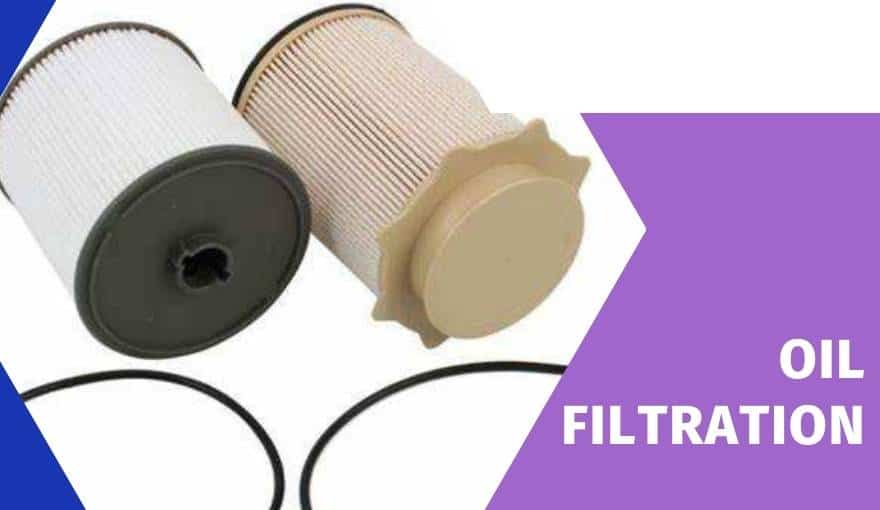
Technical guide covering oil filtration principles, systems, and implementation for industrial maintenance professionals and engineers.When critical equipment fails and shuts down production, 85% of the time it’s caused by oil contamination. A properly configured oil filtration system prevents these failures, extends equipment life by 400%, and reduces maintenance costs by 60% annually. This guide provides technical professionals with essential oil filtration principles and system selection methods.
Oil filtration represents a critical engineering process that extends beyond basic contamination removal to encompass comprehensive fluid management essential for industrial equipment reliability. From early automotive applications to modern precision manufacturing systems, oil filtration technology has evolved to meet increasingly demanding performance requirements across diverse industrial applications.
This guide provides technical professionals with comprehensive information on oil filtration principles, system selection criteria, and implementation best practices for optimizing equipment performance and operational efficiency.
What is Oil Filtration?
Oil filtration is the systematic process of removing contaminants from lubricating oils, hydraulic fluids, and industrial process oils to maintain specified cleanliness levels and preserve fluid performance characteristics. The process involves mechanical separation of particulate matter, water, and chemical contaminants that compromise equipment performance and accelerate component wear.
Primary Functions
Contamination Control
Oil filtration systems address multiple contamination sources:
Particulate matter: Metal wear particles, environmental dust, manufacturing debris
Water contamination: Free and dissolved water causing corrosion and additive degradation
Chemical contaminants: Oxidation byproducts, fuel dilution, and process chemicals
Biological contamination: Bacteria and fungi in water-contaminated systems
Industrial equipment operated with minimal filtration, relying primarily on gravity settling and basic straining mechanisms. Oil change intervals of 500-1,000 operating hours were standard due to rapid contamination accumulation.
Commercial Filter Development (1923)
Ernest Sweetland’s invention of the Purolator oil filter established the first practical automotive filtration system. This bypass filter design demonstrated significant oil life extension and established filtration as essential equipment protection technology.
Media Technology Advancement (1930s-1950s)
1935: Introduction of cotton waste filter media enabled replaceable element designs
1946: Pleated paper and cellulose media reduced manufacturing costs while improving efficiency
1950s: Synthetic materials expanded temperature and chemical resistance capabilities
Full-Flow Innovation (1943)
Development of full-flow oil filters enabled complete oil circulation through filtration media, becoming standard equipment on production vehicles by 1946 and industrial systems by 1955.
Modern Developments (1970s-Present)
1970s: Synthetic filter media for extreme operating conditions
1980s: Computer-aided filter design optimization
1990s: Nano-fiber technology for ultra-fine filtration applications
2000s: Condition monitoring and predictive maintenance integration
Technical Significance
Modern oil filtration systems provide quantifiable benefits:
Equipment life extension: 300-400% increase in component service life
Maintenance cost reduction: 60-80% decrease in maintenance expenses
Oil life extension: 200-500% increase in oil change intervals
System reliability: 85% reduction in contamination-related failures
How Oil Filtration Works
Filtration Process Mechanics
Contaminated Oil Characteristics
Unfiltered industrial oils typically contain:
Contaminant Type
Typical Concentration
Size Range
Metal particles
50-500 mg/L
1-100 microns
Environmental dust
100-1,000 mg/L
0.1-50 microns
Water content
500-5,000 ppm
Dissolved/free
Oxidation products
Variable
Molecular level
Separation Mechanisms
Physical Straining Direct interception of particles larger than filter media pore size. Most effective for particles >10 microns. Inertial Impaction Particle momentum causes collision with filter fibers during flow direction changes. Effective for particles 1-10 microns. Diffusion Brownian motion brings sub-micron particles into contact with filter media through random molecular movement. Electrostatic Attraction Charged particles attracted to oppositely charged filter media, particularly effective for synthetic oils and fine particles.
Design Characteristics Full-flow filters process 100% of system oil circulation, providing primary contamination control for critical component protection. Technical Specifications
Operating Principles Bypass filters process 5-15% of total system flow through high-efficiency media, achieving superior contamination removal for oil conditioning and life extension. Performance Capabilities
Water separation: Free and dissolved water removal
Oil life extension: 200-500% increase typical
Chemical filtration: Oxidation product and acid removal
System Benefits
Extended oil change intervals
Reduced component wear rates
Lower maintenance costs
Improved system reliability
Combination Filter Systems
Integrated Design Approach Combination systems incorporate both full-flow and bypass technologies, optimizing immediate protection with long-term oil conditioning. System Architecture
Primary stage: Full-flow for bulk contamination removal
Secondary stage: Bypass for fine particle polishing
Control systems: Automated valve and flow management
Mechanical Separation Technology Centrifugal filters utilize rotational force to separate contaminants by density differential, achieving high efficiency for specific particle types. Operating Parameters
Rotational speed: 3,000-15,000 RPM operational range
Separation force: 500-2,000 times gravitational force
Efficiency: 99.9% for particles >2 microns
Maintenance: Self-cleaning operation capability
Magnetic Filtration
Ferrous Particle Capture Magnetic filters employ permanent magnets or electromagnets to capture ferrous metal particles with 100% efficiency for targeted contamination. Technical Specifications
Magnetic field strength: 1,000-12,000 gauss operating range
Capture efficiency: 100% for ferrous particles >1 micron
Flow resistance: Minimal pressure drop impact
Maintenance: Periodic magnetic cleaning cycles
Key Components and Materials
Filter Media Technology
Cellulose-Based Media
Material Characteristics
Construction: Natural wood pulp fibers with resin impregnation
Temperature rating: 200-250°F (93-121°C) continuous operation
Efficiency range: 85-95% at nominal rating
Cost effectiveness: Lowest initial cost option
Applications: Standard automotive engines, light industrial equipment, cost-sensitive applications
Synthetic Fiber Media
Advanced Performance
Materials: Polyester, polypropylene, PTFE fiber construction
Temperature capability: 250-350°F (121-177°C) continuous operation
Efficiency range: 95-99% at nominal rating
Service life: 2-3 times cellulose media duration
Applications: Heavy-duty mobile equipment, high-temperature operations, extended service intervals
Structural testing: Pressure fatigue and burst testing
Flow testing: Pressure drop characteristics
Quality Management
ISO 9001: Quality management system implementation
Statistical process control: Manufacturing capability monitoring
Incoming inspection: Material verification procedures
Final inspection: Complete performance validation
Conclusion: oil filtration systems
Oil filtration technology represents a fundamental engineering discipline essential for modern industrial equipment reliability and operational efficiency. Proper implementation of filtration systems delivers quantifiable benefits through equipment protection, cost reduction, and performance optimization.
Key Implementation Factors
Technical Considerations
System selection: Application-specific requirements analysis
Component quality: Specification adherence and performance verification
Maintenance procedures: Proper installation and service protocols
Performance monitoring: Continuous assessment and optimization
Economic Benefits
Equipment life extension: 300-500% typical improvement
Maintenance cost reduction: 60-80% decrease in repair expenses
Return on investment: 400-800% over equipment lifecycle
Future Developments
Technology Advancement
Smart monitoring: IoT integration and predictive analytics
Advanced materials: Enhanced media performance and sustainability
Automation: Reduced maintenance requirements and improved consistency
Integration: Comprehensive fluid management system development
Success in oil filtration implementation requires understanding of contamination control principles, proper system selection, and commitment to maintenance best practices. Organizations implementing comprehensive filtration strategies consistently achieve superior equipment reliability and operational performance.
For comprehensive lubrication solutions and expert guidance on oil filtration system implementation, visit IsoHiTech Lubrication for professional consultation and high-quality filtration equipment designed for industrial applications.
Frequently Asked Questions About oil filtration systems
General Oil Filtration
Q: What is the difference between nominal and absolute micron ratings? A: Nominal ratings indicate the average particle size a filter removes with 50-98% efficiency. Absolute ratings represent the largest particle that passes through with 99.9%+ retention efficiency. Absolute ratings provide more precise performance specifications for critical applications. Q: How often should oil filters be replaced? A: Replacement frequency depends on operating conditions, contamination levels, and filter type. Monitor differential pressure as the primary indicator – replace when reaching manufacturer specifications (typically 15-25 PSI). Time-based limits range from 1,000-8,000 hours depending on application severity. Q: What micron rating should the engineer specify for the hydraulic system? A: Rating selection depends on system requirements:
General industrial: 10-25 microns nominal
Precision hydraulics: 3-6 microns absolute
Critical servo systems: 1-3 microns absolute
Consult system manufacturers for specific recommendations based on component tolerances.
Technical Performance
Q: Why does the bypass valve activate frequently? A: Common causes include:
Cold oil conditions: High viscosity restricting flow through media
Undersized filter: Inadequate capacity for system flow requirements
Valve malfunction: Incorrect pressure setting or mechanical failure
Monitor differential pressure trends and verify proper filter sizing for your application. Q: Can oil filtration completely eliminate oil changes? A: While filtration significantly extends oil life (typically 200-500%), complete elimination is not practical due to:
Additive depletion: Performance chemicals consumed over time
Chemical degradation: Molecular-level contamination accumulation
Viscosity changes: Base oil modification from thermal stress
Q: What type of filtration is best for mobile equipment? A: Mobile equipment requires robust filtration considering harsh operating conditions:
Primary protection: Full-flow filter sized for peak flow with bypass protection
Secondary filtration: Return line filter for contamination control
Environmental protection: Breather filters and seal improvements
Material selection: Synthetic media for temperature extremes and vibration resistance
Q: How do the engineer calculate ROI for filtration investment? A: Include all cost factors:
Equipment life extension: Quantify replacement deferral value
Maintenance reduction: Calculate labor and parts savings
Oil cost reduction: Extended change intervals and reduced consumption
Productivity improvement: Value of increased uptime and efficiency
Typical ROI ranges from 400-800% over equipment lifecycle with payback periods of 6-18 months.
Maintenance and Troubleshooting
Q: What causes rapid filter clogging? A: Investigate systematically:
System contamination: Component wear or external ingress
Poor oil quality: Degraded or incompatible fluids
Environmental factors: Dust, moisture, or temperature extremes
Maintenance issues: Improper installation or system cleaning
Perform oil analysis to identify contamination sources and implement corrective measures. Q: How do the engineer prevent water contamination? A: Implement comprehensive water management:
Storage practices: Proper oil handling and sealed containers
System sealing: Prevent external water ingress
Breather filters: Desiccant breathers for tank protection
Monitoring: Regular water content analysis and trending
Target water levels below 200 ppm for most industrial applications.For additional technical information on industrial machinery lubrication, quality control systems, and lubrication controllers, consult The comprehensive technical resources.
Mike Yao has engineered centralized lubrication systems since 2006 — from single-line machine-tool systems to progressive and dual-line systems for steel, mining and heavy equipment — and today leads application engineering at IsoHiTech Lubrication Systems, a manufacturer founded in 2023 based in Nanjing, China.
Grease distributor blocks distribute lubricant from a central pump to multiple lubrication points in machinery. This guide explains the working principle of grease distributor blocks,…