





Lubrication Pipe & High-Pressure Hose
Lubrication pipes and high-pressure hoses are the distribution network of a centralized grease or oil system. They carry lubricant from the pump or manifold to injectors, metering valves, and finally to bearings, pins, and other friction points. Without the right pipe material and diameter, even a well-designed pump cannot deliver consistent lubrication.
IsoHiTech supplies nylon (PA) tubing for low- to medium-pressure secondary lines, brass tubing for demanding or high-temperature zones, and thermoplastic polyamide high-pressure resin hose for grease systems up to 900 kg working pressure. Standard stock sizes include 4 mm, 6 mm, and 8 mm nylon, plus 8.6/4 mm and 11/6 mm high-pressure hose.
Use this page as a selection guide. For assembled hose kits and part numbers, see our pipe and hose catalog. For system-level design, start with grease pump solutions or automatic lubrication systems.
Quick reference — typical applications:
- Nylon 4 / 6 / 8 mm — secondary lines from distributors to lubrication points; oil and light-grease systems
- Brass tube — higher pressure or heat near furnaces, brakes, or special environments
- Polyamide high-pressure hose (8.6/4, 11/6 mm) — main feed lines in progressive and dual-line grease systems
- Pre-assembled hose — custom length with hose end, stud, and protective spring installed
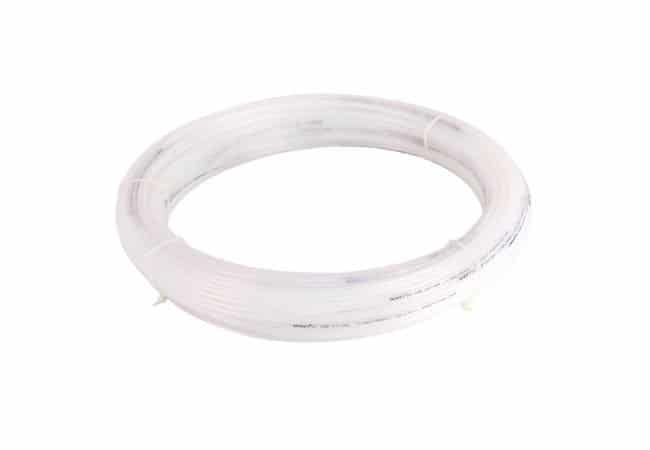
- Nylon Pipe
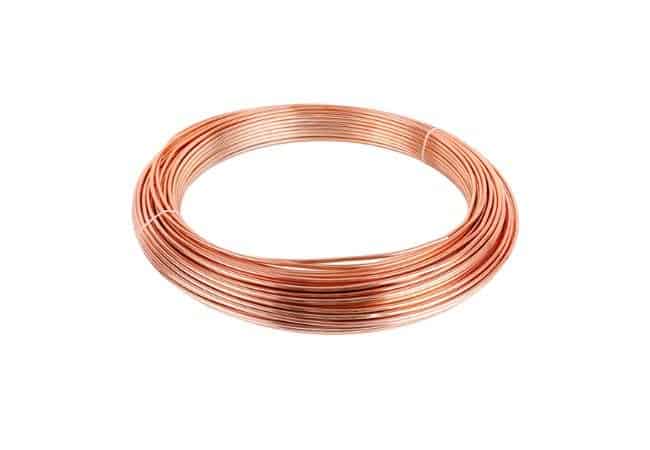
- Brass Pipe
- High Pressure Hose
- Installation & Maintenance
- Hose assembled
Nylon or PA (polyamide) pipes are flexible synthetic tubes used for most secondary lines in centralized lubrication. They install quickly, bend around guards and frames, and resist common industrial oils and greases.
Common IsoHiTech sizes
- O.D. 4 mm / I.D. 2 mm — final legs to individual lubrication points (P.N. 30139 class)
- O.D. 6 mm / I.D. 4 mm — longer secondary runs; black variant available for higher grease pressure (P.N. 30140 series)
- O.D. 8 mm / I.D. 6 mm — higher flow branches on large machines
Typical ratings: ~40 kg/cm² (oil) on 4 mm; up to ~200 kg/cm² (grease) on selected 6 mm black nylon. Use push-in or cutting-ring fittings; add a reinforcing sleeve on 4 mm lines if your divider pressure is high.
Browse 4 mm nylon pipe and 6 mm nylon lubrication pipe for detailed specs.
Small-diameter brass (copper-alloy) tube handles higher pressure and temperature in specific zones where nylon would soften or swell. It is more rigid than nylon but often more cost-effective than high-pressure resin hose on short, straight runs.
Typical use cases:
- Near heat sources (foundry, oven, engine bay)
- Short high-pressure jumpers where flexibility is not required
- Installations that need metal tube for fire or abrasion policies
Pair brass line with appropriate compression fittings. For long flexible routes or field assembly, polyamide high-pressure hose is usually the better choice.
High-pressure oil/grease hose uses a thermoplastic polyamide core with crimped hose ends. It is the standard main-line solution in modern grease lubrication systems—easier to install than captive-type rigid pipe and simpler to replace during maintenance.
Popular sizes
- 11 / 6 mm polyamide hose — high-flow main lines (P.N. 320005 class, ~900 kg grease)
- 8.6 / 4 mm polyamide hose — compact main lines (P.N. 320003 class, ~900 kg grease)
How to assemble hose end and stud
Cut hose square, insert stud, crimp hose end with the correct die, and pressure-test before commissioning. Watch the assembly video on this tab or request pre-assembled lengths from IsoHiTech.
See high-pressure polyamide lubrication pipe for full technical data.
Hose end and stud assembly
- Use a square cut and deburr the hose end before inserting the stud.
- Match hose end and stud to hose OD (8.6 mm vs. 11 mm series are not interchangeable).
- Crimp per tooling spec; pull-test before installing on the machine.
Field cutting nylon and resin tube
- Cut with a sharp tube cutter—avoid crushing the bore.
- Insert fully into push-in or cutting-ring fittings; use a support sleeve on 4 mm nylon if required.
- Keep ends clean; contamination causes injector blockage downstream.
Routing and support
- Do not kink below minimum bend radius (see material comparison table).
- Clamp with pipe clips or plastic/steel clamps; allow slight slack for thermal expansion.
- Add protective spring on nylon exposed to rub points or debris.
Pre-assembled hose
IsoHiTech can supply custom-length assemblies with hose ends, studs, and springs installed—see tab “Hose Assembled” and our pipe and hose page.
We customize pipeline assemblies to your length and thread specification. For regular nylon pipe, protective springs are typically installed at exposed sections. For high-pressure resin pipe, we secure joints and sleeves so you can install directly on the machine.
Customization options
- Custom cut length (nylon or high-pressure hose)
- Pre-crimped hose end and stud (M8/M10 and other threads on request)
- Protective spring cover on nylon runs
- Multiple assemblies per machine BOM
Send your pump model, divider type, and routing sketch for a quotation.

Lubrication Pipe Material Comparison
| Material | Typical sizes (OD / ID) | Working pressure* | Temperature range | Min. bend radius | Best for |
|---|---|---|---|---|---|
| Nylon (PA12) | 4 / 2 mm, 6 / 4 mm, 8 / 6 mm | ~4–6 MPa (oil); up to ~20 MPa (grease, grade-dependent) | −35 °C to +70 °C | ~10 mm (4 mm tube) | Secondary lines, flexible routing, progressive system legs |
| Brass tube | Small OD per drawing | Higher than nylon in short runs; suitable for special high-pressure zones | −40 °C to +120 °C | Large radius; limited flexibility | High-temperature areas, cost-effective rigid runs vs. resin hose |
| Polyamide (PA11/PA12) high-pressure hose | 8.6 / 4 mm, 11 / 6 mm | Up to ~90 MPa (900 kgf/cm²) grease | −40 °C to +100 °C | ~25–40 mm (size-dependent) | Main grease lines, field-cut assemblies, progressive/dual-line feeds |
| High-pressure resin tube (thermoplastic) | Same as polyamide hose core | Matches hose spec above | −40 °C to +100 °C | Per hose datasheet | Replace captive-type pipe; easier maintenance and replacement |
*Working pressure depends on temperature, fitting type, and lubricant viscosity. Always verify against pump and divider maximum rating. Contact IsoHiTech for application-specific confirmation.
Related Product


What Is a Lubrication Pipe (and High-Pressure Hose)?
In centralized lubrication, “pipe” usually means small-bore flexible or semi-rigid tubing—not large plant piping. Nylon and polyamide tubes act as the arteries of the system: they must hold system pressure, resist oil and grease, bend around machine frames, and stay leak-free at every compression or push-in fitting.
High-pressure hose (thermoplastic polyamide resin tube with crimped hose ends) is used where nylon cannot handle grease pressure—typically on the main line from a grease pump to a progressive divider or dual-line distributor. Compared with older captive-type rigid pipe, resin hose can be cut and assembled on site, which speeds replacement when a line is damaged or a machine layout changes.
Role in Centralized & Automatic Lubrication Systems
Every automatic lubrication layout follows the same basic path:
- Pump pressurizes the main supply (grease or oil).
- Primary line (often high-pressure hose) carries fluid to a manifold, divider, or injector bank.
- Secondary lines (usually 4–6 mm nylon) run from metering devices to each lubrication point.
- Fittings (hose ends, studs, elbows, clips) connect pipe to pumps, distributors, and grease nipples.
Pipe diameter directly affects flow and pressure drop. Undersized tubing restricts grease flow in cold weather; oversized tubing adds cost and makes routing harder in tight spaces. Material choice affects maximum pressure, temperature, and how often you must replace lines in abrasive or hot environments.
For a full system overview, see automatic lubrication systems. For connection hardware and torque guidance, read our lubrication pipe fittings guide.
How to Choose the Right Lubrication Pipe
Step 1 — Identify system pressure. Check your pump nameplate or divider spec (typical progressive grease systems: 20–40 MPa at the pump; secondary lines see lower pressure after metering).
Step 2 — Match material to pressure and temperature.
| Need | Recommended material |
|---|---|
| Secondary lines, oil or light grease, easy routing | Nylon / PA tube (4–8 mm OD) |
| Higher pressure or elevated temperature on a short run | Brass tube |
| Main grease line, field-cut lengths, high pressure | Polyamide high-pressure resin hose |
Step 3 — Select OD/ID. Use 4 mm for final legs to individual points; 6 mm for longer secondary runs or slightly higher flow; 8 mm for main branches in large systems. High-pressure hose is specified by OD/ID pairs: 8.6/4 mm and 11/6 mm are the most common IsoHiTech stock sizes.
Step 4 — Plan fittings and assembly. High-pressure hose requires correct hose end and stud pairs, crimped or pre-assembled. Nylon uses push-in or cutting-ring fittings; a reinforcing sleeve may be required on 4 mm lines under higher pressure.
Step 5 — Protect and support. Use pipe clips and clamps every 300–500 mm, keep bend radius above the manufacturer minimum, and add protective springs on nylon exposed to abrasion.
If lines fail repeatedly, see lubrication pipe broken: patterns and root causes before switching material.
Related Products & Resources
- Grease pump hub — pump selection for your pipe pressure class
- Automatic lubrication systems — system architecture and components
- Pipe and hose product list — part numbers and assembled hose
- Lubrication pipe category — full SKU range
- Lubrication pipe fittings guide (blog)
- Pipe failure troubleshooting (blog)
“Lubrication pipe” usually refers to nylon or brass tubing for secondary lines (typically 4–8 mm OD). High-pressure hose is a polyamide core tube with crimped hose ends, rated for main-line grease pressure (often 8.6/4 mm or 11/6 mm). Use hose on the pump outlet and high-pressure segments; use nylon for runs to individual lubrication points after metering devices.
Use 4 mm for final legs from a distributor to a single point. Choose 6 mm for longer secondary runs or when flow to multiple nearby points is needed. Use 8 mm for main branches on large centralized systems. If pressure or cold-weather stiffness is an issue, step up one size or confirm rating with your pump and divider supplier.
Choose brass for short, rigid runs in high-temperature or unusually high-pressure zones where nylon would not be rated. Brass is less flexible and harder to route in tight spaces. For most grease main lines and field-replaceable assemblies, polyamide high-pressure hose is the standard choice.
Yes. Thermoplastic polyamide hose is designed for on-site cutting and crimping with the correct hose end, stud, and crimp tooling. Cut square, keep the bore clean, and pressure-test before operation. If you do not have crimp equipment, order pre-assembled lengths from IsoHiTech.
Common causes include kinking below minimum bend radius, abrasion without a protective spring, incorrect fitting insertion, over-pressure for the tube grade, and aged nylon that has hardened. Leaks at hose ends usually indicate wrong crimp die, worn studs, or vibration without proper clamping. See our blog on pipe failure patterns for a diagnostic checklist.
Nylon connects with push-in or cutting-ring fittings to distributors, elbows, and grease nipples. High-pressure hose connects pump outlets and main headers to dividers via crimped hose end and stud pairs. The complete system includes the pump (grease pump hub), metering devices, fittings, and clips—pipe is only one layer of the layout.