


Automatic Grease Lubrication Systems - Complete Guide & Products
An automatic grease lubrication system feeds every bearing on a machine or production line from one pump station, metering grease on a timed cycle instead of a worker with a grease gun. It is the standard answer wherever lube points are numerous, hot, guarded, or spread along long lines: production machinery, crushers and conveyors, trucks and excavators, steel and paper plants.
IsoHiTech builds these systems around four distribution families — progressive, single-line, dual-line, and single-point lubricators — with pumps from 24V DC chassis units to 40 MPa dual-line plants, timer controllers, and reservoirs from 2 to 100 liters. The products below cover the common configurations; the selection table, system comparison, and FAQs underneath the grid explain how to match a system to your machinery.
How to Choose an Automatic Grease Lubrication System
Five variables decide the configuration:
| Selection factor | What to check |
|---|---|
| Lube points | Up to ~20 points: single-point lubricators or a compact progressive pump. 20–100 points: progressive metering or single-line injectors. Hundreds of points along long lines: dual-line. |
| Working pressure | 14.7–25 MPa suits vehicle and machine progressive systems; 31.5–40 MPa is the class for dual-line plants with long pipe runs. |
| Reservoir | From 0.4L vehicle tanks to 100L plant stations — size by point count × per-point volume × refill interval. |
| Control | Integrated pump timers (4 min–15 h intervals) or standalone lubrication controllers for duty cycling, alarms, and low-level signals. |
| Grease grade | NLGI 000–2 covers most automatic systems; confirm each pump’s grade range before specifying. |
The automatic grease system types guide works through each family in depth.
System Types at a Glance
| Family | How it distributes grease | Best for |
|---|---|---|
| Progressive | Divides pump output across metering sections in sequence; a blocked point halts the cycle and can raise an alarm | Machines and mobile equipment needing exact per-point metering |
| Single-line / SLR | Pressurizes a line that charges injectors; injectors discharge on pressure release | Large point counts, long distances, grease or oil service |
| Dual-line | Two mains alternately pressurized; each feeder valve serves its own point group | Plants with hundreds of points, long runs, harsh environments |
| Single-point lubricators | Self-contained canisters feed one bearing for months untended | Remote or isolated points; the first step up from manual greasing |
For the full trade-off analysis see dual-line vs single-line vs progressive systems.
Automatic Grease Pump Models Compared
| Model | Pressure | Output | Configuration |
|---|---|---|---|
| DRB-P Electric Grease Pump | 40 MPa (5,800 PSI) | 120 / 235 / 365 mL/min | Single or dual-line; 30/60/100L reservoir; 380V |
| SDRB-N Dual-Pump Electric Grease Pump | 31.5 MPa | 60–585 mL/min | Dual-line plants; primary + standby pump with automatic switchover |
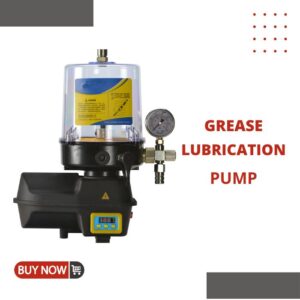
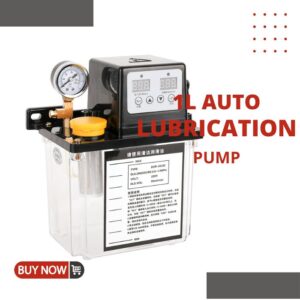
| DC24V-B Electric Grease Pump | 25 MPa | 5.5 mL/min per outlet | 24V/12V progressive; 1–3 outlets; 2L tank; timer; IP65 |
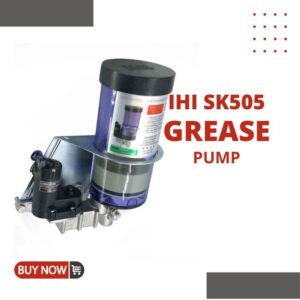
| IHI SK-505BM Electric Grease Pump | 14.7 MPa | 13 cc/min | 24V DC progressive; 0.4/1L reservoir; up to 60 lube points |
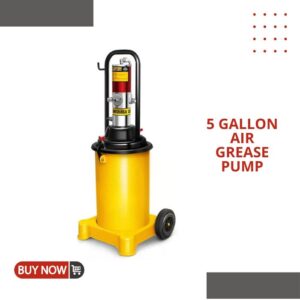
| Air-Operated 55-Gallon Drum Pump | Up to 8,700 PSI | 50:1 / 58:1 ratio | Drum-feed station for NLGI 2–3 grease; pump-only or full kit |
Automatic Grease Lubrication System FAQs
How much does an automatic grease lubrication system cost?
Price scales with point count, pressure class, reservoir size, and controls: a set of single-point lubricators or a compact DC progressive pump sits at the low end, while a 40 MPa dual-line plant with standby pump and controllers sits at the top. Because every installation is sized to the machine, IsoHiTech quotes per project — send the point count and grease grade through the contact page for pricing.
What is the difference between an automatic grease lubricator and a lubrication system?
A lubricator is one self-contained canister feeding one bearing; a system is a pump plus distribution network feeding many points from one station. Lubricators suit isolated points — see the single-point lubricators category — while systems cover whole machines.
Which system type fits heavy equipment?
Can an automatic system meter grease exactly at every point?
Yes — that is the core of a progressive design. Metering sections divide the pump output into fixed per-stroke volumes, so each bearing receives its specified dose every cycle, and a blocked point stops the sequence where an alarm can catch it.
Is an automatic grease pump by itself a complete system?
No. The pump is the heart, but a working system also needs distributors or injectors, a controller or timer, and the fitting and hose network. The pump models above pair with the progressive distributors and controllers listed in their categories.
Tell us your point count, grease grade, and machine type — IsoHiTech will size the system and quote the matching components.
Buying the pump on its own? The core units are listed as automatic lubrication pumps: see the automatic grease pump for vehicles and industrial machinery and the automatic oil lubrication pump range for oil systems.
- Sale!

- Sale!

- Sale!


- Sale!

- Sale!
