


Dual-Line Lubrication Systems
Dual-line lubrication is the heavy-industry answer when one system must feed hundreds of points across long distances: two main lines run out from the pump, a reversing valve alternates which line is under pressure, and every metering valve on the line doses its bearing once per reversal. Steel mills, mining, cement, and paper plants run on this architecture because it survives dirt, distance, and decades.
This category is the complete dual-line parts list from IsoHiTech: high-pressure pumps to 40 MPa, hydraulic and electric reversing valves, SKF VS-series and Lincoln metering valves, end-of-line pressure switches, and the filters that keep the mains clean. Genuine items and equivalents are each labeled as such.
Choosing Dual-Line Components
| Selection factor | What to check |
|---|---|
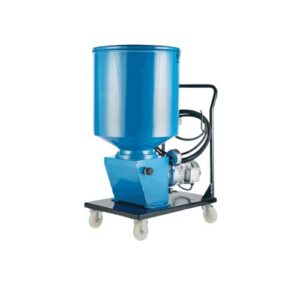
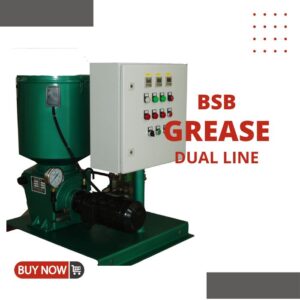
| Pump class | Dual-line mains need high pressure: DRB-P at 40 MPa for the largest systems, SDRB-N dual-pump at 31.5 MPa with 60–585 mL/min staged output, BSB for mid-size plants. |
| Reversing valve | Hydraulic types (SYP, DR4-5) run on line pressure alone; electric types (24EJF-P) take solenoid control from a timer or PLC for programmable cycles. |
| Metering valves | Fixed-dose VSG-KR or adjustable VSL-KR by outlet count and dose; genuine Lincoln VSKV2 and Bijur DD/DM/DDM/DDN for existing installed bases. |
| Cycle proof | An end-of-line switch (YKQ, YCK, or genuine Lincoln EDWE-3) confirms pressure reached line end — the signal that a half-cycle completed. |
| System scale | Long lines and harsh plants: dual-line. Compact machines with fewer points: progressive dividers instead. Pumps of every drive class sit in the pump category. |
Components Compared
| Component | Role | Class | Notes |
|---|---|---|---|
| DRB-P Pump | Pump | 40 MPa | Single/dual-line, metallurgy & mining |
| SDRB-N Pump | Pump | 31.5 MPa, dual-pump | 60–585 mL/min staged output |
| BSB Pump | Pump | Electric | Mid-size plant duty |
| SYP Reversing Valve | Reversing | 4/2 hydraulic | Runs on line pressure |
| DR4-5 Reversing Valve | Reversing | Hydraulic | Auto-alternates direction |
| 24EJF-P Valve | Reversing | 4/2 electric | Solenoid, PLC/timer control |
| DU 1 Change-over Valve | Reversing | Directional | Oil or grease mains |
| VSG-KR Valve | Metering | SKF VS series | Fixed dose per cycle |
| VSL-KR Valve | Metering | Adjustable | Field-set output |
| VSKH-KR Valve | Metering | SKF VS series | Grease and oil service |
| VSKV-KR Valve | Metering | SKF VS series | Vertical outlets |
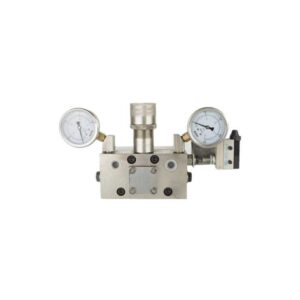
| Lincoln VSKV2 | Metering (genuine) | 400 bar, 0–1.5 cm³ | 2 outlets, G1/4 |
| Bijur DD/DM/DDM/DDN | Distributor (genuine) | 4 series | For Bijur installed bases |
| SDPQ Divider Valve | Metering | Positive displacement | Hydraulically operated |
| DMM Metering Valve | Metering | Air-oil dual-line | Modular, machine duty |
| Lincoln EDWE-3 Switch | End-of-line (genuine) | Pressure switch | Two-line system cycle proof |
| YKQ Pressure Unit | End-of-line | Indicator | Signal on pressure arrival |
| YCK Pressure Valve | End-of-line | Differential switch | Monitors line pressure difference |
Also cataloged: DDB multi-point pump (multi-line, the low-frequency cousin of dual-line), the ZPU feed pump and BMB / BM-B pump, GGQ high-pressure pipeline filters for the mains, and the PF-200 grease spray valve for open-gear spray service.
Dual-Line Lubrication FAQs
How does a dual-line system work?
The pump pressurizes main line A; every metering valve on A doses its bearing. A reversing valve then swaps to line B and the valves on B dose. The end-of-line pressure switch on each main confirms the pressure wave arrived, proving the half-cycle completed before the next reversal.
Dual-line or progressive — which system do I need?
Dual-line for long distances, large point counts, and dirty plants — each metering valve works independently, so one blocked point doesn’t stop the system. Progressive for compact machines: cheaper and simpler, but one blocked outlet halts the whole divider chain. Compare in the progressive distributors category.
Hydraulic or electric reversing valve?
Hydraulic (SYP, DR4-5) needs no wiring — line pressure itself drives the reversal, which suits remote and high-vibration spots. Electric (24EJF-P) gives a PLC or timer exact control of cycle timing and pairs with monitoring — most modern plants choose it.
Are the metering valves genuine SKF or Lincoln?
VSG-KR, VSL-KR, VSKH-KR, and VSKV-KR are from the SKF VS series as cataloged; the Lincoln VSKV2 and Bijur Delimon DD/DM/DDM/DDN are genuine items. Equivalent-branded parts are labeled by series throughout — send your installed valve’s part number through the contact page and the matching item will be confirmed.
Why does the end-of-line switch matter?
Without it, a broken hose or blocked main looks identical to a healthy system on the pump gauge. The switch proves pressure reached the far end of each main every half-cycle — that signal is what makes dual-line supervisable in unattended plants.
Send your point count, line lengths, and installed part numbers — IsoHiTech will spec the dual-line circuit and quote.

- Sale!


- Sale!


- Sale!


