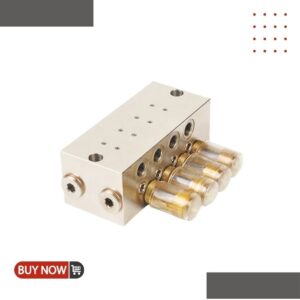

Progressive Distributors for Centralized Lubrication Systems
A progressive distributor takes one stream of oil or grease from the pump and divides it into metered, sequential portions — every outlet receives its exact dose, one after another, cycle after cycle. If any point blocks, the sequence stops right there, which is why progressive systems are considered self-monitoring: the blockage announces itself instead of silently starving a bearing.
These blocks are the metering heart of centralized lubrication on machine tools, mining and construction machinery, food and packaging lines, and mobile equipment. This category carries the full range of IsoHiTech families — DJF, JPQ, M, Mono, and ZP series divider valves, dual-line ZVB valves, and 2–20 outlet replacements for Lincoln SSV — plus the pairing guidance in the tables and FAQs below the grid.
Is a Central Grease System Worth It?
Maintenance techs who have lived through the conversion tend to agree on where centralization pays: points that are hard to reach, hazardous to access, or so numerous that manual greasing gets skipped under production pressure. On machines that used to run dry, failure intervals stretch from days to months — a bearing that is finally getting grease at all outlasts one that was waiting for a route that never came.
The honest counterpoints from the same workshops: a central system invites a set-and-forget mindset, the system itself becomes a maintenance item (lines block, pumps need refilling), and you lose the hands-on feel that used to warn you a seal had blown or a bearing had stopped taking grease. The upfront investment only pays where greasing is genuinely difficult or long.
This is precisely where a progressive layout earns its keep. Because the divider pistons travel in a fixed sequence, a single blocked outlet or downstream line stops the entire block from cycling — the cycle indicator pin simply quits moving, which is a built-in blockage alarm that a manual greasing route cannot offer. Graco and SKF both document this stop-on-blockage behavior as the defining operating principle of progressive feeders. For long runs or points buried behind guards, route the tail lines to an accessible remote grease manifold station so the indicator stays visible and the gun couples at the station, never at the machine.
Choosing a Progressive Block
| Selection factor | What to check |
|---|---|
| Outlet count | 2–20 outlets per block on SSV-type valves; blocks can be cascaded in stages when a machine needs more points than one valve serves. |
| Lubricant | Oil, liquid grease (NLGI 000–0), and grease up to NLGI 2 all run through progressive sections — confirm each series’ grade range before specifying. |
| Duty and temperature | Standard blocks cover general plant duty; high-ambient-temperature and heavy-duty versions exist for hot, contaminated environments. |
| Monitoring | A cycle-indicator pin on the block gives visual confirmation; add a proximity switch wired to a lubrication controller for alarms and run detection. |
| System type | Progressive blocks meter in strict sequence; dual-line circuits need feeder valves instead — the system types comparison explains where each fits. |
Model Families Compared
| Model | Family / type | Duty | Notes |
|---|---|---|---|
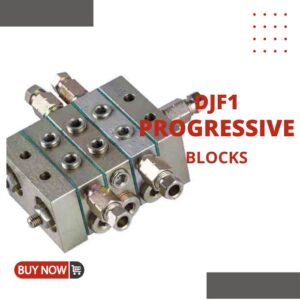
| DJF1000 Progressive Block | Series 1000 divider manifold | General plant | Oil or grease, precise multi-outlet split |
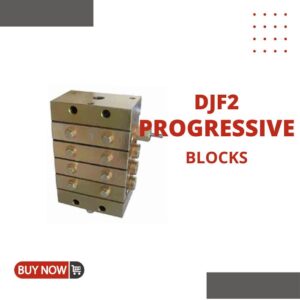
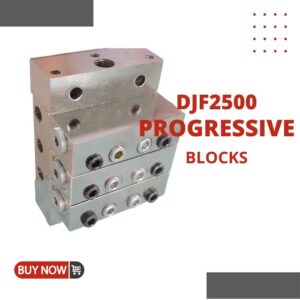
| DJF2000 Progressive Block | Series 2000 divider manifold | General plant | Sequential metering; blockage halts cycle |
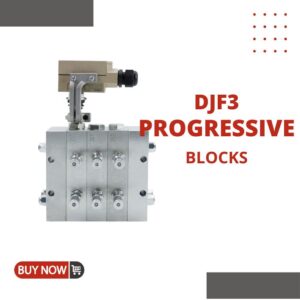
| DJF3000 Progressive Block | Series 3000 divider manifold | High temperature, heavy duty | Hot and contaminated environments |
| M2500 Progressive Block | M2500 divider manifold | General industrial | Exact doses in set order, oil or grease |
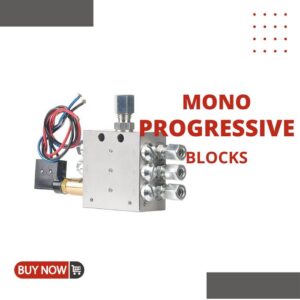
| Mono Progressive Block | Mono divider | General industrial | Direct SSV replacement capability |
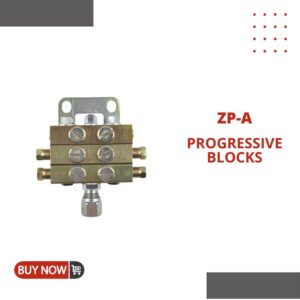
| ZP-A Progressive Block | ZP-A piston divider | Machinery lubrication | Orderly piston-metered distribution |
| ZPA Divider Valve | ZPA progressive valve | Small to large plants | Total-loss and oil recirculation systems |
| JPQ Progressive Block | JPQ divider | Mining, machining, farm | Built for continuous 24/7 operation |
| ZVB Dual-Line Divider Valve | Dual-line metering valve | Dual-line plants | For two-main circuits, not progressive lines |
| Oil Air Mist Block | Mist distribution block | Oil-mist systems | Splits one oil/air mix into metered outlets |
| SSV Replacement Guide | Reference item | Maintenance planning | Cross-reference and replacement procedure |
Progressive Distributor FAQs
What happens when one lubrication point blocks?
The whole block stops at that section — flow cannot bypass a blocked outlet in a progressive design. The cycle-indicator pin shows where the sequence halted, and a proximity switch on the pin can trip an alarm through the controller. That built-in shutdown is a feature: it turns a silent bearing failure into a visible fault.
How many outlets can one progressive block feed?
SSV-type valves configure from 2 to 20 outlets; DJF, JPQ, and ZP families cover similar ranges. When a machine needs more points, blocks cascade — a master block feeds secondary blocks, each dividing its share further. The automatic grease system category shows complete circuits built this way.
Can I get more volume to one point?
Yes — combining adjacent outlets on the block doubles the dose delivered to a single point. This is standard practice for larger bearings that need more grease per cycle than a single section dispenses.
Progressive distributor or dual-line feeder valve?
Progressive blocks meter in strict sequence and suit dense machine layouts; dual-line valves meter in two alternating groups and suit plants with hundreds of points on long pipe runs. The ZVB valve above serves the dual-line side — the comparison guide works through the trade-offs.
Do these replace Lincoln SSV divider valves?
Yes — the Mono block and the 2–20 outlet divider valve are built as SSV/Quicklub replacements, and the replacement guide covers the cross-reference procedure. Send the SSV part number and point count through the contact page for a matched quote.
Send your point count, lubricant grade, and pump details — IsoHiTech will spec the block configuration and quote.
Why Progressive Distribution Wins on Multi-Point Machines
A progressive distributor is the metering heart of a multi-point grease or oil system: one inlet flow enters, and internal pistons stroke in sequence to dispense measured doses to every outlet in turn. Two properties make the family the default choice for machine tools, presses, and production lines:
- One block, many doses. A single divider block replaces a wall of individual metering valves — outlets commonly run from a handful up to 24 on one block, and many designs allow combining outlets or stacking sections for more points or bigger doses (construction varies by product family).
- Built-in fault detection. The sequence is the alarm: when one outlet’s line blocks, the whole block stops cycling, so an indicator pin or cycle switch turns a silent failure into a visible one. Why that happens is explained in the grease distributor block working principle guide.
Shoppers comparing families should also read the Lincoln SSV metering block guide — it decodes the naming of the most-cited progressive divider family.
- Sale!

- Sale!
- Sale!
- Sale!

- Sale!
- Sale!
- Sale!

- Sale!

- Sale!
- Sale!