What a 20kg Grease Pump Is
A 20kg grease pump mounts directly on a standard 20 kg grease pail and pumps grease through a hose and coupler to the point of use. Three drive types share this mounting pattern: a hand lever for field work, a pneumatic intensifier for workshops, and a hydraulic drive for fixed plant. All three press a follower plate onto the grease surface so the pump inlet stays primed as the pail empties. The 12.5 kg keg pump and the larger container mounts are covered on their own pages; this page is the hub for the 20 kg pail format. Background on how the pump types differ sits in the complete guide to grease pumps.
Hand-Operated Pumps
The hand-operated version delivers up to 500 bar (7,250 psi) with an output of 2-9 g per stroke. Variable lever positions trade volume against pressure: the high-volume mode moves up to 9 g per stroke at lower pressure, while the high-pressure mode reduces the volume per stroke to build more pressure where a fitting fights back. A 2.0 m high-pressure rubber hose gives working reach without dragging the pail. Ports are typically 3/8″ or 1/2″ BSP on the inlet and 1/4″ BSP on the outlet. It handles NLGI 1-3 grease across an operating temperature of -20°C to +60°C, grease-dependent, and its pail cover fits the standard 330 mm pail opening.
Pneumatic Pumps
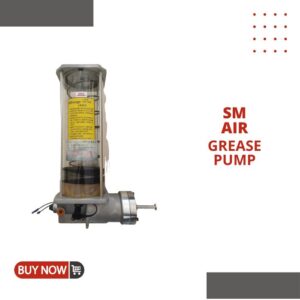
The pneumatic version is a pressure-ratio pump in 50:1 or 60:1, fed from a 22-150 psi (1.5-10 bar) air supply. At 90 psi (6.2 bar), a 60:1 pump delivers up to 5,400 psi (372 bar); a 50:1 at the same supply is about 4,500 psi. The 60:1 maximum rating is 550 bar (7,950 psi) at rated air supply. Output runs about 540 g/min at 90 psi, with air consumption of 85-120 NL/min at full flow. The air inlet and the grease outlet are both 1/4″ BSP. It covers NLGI 0-3 from -20°C to +80°C, with a 330 mm follower plate riding the pail. A typical kit builds the complete station: drum cover, follower plate, trolley, a 1.5-2.2 m high-pressure hose, control valve, and grease coupler. The same drive concept scales onto the 25 kg pneumatic grease pump for bigger containers.
Hydraulic Pumps
The hydraulic version is driven from the machine’s hydraulic power unit rather than from air or muscle. It delivers up to 345 bar (5,000 psi) at about 150 ml/min and handles NLGI 1-2 grease. Steel mills, crushers, and other fixed lubrication systems use it where hydraulic power is already on the machine and compressed air is not worth installing.
Drive-Type Comparison
The three drives share the pail mount but serve different jobs; the table makes the trade-offs explicit.
| Attribute | Hand-operated | Pneumatic | Hydraulic |
|---|---|---|---|
| Maximum pressure | up to 500 bar | up to 550 bar | up to 345 bar |
| Output | 2-9 g per stroke | about 540 g/min | about 150 ml/min |
| Power source | manual lever | compressed air | hydraulic power unit |
| Portability | high | medium, on trolley | low, fixed |
| NLGI range | 1-3 | 0-3 | 1-2 |
| Typical use | field light duty | workshop fleet continuous | heavy industrial fixed plant |
Step up through the columns as duty moves from occasional field greasing to continuous production work.
Pail Fit, Ports, and Hose Sizing
Standard 20 kg pails use a 330 mm opening, and the follower plate must match it; a loose plate lets air in and priming suffers. Step up to a 60:1 or higher ratio for hose runs beyond 5 m, for NLGI 3 grease, or for centralized manifolds. Forcing NLGI 3 through a pump rated only to NLGI 2 causes cavitation, inconsistent output, and accelerated wear. Extension hose must be rated at or above the pump maximum, and 1/4″ ID hose is the standard for most grease work. Expect a pressure drop of about 5-10 psi per metre of hose under high-flow conditions, so long runs need the ratio margin. Coupler choice follows the machine: hydraulic button-head couplers are the common pattern, with needle-type and pin-type couplers in marine and heavy industry. BSP and NPT threads are not interchangeable, so confirm the port thread pattern at order. Sibling mounts: the 12.5 kg grease pump for smaller kegs and the 5 gallons pneumatic grease pump, with the wider grease pump range behind both. Send the pail and point details through the contact page to fix the configuration.
Frequently Asked Questions
What is a 20kg grease pump?
It is a pump that mounts directly on a standard 20 kg grease pail. Hand lever, pneumatic, and hydraulic drive types share the same pail-mount principle.
What does the pressure ratio mean?
The ratio multiplies supply air pressure into grease pressure. At 90 psi, a 60:1 pump delivers up to 5,400 psi and a 50:1 about 4,500 psi.
What is the maximum pressure by drive type?
Hand pumps reach up to 500 bar, pneumatic up to 550 bar, and hydraulic up to 345 bar. The pneumatic figure applies to the 60:1 version at rated air supply.
What are the output rates?
A hand pump moves 2-9 g per stroke depending on lever position. A pneumatic unit delivers about 540 g/min, and a hydraulic unit about 150 ml/min.
Can NLGI 3 grease run through it?
Only if the pump is rated for it: hand pumps here handle NLGI 1-3 and pneumatic NLGI 0-3. Forcing NLGI 3 through a pump rated NLGI 2 causes cavitation and inconsistent output.
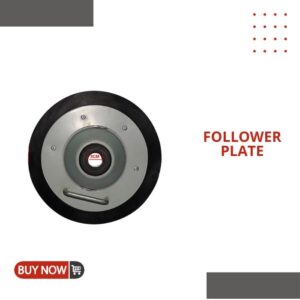
What does the follower plate do?
It matches the 330 mm pail opening and rides the grease surface to prevent air pockets and skinning. That keeps priming consistent down the pail.
What size compressor is needed?
The pneumatic models accept a 22-150 psi supply and consume 85-120 NL/min at full flow. Choose a compressor that sustains that flow under load.
Are the ports BSP or NPT?
It depends on the region of supply, and the two thread families are not interchangeable. Confirm the port thread when ordering.
Can it feed a centralized lubrication system?
Yes, pneumatic 20 kg pumps with 50:1 or 60:1 ratios serve as primary pump heads for progressive, dual-line, or point-to-point manifolds. Confirm hose ratings and layout through our contact page.
Who builds these pumps?
IsoHiTech Lubrication Systems, founded in 2023, engineering since 2006, builds and supports every unit. Email inquiry@isohitech.com for specifications and a quotation.