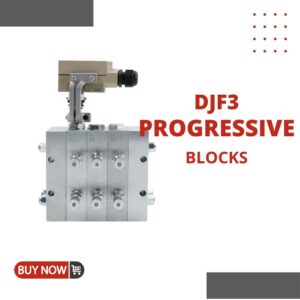
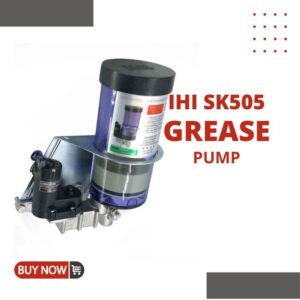
What an Automatic Grease Pump System Does
An automatic grease pump system (ALS), often called an autogreaser, is a permanently installed pump and controller that pushes metered grease doses to every connected bearing, pin, and wear surface while the machine runs, replacing manual rounds where points get missed and volumes vary. For the wider picture, see our guide to central lubrication systems.
Parts lists and procurement sheets also name this unit an automatic lubrication pump or auto lube pump – timed pump, controller, and reservoir in one package, same hardware.
Typical Specification Ranges
These are typical market ranges for the category, not a commitment for one model; confirm exact values when quoting.
| Parameter | Typical Range |
|---|---|
| Drive | Typically electric 12V or 24V DC, or pneumatic on a 4-8 bar air supply |
| Reservoir capacity | Typically 1, 2, 4, 8, or 20 kg |
| Output pressure | Typically up to 350 bar electric, up to 280 bar pneumatic |
| Flow rate | Typically 0.5-8 cc/min depending on model and cycle setting |
| Lube point capacity | Typically 1-60+ points per system |
| Dose per point | Typically 0.01-0.5 cc per cycle, adjustable |
| Grease grade | Typically NLGI 00 to 2 |
| Base oil viscosity | Typically 46-460 cSt at 40 °C |
| Operating temperature | Typically -25 °C to +70 °C, with low-temperature variants to -40 °C |
| Cycle interval | Typically 1 minute to 8 hours, or triggered by engine hours |
| Progressive main line rating | Typically up to 400 bar working pressure |
| Seal materials | Typically NBR, with PU or FKM options |
| Alarm outputs | Low-level sensor plus pressure fault relay, dry contact or CAN-bus output |
Vehicle systems are usually electric; the 24V DC automatic grease pump page covers on-board voltage, timer, and wiring details.
The Three Distribution Architectures
Single-Line Parallel (SLP)
One supply line feeds parallel injectors, each dispensing its own adjustable dose. A blocked point starves only that point; the rest of the machine stays lubricated, but the fault can go unnoticed without inspection. SLP suits trucks, trailers, and modest, spread-out point counts.
Progressive
Grease moves through divider sections in strict sequence. If any outlet blocks, the whole circuit stalls, and that is a feature: a cycle-indicator pin or proximity switch turns the stall into a visible fault signal. Progressive suits buyers who need positive blockage detection.
Dual-Line
Two main lines alternate under pressure through a reversing valve, tolerating long runs and high point counts; one blocked outlet does not stop the rest. It is standard on large mining and metals machinery.
Matching Architecture to Equipment
| Equipment | Typical architecture |
|---|---|
| Truck and trailer chassis | SLP or small progressive |
| Excavators and wheel loaders | Progressive |
| Mining and metals machinery | Dual-line |
| Machine tools and production lines | Electric pump with progressive dividers |
On heavy equipment lubrication systems, contamination and long booms push most buyers toward progressive dividers; our excavator configuration guide shows a worked layout. The grease pump hub covers the wider pump family.
Sizing, Grease, and Retrofit Notes
Daily consumption equals points times dose per point times cycles per day. Example: 30 points at 0.1 cc per point, 6 cycles a day, gives 30 x 0.1 x 6 = 18 cc daily; a 2 kg reservoir, roughly 2000 cc, covers about 2000 / 18 = 111 days between refills. Run this with your own point count before choosing a reservoir.
- Below roughly -15 °C, operators typically move to NLGI 1 or a low-temperature synthetic so line pressure stays within rating.
- Every 90-degree elbow adds back-pressure; bend-heavy routes need pressure margin, so keep runs straight.
- Retrofitting an existing machine typically takes 4-8 hours, so plan the work around a downtime window.
- Beyond roughly 60 points or hundred-meter runs, single-line architectures run out of pressure margin; that is dual-line territory.
Have a point list and layout ready? Send them through the quote request page and we will map an architecture to it.
Frequently Asked Questions
How do I choose between single-line parallel, progressive, and dual-line?
Start with point count and fault tolerance: spread-out points on vehicles suit SLP; pick progressive when you need blockage detection, since one blocked outlet stalls the circuit; high point counts or long distances point to dual-line. Between options, share your layout and we will confirm.
What is the difference between an automatic grease pump and a grease gun?
A grease gun is a manual tool applied fitting by fitting. An automatic grease pump is permanently mounted, dosing every connected point on a timer while the machine works.
Should I choose an electric or a pneumatic pump?
Electric pumps, typically 12V or 24V DC, suit vehicles that carry their own power; pneumatic pumps suit plants with a 4-8 bar air supply nearby.
How do I estimate how long a reservoir will last?
Multiply points by dose per point by cycles per day, then divide reservoir volume by the result. The example above gives 18 cc daily and roughly 111 days from a 2000 cc reservoir.
Which grease grade should I run?
Most systems run NLGI 1 or 2. In cold weather, typically below roughly -15 °C, switch to NLGI 1 or a low-temperature synthetic so grease still flows at rated pressure.
Can an automatic system be retrofitted to existing equipment?
Yes. Existing fittings can be mapped and plumbed back to a pump. Installation typically takes 4-8 hours per machine, so schedule a downtime window.
What happens when one lube point blocks?
On SLP only that point goes dry and the fault may pass unnoticed; on progressive the circuit stalls and raises a detectable fault; on dual-line the rest keeps running past a blocked outlet.
Can the alarm output connect to a dashboard or PLC?
Yes. Systems commonly provide a low-level sensor and pressure fault relay with dry contact or CAN-bus output, feeding a dash lamp, buzzer, or remote monitoring input.
When is a machine not a good candidate for an ALS?
Machines with few accessible points, machines that cannot spare a downtime window, and extreme-cold sites unwilling to change grease grade all weaken the case; manual or single-point lubrication may suit better.
Who supplies these systems and how do I get a quote?
IsoHiTech Lubrication Systems was founded in 2023, engineering since 2006. Send your machine type and point count to inquiry@isohitech.com or through our contact page, and we will propose an architecture.