How Compression Fittings Seal
A bite-type compression fitting seals by metal-to-metal contact, not by the nut thread. As the nut tightens against the body, the ferrule is driven forward and its leading edge bites into the tube wall, cutting a shallow groove and springing slightly to lock the tube in place. The nut thread carries no sealant and plays no part in the seal. Never wrap the nut thread with tape or paste. If a finished joint weeps, the cause is almost always under-tightening or a tube that was free to move while the ferrule was biting. The fitting-by-fitting range is covered in the ferrule compression fittings technical guide.
Choosing a Series (LL, L, S)
Three series cover most hydraulic and lubrication tubing. The LL series is extra light, covering 4-8 mm tube at up to 100 bar for instrument and low-pressure lines. The L series covers 6-42 mm tube at 250 bar for the common 6-15 mm sizes, derating to 160 bar at 18-22 mm and 100 bar at 28-42 mm as the tube wall becomes the limiting part. The S series is heavy duty, covering 6-38 mm tube at 630 bar for 6-12 mm sizes, derating to 400 bar at 16-25 mm and 250 bar at 30-38 mm. Pick the smallest series whose rating clears your working pressure at the tube size you actually run.
Preparing the Tube
Use tube with a hardness of 90 HRB or softer, so the ferrule can bite instead of skating on the surface. Cut the tube square, deburr the inside and outside edges, and clean off cutting oil and chips before assembly. The tube must bottom out against the shoulder inside the fitting body; a tube that stops short leaves the ferrule biting on nothing. Soft tube and hard drawn tube of the same outside diameter behave very differently during assembly, so measure the tube in hand rather than assuming.
Assembly: Turns and Torque
Screw the nut on finger-tight until the ferrule just grips the tube, then apply the turns for the tube size: 1-1/4 turns for 4-10 mm tube, 1 turn for 12-16 mm tube, and 3/4-1 turn for 18-25 mm tube. If you prefer a torque wrench, the L series needs about 15 Nm at 6 mm and about 50 Nm at 22 mm, with full torque tables living on the individual product pages. Mark the nut position against the body at the end of first assembly; that mark is the reference for every re-make. Unsure which series fits your circuit? Send the tube size and working pressure through our quote request page and we will point you to the right product page.
Re-Assembly and Reuse Limits
A compression joint can be re-made about 3-5 times before the ferrule loses its grip. After the first assembly, tighten 1/4-1/2 turn past the previous mark to re-seat the same bite; do not restart the turns count from finger-tight. If the nut reaches the old mark with no resistance, or the joint still weeps after re-making, replace the ferrule and inspect the tube for a double bite. Do not mix bodies, nuts, and ferrules from different manufacturers: cone angles and ferrule heights differ enough between makers to ruin the seal geometry. A single-ferrule fitting suits simpler duty, while a double-ferrule design adds a rear ring that grips the tube without dragging it during assembly.
Related Fittings and Tubing
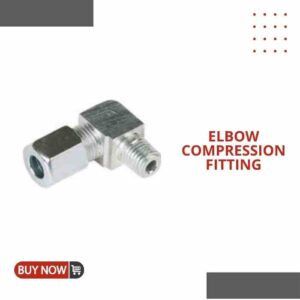
The range of straight connectors lives on the compression straight tube fitting page, and routed runs use the elbow compression fitting in the same series sizes. For brass compression sleeves, see the heavy duty brass ferrules page, and for small-bore lubrication lines the 1/8 tube straight compression fitting covers the fine-thread end of the range. Semi-rigid plastic tubing in small bore sizes pairs with these fittings on the plastic tube page.
Frequently Asked Questions
How tight should I tighten a compression fitting?
Tighten finger-tight until the ferrule just grips, then apply the turns for your tube size. Turns, not feel, set how deep the ferrule bites.
Should I use a torque wrench or the turns method?
The turns method is the primary instruction and needs no instruments. A torque wrench also works: about 15 Nm at 6 mm and about 50 Nm at 22 mm.
Can I re-make a joint after taking it apart?
Yes, about 3-5 times. Tighten 1/4-1/2 turn past the mark made at first assembly, and replace the ferrule if the bite is spent.
Can I mix bodies and ferrules from different brands?
No, cone angles and ferrule heights vary between makers, and mixed parts seat wrongly. Keep the body, nut, and ferrule from one source.
Should I choose zinc-plated steel, stainless steel, or brass?
Zinc-plated carbon steel suits most general hydraulic duty. Stainless steel fits corrosive environments, and brass suits lighter service with softer tubing.
How hard can the tube be?
Tube must be 90 HRB or softer. Harder tube resists the bite, so the ferrule skids instead of cutting its groove.
Why does a new joint leak?
Usually under-tightening or tube movement during assembly. Re-make it 1/4-1/2 turn past the mark; if it still weeps, replace the ferrule.
How do I choose between LL, L, and S?
Match the series to tube size and working pressure: LL to 100 bar, L to 250 bar, S to 630 bar. The derated sizes are listed above.
Are angled and tee shapes available?
Yes, elbows and other routed shapes are covered on the elbow fitting page. For tees and crosses, check current availability through our quote request page.
Who makes these fittings?
IsoHiTech Lubrication Systems, founded in 2023, engineering since 2006, builds and supports every unit. Email inquiry@isohitech.com for specifications and a quotation.