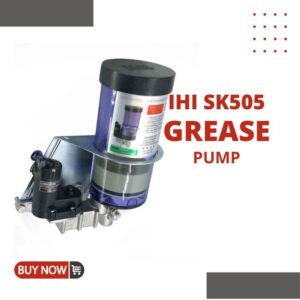
This page covers the electric operated grease pump range by power supply: 12V DC and 24V DC mobile units running from vehicle batteries, and 110V AC and 220 – 240V AC units for workbenches and drum stations. Pressure spans 2,000 – 10,000 psi (140 – 690 bar), and reservoirs run from 0.4 kg to 18 kg tanks and drum-feed supply. For a general selection overview, see the electric grease pump page; for 380V three-phase plant stations, see the DRB-P series, ZPU 08/14/24, and DDB multi-point pages.
Voltage Is the First Selection Variable
The power source at the installation site decides the motor before any performance figure does; a pump built for the wrong supply cannot run at all.
| Motor type | Supply options |
|---|---|
| Permanent magnet DC motor | 12V DC or 24V DC |
| AC induction motor | 110V AC or 220 – 240V AC single-phase |
12V and 24V DC for Mobile Equipment
A 12V DC unit matches the electrical system of light vehicles and small mobile equipment. A 24V DC unit suits heavy trucks and construction machinery; at the same power it draws less current, easing the load on wiring and battery.
110V and 220 – 240V AC for Fixed Stations
Where a wall outlet is available, a single-phase AC induction motor runs workbenches, workshop service points, and drum filling stations. Order the unit for the local mains: 110V AC or 220 – 240V AC.
Pressure, Flow, and Outlet Threads
Working pressure spans 2,000 – 10,000 psi (140 – 690 bar); heavy-duty builds go up to 10,153 psi (700 bar). Flow is 0.3 – 8 g per stroke, or 10 – 500 cc/min by model. Outlets: 1/8″ BSP, 1/4″ BSP, or G1/4. An overflow valve, factory-set or adjustable, protects the hose and fittings.
Grease Grades and Temperature Windows
The pumps handle NLGI 0, 1, and 2 grease, with NLGI 3 on some models. Base oil viscosity runs 46 – 460 cSt at 40°C. Standard units cover -20°C to +70°C; low-temperature variants cover -40°C to +80°C.
Reservoir Sizes and Drum-Feed
The 0.4 kg handheld reservoir suits occasional portable service. Tanks come in 2 kg, 8 kg, and 18 kg, and drum-feed supply draws from a grease drum for high-consumption stations. Size follows the point count and refill interval.
Centralized Lubrication Expansion
One pump can feed 10 – 500+ lubrication points with progressive distributors, injector-style valves, or a dual-line network. Programmable controllers and timer relays trigger the pump cycle, decoupling lubrication from operator availability. The central lubrication system guide compares the options.
Honest Limitations
Washdown and outdoor applications need an enclosure for the site; confirm enclosure options when ordering. Most of these pumps are built for intermittent duty; continuous-run needs confirmation. Cold conditions plus stiff NLGI 2 grease raise suction resistance; check cold setups against a low-temperature variant or a softer grade. Outlet threads differ by model; confirm the fitting when ordering.
If any of these limits touches your application, contact us to review the voltage and grease spec.
Frequently Asked Questions
Should I choose 12V or 24V DC?
Match the pump to the electrical system of the vehicle or machine it serves: light vehicles and small equipment run 12V, heavy trucks and construction machinery run 24V.
DC mobile power or AC stationary power?
Machines and vehicles without a wall outlet take a DC unit; workbenches and drum stations with mains power take a single-phase AC unit. The electric grease pump page gives a broader method.
What should I check for a vehicle installation?
Confirm fusing, relay control, and wire gauge, and check the machine’s nominal voltage before connecting: a 24V feed damages a 12V unit. Battery capacity limits run time.
What about 380V three-phase plant power?
These units are single-phase or DC. For 380V three-phase centralized stations, see the DRB-P series, ZPU 08/14/24, and DDB multi-point pages.
Can the pump run continuously?
Most electric grease pumps are built for intermittent duty cycles, not continuous running. If you need sustained output, confirm the duty rating first.
Will NLGI 2 grease pump in winter?
Cold conditions thicken grease and raise suction resistance, so NLGI 2 gets harder to pump. Low-temperature variants cover -40°C to +80°C, and a softer grade can help.
How should I read the pressure and flow ranges?
Working pressure spans 140 – 690 bar, and heavy-duty builds go up to 700 bar. Flow runs 0.3 – 8 g per stroke or 10 – 500 cc/min.
Which reservoir size fits my application?
Options run from a 0.4 kg handheld reservoir through 2 kg, 8 kg, and 18 kg tanks to drum-feed supply. Pick the size from the point count and refill interval.
Can one pump feed a centralized lubrication system?
Yes. One pump supports 10 – 500+ lubrication points with progressive distributors, injector-style valves, or a dual-line layout; a programmable controller or timer relay sets timing. The central lubrication system guide has the basics.
Who is the supplier behind these pumps?
IsoHiTech Lubrication Systems is a lubrication equipment supplier founded in 2023, engineering since 2006. To spec a voltage variant, grease pairing, or reservoir size, send us your application details at inquiry@isohitech.com.