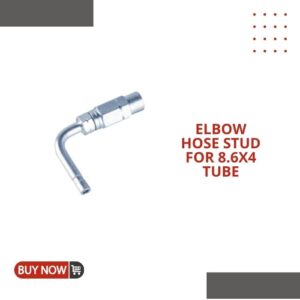
What the Lincoln 226-14091-2 Is
The Lincoln 226-14091-2 is a check valve that screws into an SSV or SSVD outlet port, allowing lubricant to flow in one direction and preventing reverse flow between lubrication cycles.
Lincoln is a trademark of its respective owner.
This is an aftermarket valve, not manufactured, sponsored, or endorsed by Lincoln.
226-14091-2 designations are for cross-reference identification only.
Specifications
| Part number | Aftermarket replacement for Lincoln 226-14091-2 |
| Type | Check valve, non-return, for divider valve outlets |
| Mounting thread | M10 x 1.0 into the outlet |
| Tube connection | Push-in, 6 mm plastic pressure tubing |
| Sleeve | Standard knurled |
| Suffix role | -2: secondary divider, medium pressure |
| Approximate opening pressure | 6-8 bar |
| Pressure context | 350 bar applies to the system / main divider side |
What SSV Actually Means
SSV is the Quicklub secondary divider valve series name, not an abbreviation that should be expanded into other words.
Some listings describe SSV as standing for longer phrases, but that is not accurate; treat SSV as the series designation used by Quicklub for this divider valve family.
When you see SSV in a part number or catalog entry, it simply identifies the secondary divider valve series, and no hidden meaning should be assumed.
The -2, -4, and -6 Versions
The -2 version serves secondary divider valves in medium pressure circuits, using 6 mm tubing and a standard knurled sleeve.
The -4 version serves main divider valves in high pressure circuits, and it uses a reinforced sleeve rather than the standard knurled sleeve.
The -6 version is a 4 mm tubing version for medium pressure circuits, so the choice comes down to tube size and whether the valve sits on a main or secondary divider.
Check Valves and Plugs on SSVD Outlets
On SSVD divider valves, outlets 1 and 2 are hydraulically interconnected, so both openings share the same internal flow path.
When both outlets feed separate lines, each outlet needs its own check valve to prevent backflow from one line affecting the other.
An unused outlet must be closed with a closure plug; leaving it open allows lubricant to escape and breaks the hold-up between cycles.
Oil hold-up matters because the check valve keeps the downstream line filled between cycles, so the next lubrication event starts with immediate pressure at the bearing rather than refilling an empty tube.
Related Parts
For closing an unused SSVD outlet, use a closure plug that threads into the outlet port and seals the opening.
If you are working on the main divider side of a high pressure circuit, review the check valve assembly option that matches the -4 suffix requirements.
Before ordering multiple check valves, consult the SSV divider valve replacement guide to confirm valve count and outlet configuration, or request pricing through the quotation form.
Frequently Asked Questions
What does this check valve do?
It allows lubricant to flow out of the divider valve toward the bearing point. It stops lubricant from flowing back into the divider when the system pauses.
What does SSV mean?
SSV is the Quicklub secondary divider valve series name. It is not an abbreviation, so do not expand the letters into other words.
What is the M10 x 1.0 thread for?
The M10 x 1.0 thread screws into the divider valve outlet port. It is not the tube connection side of the valve.
What tubing fits this valve?
The valve accepts 6 mm plastic pressure tubing on the push-in side. The knurled sleeve is the standard type, not the reinforced version.
What does the -2 suffix mean?
The -2 suffix marks this as the version for secondary divider valves in medium pressure circuits. It pairs with 6 mm tubing and a standard knurled sleeve.
How does -2 differ from -4?
The -2 version fits secondary divider valves with standard sleeves. The -4 version fits main divider valves in high pressure circuits with reinforced sleeves.
What does the opening pressure mean?
Opening pressure is the approximate pressure at which the valve begins to let lubricant through. It is not a rating of the valve body or system pressure limit.
Does every outlet need a check valve?
On SSVD divider valves, outlets 1 and 2 are hydraulically interconnected. If both feed separate lines, each outlet needs its own check valve.
What should I do with an unused outlet?
Close any unused outlet with a closure plug. An open outlet lets lubricant escape and prevents proper hold-up between lubrication cycles.
How do I order or get support?
IsoHiTech Lubrication Systems, founded in 2023, engineering since 2006, builds and supports every unit. Email inquiry@isohitech.com for specifications and a quotation.
You can also request pricing through the quotation form. A support engineer will confirm valve count and outlet configuration.