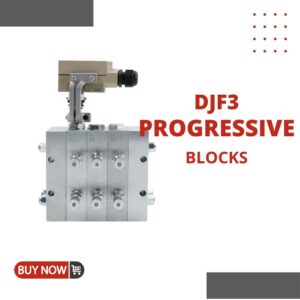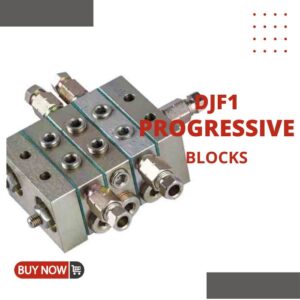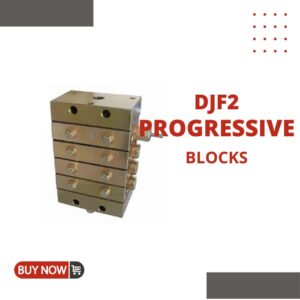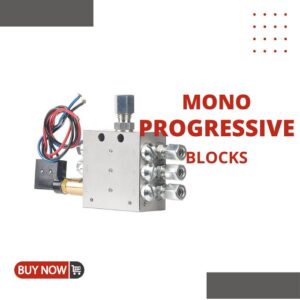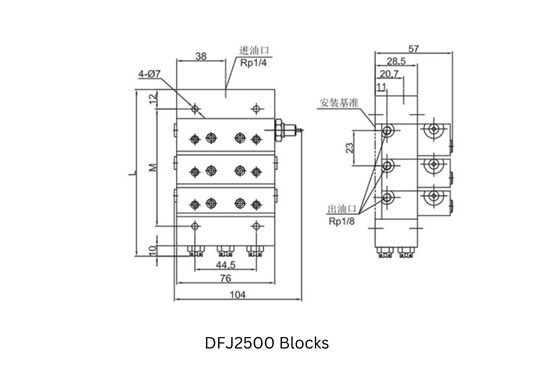
The M2500 progressive block meters grease in a progressive lubrication system: a pump feeds grease in, and internal pistons divide the flow into fixed volumes discharged one after another to each lubrication point. Below are the declared specifications, section-size table, selection guidance, and ordering data for the M2500 range from IsoHiTech Lubrication Systems. For system context, see the progressive lubrication systems page; for the sequence behavior, the working principle of the grease distributor block.
Specifications
| Item | Declared specification |
|---|---|
| Max working pressure | 25 MPa (250 bar) |
| Min working pressure | 1.4 MPa |
| Discharge per outlet | 0.08 to 1.28 ml/cycle, set by section size |
| Lubricant | Oil viscosity N68 or higher; grease NLGI 000 to 2 |
| Working temperature | -20°C to +60°C |
| Max cycle frequency | 60 cycles/min with indicator stem; 200 cycles/min without |
| Sections per block | 3 to 10 |
| Outlet tubing | 6 mm tubing, line length 1.2-3.5 m; or 8 mm tubing, line length 1.5-4.5 m |
Parameter Table: Section Sizes 05 to 40
Each section size displaces a fixed volume per cycle; twin-outlet versions split that dose across two points.
| Section size | Twin outlet ml/cycle | Single outlet ml/cycle | Twin P.N. | Single P.N. |
|---|---|---|---|---|
| 05 | 0.08 | 0.16 | 22500-05T | 22500-05S |
| 10 | 0.16 | 0.32 | 22500-10T | 22500-10S |
| 15 | 0.24 | 0.48 | 22500-15T | 22500-15S |
| 20 | 0.32 | 0.64 | 22500-20T | 22500-20S |
| 25 | 0.41 | 0.82 | 22500-25T | 22500-25S |
| 30 | 0.49 | 0.98 | 22500-30T | 22500-30S |
| 35 | 0.57 | 1.14 | 22500-35T | 22500-35S |
| 40 | 0.64 | 1.28 | 22500-40T | 22500-40S |
How the Block Cycles
Inside the block, pistons displace in strict sequence: each completed movement pilots the next, all outlets discharge in turn within one cycle, and the cycle repeats. The indicator stem travels about 4 mm per cycle; a stopped stem means the sequence has stopped somewhere. Keep one thing clear: the stem proves the block is cycling – not that every downstream line is intact or that grease entered each bearing.
Choosing Sections
Section count equals the number of points served: 3 to 10 sections per block. Section size sets the dose per cycle at that point – match it to the bearing’s required dose and the cycle frequency the system runs at. Mixed sizes in one block are configured at ordering. For spread-out bearing groups, a primary block feeding secondary blocks near each group is the conventional arrangement – an option for long pipe runs, not a performance upgrade.
Ordering Notes
- The indicator stem option fits only section sizes up to size 20.
- Non-standard inlet and outlet diameters are specified at ordering; state them on the enquiry.
- Never plug an outlet. A blocked outlet over-pressurizes and damages the distributor, and in a progressive block one blocked outlet stops the whole sequence – that stop is the fault signal.
- When machining mounting holes, match the two fixing holes of the inlet and end section to the actual block delivered; hole spacing varies slightly.
The Feed Pump
The M2500 block is fed by a grease pump sized to cover the 1.4 MPa minimum and stay within the 25 MPa maximum. On vehicles and mobile machinery, the DZGK 12V/24V DC grease pump is one example. For pump families in general, see the complete guide to grease pumps and the grease pump hub.
What This Page Does Not Claim
Three things, plainly. The indicator stem confirms block cycling only; it is not proof that every bearing received grease. No service-life or reliability figures are published for the M2500, because none exist in the declared data. There is no price or lead time on this page: blocks are configured per machine and quoted case by case.
To configure an M2500 block, send us the point count, dose per point, inlet and outlet threads, and whether you need the indicator stem, or contact us for a quote.
Frequently Asked Questions
What is an M2500 progressive block?
The metering section of a progressive grease system: pistons divide incoming grease into fixed volumes and discharge them in strict sequence. The range covers 3 to 10 sections in sizes 05 to 40, twin-outlet or single-outlet.
How many lubrication points does one block serve?
One per section, so 3 to 10 points; a twin-outlet section feeds two points by splitting its dose.
How do I choose the section size?
Match the dose per cycle to the bearing’s required dose and the cycle frequency. The parameter table lists ml/cycle for each size.
Can section sizes be mixed in one block?
Yes. Mixed sizes are configured at ordering; confirm the layout with your order.
Why must an outlet never be plugged?
A blocked outlet over-pressurizes and damages the distributor, and it stops the whole sequence – that stop is the fault signal.
What does the indicator stem prove?
Only that the block is cycling – it does not prove each downstream line is intact or that grease entered each bearing.
What grease or oil does it handle?
Grease NLGI 000 to 2, or oil with viscosity N68 or higher; working temperature -20°C to +60°C.
How does tubing diameter relate to line length?
Use 6 mm tubing for line lengths of 1.2-3.5 m, or 8 mm tubing for 1.5-4.5 m. Beyond that, pressure losses build; keep secondary blocks near the point groups.
What should I specify when ordering?
Point count, dose per point, section sizes, inlet and outlet threads, and the indicator stem option (available up to size 20); non-standard diameters are specified at ordering.
Send us your point count, dose per point, and thread requirements, and we will quote the configured block – contact us for a quote.