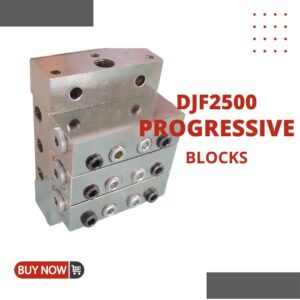
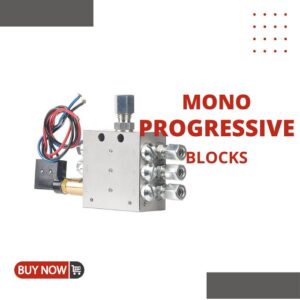
Dual-Line Divider Valves Compatible with ZVB Systems
ZVB is a Bijur Delimon dual-line valve family designation. These valves are aftermarket replacements, not manufactured, sponsored, or endorsed by Bijur Delimon. ZVB designations are for cross-reference identification only.
Naming note: SKF catalogs list this dual-line valve family as SSPQ — ZVB (Vogel) and SSPQ (SKF) are the same dual-line divider valve family, so a parts list citing either code matches this range.
The ZVB block mounts between two supply lines in a dual-line lubrication circuit. A changeover valve alternates pressure between the two main lines. Each valve outlet meters lubricant once per full cycle, then discharges to a bearing point through an individual feed line.
These units fit dual-line systems originally specified with ZVB family divider geometry. The body design uses side-by-side metering pistons inside a machined or cast housing. No electrical power is required at the valve itself. The valves respond only to main line pressure changes.
See the dual-line lubrication systems overview for circuit layout and the dual-line systems guide for start-up and flushing procedures.
What a Dual-Line Valve Does
A dual-line valve receives lubricant from two main lines connected to a central pump station. The pump or a reversing valve shifts pressure from line one to line two. Each pressure shift moves the internal piston assembly in one direction. Lubricant ahead of the piston is discharged to the point being lubricated.
The valve meters a fixed volume on every full cycle. One cycle includes a pressure event in line one followed by a pressure event in line two. The valve does not recycle until the main lines reverse again. This makes the delivered volume per outlet predictable when supply pressure and lubricant viscosity stay within the rated window.
Dual-line valves are suited to centralized systems with many points spread across a machine. Individual outlets can serve different bearing locations while using the same two supply trunks. The valve body does not require a return line, because lubricant moves forward to the bearing, not back to the pump.
The operating principle is covered in detail at the working principle of the grease distributor block.
Pressure and Temperature Ratings
| Parameter | Value |
| Maximum operating pressure | up to 400 bar (5,800 psi) |
| Recommended supply pressure | 20 bar (290 psi) or higher for reliable cycling |
| Minimum pressure differential between lines | 10 bar (145 psi) |
| Standard operating temperature | -20 to +80 C |
| Extended temperature build | -40 to +120 C |
| Ambient temperature rating | -40 to +60 C |
Supply pressure below 20 bar can produce slow or incomplete piston travel. The 10 bar differential is the minimum difference required between the pressurized line and the vented line. Systems with long tubing runs often need higher pump pressure to overcome line losses.
The extended temperature build uses seal and body material changes to widen the operating band. Ambient temperature limits apply to storage and non-operating exposure. Operating temperature limits apply to lubricant flowing through the valve.
Outlets and Metering Sizes
| Outlets per block | Designation |
| 1 | ZVB-1 |
| 2 | ZVB-2 |
| 4 | ZVB-4 |
| 6 | ZVB-6 |
| 8 | ZVB-8 |
The ZVB family uses metering size classes of about 0.5, 1.0, 1.5, and 3.0 cm3 per actuation. Confirm the size code stamped on your valve when ordering. The value listed is the nominal output per outlet per full cycle.
Outlet count determines the maximum number of lubrication points served by one block. Multiple blocks can be connected to the same two main lines. The metering size class is independent of the outlet count.
See the ZVB block product page for available configurations.
Lubricants and Materials
| Item | Standard | Optional |
| Mineral oils | 68 to 1,500 cSt | – |
| Synthetic oils | 68 to 680 cSt | – |
| Greases | NLGI 000 to 3 | – |
| Valve body | carbon steel machined or cast iron | stainless steel |
| Seals | NBR | FKM or EPDM |
Length is about 120 to 180 mm depending on metering volume. Width is 40 to 60 mm. Height is 50 to 80 mm. Weight is about 0.8 to 2.5 kg per block.
NBR seals work for most mineral oils and general greases. FKM suits higher temperatures and some synthetic fluids. EPDM suits certain water-based or phosphate-ester fluids. Confirm lubricant compatibility with the seal material before ordering.
A comparable valve style is shown at Lincoln VSKV2 dual-line valve.
What to Confirm Before Ordering
Check the designation stamped on the existing block, such as ZVB-4 or ZVB-8. Record the metering class from the size code on the valve body. Confirm the thread size and outlet fitting style used at each port.
Measure the center distance between the two main line ports. Verify whether the body is carbon steel, cast iron, or stainless steel. Note the seal material if the system runs above 80 C or uses a non-standard oil.
Count the number of active outlets. Plug unused outlets only with metal plugs that match the port thread. Confirm the pump output pressure and changeover valve type before replacing a valve.
For help matching a ZVB block to your circuit, contact the team with the nameplate details and a photo of the old valve.
Frequently Asked Questions
Will these valves fit my Bijur Delimon dual-line system?
These valves match the ZVB mounting envelope and port spacing used in standard Bijur Delimon dual-line circuits. Confirm the block designation, thread size, and metering code before ordering.
Who manufactures ZVB valves?
These are aftermarket ZVB-compatible valves, not made by Bijur Delimon. The ZVB name is used only for cross-reference identification against the original family designation.
What metering volumes are available?
The available size classes are about 0.5, 1.0, 1.5, and 3.0 cm3 per actuation. Check the stamped size code on your valve to confirm the exact required class.
What pressure does the system need?
Supply pressure should stay at 20 bar or higher for reliable cycling. Maximum operating pressure is rated up to 400 bar with a minimum differential of 10 bar.
How many outlets does each valve have?
ZVB blocks are available with 1, 2, 4, 6, or 8 outlets. The designation number in ZVB-1 through ZVB-8 states the outlet count.
Can they handle grease?
Standard builds are rated for greases from NLGI 000 to NLGI 3. Harder greases may require higher supply pressure and larger main line tubing.
What temperatures can they run in?
Standard seals and bodies run from -20 to +80 C. An extended temperature build runs from -40 to +120 C when specified.
How does a dual-line valve differ from a progressive divider?
A dual-line valve meters all outlets when pressure alternates between two main lines. A progressive divider meters outlets in sequence from a single supply line.
How do I confirm the size code when ordering?
Read the code stamped on the existing valve body and compare it against the 0.5, 1.0, 1.5, or 3.0 cm3 classes. Include a clear photo if the stamping is worn.
Who builds these valves, and how do I get a quotation?
IsoHiTech Lubrication Systems, founded in 2023, engineering since 2006, builds and supports every unit. Email inquiry@isohitech.com for specifications and a quotation.
Contact the team with your block designation and required metering class.