




Why Tire Grades Need Lubrication System?
It is possible to extend the life of tires by automatically lubricating them, preventing them from shutting down prematurely. By preventing contaminants from entering the system during operation, grease can protect the system for a long time. By preserving your equipment and protecting your workforce, you will save money on repairs. Since manual labor is not required, you can operate the machine safely.
ARE YOU LOOKING FOR AN AUTOMATED LUBE SYSTEM?
- Greasing every point on the wheel loader prevents dust and dirt from entering worn surfaces while it is in operation.
- As hard-to-reach lubrication points can be serviced without crawling under or over equipment, there is increased safety.
- By decreasing wear on vital components, an automatic lubrication system improves equipment life.
- With a payback often within the first year, fleets can gain 30 minutes or more of operating time per day.
- LUBRICATION SYSTEM
- Grease Pump
- Progressive Distributor
- Hose

IsoHiTech could provide the complete kit.IsoHiTech also provide the OEM Service for well-known brand in the world
1. Grease Pump
2. Progressive Distributor
3. Hose and fittings
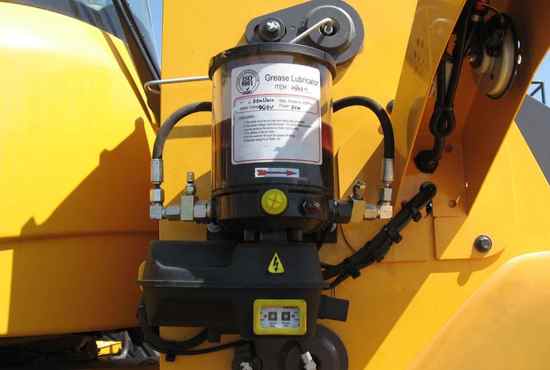
The CSK Lubricator is a multiple-outlet(Maximum up to 3) lubrication unit powered by an electric motor, suitable for use with progressive divider valve systems. This model comes with up to three separate pumping elements and can also be fitted with 24 VDC motors, making it ideal for mobile applications. It has an integral controller or can be managed through our internal timers

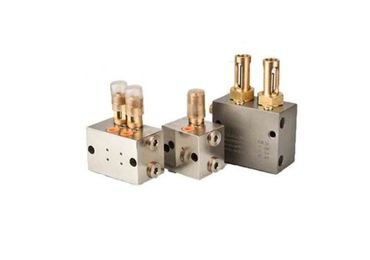
Mono Divider Valves are designed to precisely meter lubricant from 6 up to 20 separate outlets. Each Output is fixed at 0.17cc per cycle, you could increase output when needed by plugging the outlet. Cycle indicator pins offer visible verification of operations and can also be fitted with a switch to signal a system controller.

IsoHiTech provide the hose and couplings
Hose Parameter
O.D.9mm and I.D.4mm
O.D.11mm and I.D.6mm
Grease Nipple Size
Pt 1/8 and Pt 1/4
Related Products


How Lubrication Systems Affect Tire Grades and Performance
Every tire carries three UTQG grades on its sidewall—treadwear, traction, and temperature. These numbers reflect your tire’s chemical formulation, specifically the lubrication systems engineered into the rubber compound. Understanding this connection enables informed tire selection based on actual performance chemistry.
Maintaining this equipment? See our heavy equipment lubrication systems — OEM-compatible, full specifications, fast quoting.
What Are Tire Lubrication Systems?
Tire lubrication systems consist of three categories of chemical additives integrated during manufacturing:
Internal Plasticizers: Processing oils (10-30 phr) that reduce the glass transition temperature (Tg) and control viscoelastic properties. These directly determine the fundamental performance trade-offs between grip, durability, and heat resistance.
Mold Release Agents: Silicone or polymer-based coatings applied to molds during vulcanization. These prevent tire adhesion at curing temperatures (160-180°C) but can temporarily reduce initial traction by 15-20%.
Processing Aids: Chemical additives including stearic acid (1-2 phr), zinc oxide, and synthetic lubricants that facilitate mixing, improve filler dispersion, and enhance vulcanization efficiency.
These three systems work together to determine your tire’s UTQG grades: treadwear ratings (100-800+), traction grades (AA/A/B/C), and temperature resistance (A/B/C).
UTQG System Overview
The Uniform Tire Quality Grading system provides standardized performance metrics mandated by NHTSA. Understanding these grades requires recognizing what they measure—and what they don’t.
Treadwear Rating: Comparative wear life versus a baseline Course Monitoring Tire (CMT) rated at 100. A rating of 400 indicates four times the baseline wear resistance under controlled testing. Market data shows 68% of passenger tires fall between 300-500, with only 12% exceeding 600.
Traction Grade: Straight-line braking performance on wet surfaces, measured as coefficient of friction at 40 mph. Grade AA requires >0.54 g-force on asphalt, Grade A requires >0.47, Grade B >0.38, and Grade C represents the minimum acceptable performance. Currently, 77% of market tires achieve Grade A, while 15% earn AA.
Temperature Grade: Heat resistance at sustained high speeds. Grade A tires withstand speeds over 115 mph, Grade B covers 100-115 mph, and Grade C represents the minimum standard of 85-100 mph. Approximately 62% of current market tires achieve Grade A.
These grades reflect the outcomes of lubrication system choices made during tire formulation. The chemistry determines the grades—not the other way around.
Internal Plasticizers: The Primary Performance Determinant
Internal plasticizers represent the most critical lubrication category for UTQG performance. These materials function as molecular lubricants within the rubber matrix, fundamentally controlling the trade-offs between competing performance objectives.
Chemical Composition and Function
Modern tire compounds incorporate 10-30 parts per hundred rubber (phr) of plasticizing oils. Traditional formulations used petroleum-derived aromatic oils, but environmental regulations—particularly EU restrictions on Polycyclic Aromatic Hydrocarbons implemented in 2010—drove the industry toward Treated Distillate Aromatic Extracts (TDAE) and bio-based alternatives.
Mechanism of Action: Plasticizers reduce intermolecular forces between polymer chains, increasing chain mobility. This mobility directly controls the compound’s glass transition temperature (Tg)—the critical temperature where the material transitions from glassy (rigid) to rubbery (flexible) behavior.
The Tg determines performance across all operating conditions:
| Compound Type | Tg Range | Typical Oil Content | Primary Application |
|---|---|---|---|
| High-performance | -40°C to -50°C | 25-30 phr | Maximum wet grip, AA traction |
| All-season | -30°C to -40°C | 18-25 phr | Balanced performance |
| Long-wearing | -15°C to -25°C | 10-15 phr | High treadwear ratings |
Key Engineering Principle: Lower Tg increases molecular mobility at operating temperatures, which simultaneously:
- Increases hysteresis (wet grip) ✓
- Increases heat generation (thermal challenge) ✗
- Reduces abrasion resistance (lower treadwear) ✗
This fundamental trade-off explains why you cannot independently optimize all three UTQG grades with conventional plasticization approaches.
Specific Plasticizer Types and Their Effects
Aromatic Oils (TDAE): Traditional choice for performance compounds. Molecular weight typically 400-600 g/mol, with 20-30% aromatic content. These oils provide:
- Excellent low-temperature flexibility
- Strong solvency for elastomers
- Efficient Tg depression (15-20°C reduction at 20 phr loading)
However, TDAE oils increase hysteresis across the entire temperature spectrum, generating heat at highway speeds. This limits their use in compounds targeting Grade A temperature resistance.
Naphthenic Oils: Lower aromatic content (3-15%), molecular weight 300-500 g/mol. These provide:
- Moderate Tg depression (10-15°C at 20 phr)
- Lower hysteresis at high frequencies (better rolling resistance)
- Improved thermal stability
Naphthenic oils are preferred for touring tires balancing longevity with acceptable wet performance.
Bio-Based Oils: Emerging alternatives derived from soybean, canola, or sunflower sources. Epoxidized soybean oil (ESO), for example, provides:
- Equivalent processability to petroleum oils
- Tg depression comparable to TDAE (15-18°C at 20 phr)
- Superior oxidative stability due to natural antioxidant retention
- 8-12% improved aging resistance in accelerated testing
Industry studies on optimized bio-oil formulations report modestly higher treadwear ratings at comparable traction grades. This performance advantage stems from the oils’ molecular structure, which reduces polymer chain scission during oxidative aging.
Quantitative Impact on Compound Properties
The relationship between plasticizer content and mechanical properties follows predictable trends that tire engineers use for formulation optimization:
Hardness Variation:
Oil Content:  15 phr  →  20 phr  →  25 phr  →  30 phr
Shore A:      68      →  64      →  60      →  56
Treadwear:    600     →  450     →  350     →  250
Traction:     A       →  A       →  AA      →  AA
Modulus Changes: Increasing plasticizer from 15 to 30 phr typically reduces:
- 100% modulus by 25-30%
- 300% modulus by 18-22%
- Tensile strength by 12-15%
These reductions directly translate to decreased abrasion resistance and lower treadwear ratings.
Hysteresis (tan δ) at Wet-Relevant Temperatures: At 0°C (simulating wet pavement contact):
- 15 phr oil content: tan δ = 0.18-0.22
- 25 phr oil content: tan δ = 0.28-0.32
This 40-50% increase in hysteresis explains why heavily plasticized compounds achieve AA traction grades while lightly plasticized compounds struggle to reach even Grade A.
Advanced Plasticization Strategies
Dual-Oil Systems: High-performance formulations increasingly employ two plasticizers with different molecular weights:
- Low MW oil (300-400 g/mol): Provides cold-temperature flexibility and wet grip
- High MW oil (600-800 g/mol): Maintains high-temperature stiffness and reduces volatility
This approach partially decouples wet grip from temperature resistance, enabling compounds that achieve AA traction with Grade A temperature ratings—a combination difficult with single-oil systems.
Functionalized Liquid Polymers: Next-generation systems use reactive liquid styrene-butadiene rubber (L-SBR) as combined plasticizer and polymer component:
- Terminal functional groups (hydroxyl or carboxyl) react with silica coupling agents
- Provides plasticization during mixing (12-18% energy reduction)
- Becomes chemically bonded during vulcanization (improved mechanical properties)
- Eliminates long-term migration and blooming issues
Continental AG’s research shows that reactive plasticization enables 30% lower rolling resistance with 10% higher wet grip simultaneously—escaping the traditional trade-off through chemistry.
Key Takeaway: Internal plasticizers are the primary determinant of UTQG performance. Oil content variations of just 5 phr can shift treadwear ratings by 100-150 points and change traction grades from A to AA. This sensitivity explains why tire formulation is as much art as science.
Processing Aids: Enabling Uniform Compound Properties
While internal plasticizers determine fundamental performance characteristics, processing aids ensure those characteristics are uniform throughout the tire structure. This uniformity is critical for achieving rated UTQG performance.
Stearic Acid: The Essential Processing Lubricant
Stearic acid (typically 1-2 phr) serves multiple functions in tire compounds:
During Mixing: Acts as a lubricant between rubber and mixing equipment, reducing friction and lowering processing temperatures. This prevents premature cross-linking (scorch) and ensures complete filler dispersion.
During Vulcanization: Reacts with zinc oxide to form zinc stearate, which functions as:
- A vulcanization activator (improves cross-link efficiency)
- An internal lubricant (reduces mold adhesion)
- A processing aid (improves flow in the mold cavity)
Quantitative Impact: Research published in Rubber Chemistry and Technology demonstrates that stearic acid content variations of just 0.5 phr alter:
- Compound viscosity by 8-12% (affecting processability)
- Modulus by 6-10% (affecting mechanical properties)
- Cross-link density by 5-8% (affecting durability and heat resistance)
This sensitivity explains why precision in stearic acid dosing is critical for consistent UTQG performance.
Synthetic Processing Aids
Modern formulations increasingly incorporate synthetic processing aids beyond traditional fatty acids:
Peptizing Agents: Break down long polymer chains during mixing, reducing viscosity and improving filler dispersion. Common agents include:
- Pentachlorothiophenol (PCTP): 0.1-0.3 phr loading
- 2,2′-Dibenzamidodiphenyl disulfide (DBD): 0.2-0.5 phr loading
These materials improve carbon black and silica dispersion quality, creating more uniform compound properties that translate to consistent wear patterns and higher treadwear ratings.
Dispersion Promoters: Reduce filler agglomerate size and improve distribution uniformity. Typical loading: 1-3 phr. These additives are particularly critical in silica compounds, where poor dispersion creates weak points that initiate premature failure.
Impact on UTQG Consistency
Processing aids don’t directly change target UTQG grades, but they ensure you actually achieve those targets consistently. Poor filler dispersion creates:
- Local hard spots (premature wear initiation, 15-25% treadwear reduction)
- Inconsistent grip (traction grade variability between test samples)
- Thermal weak points (temperature grade failures in extreme testing)
Premium tire manufacturers invest heavily in processing optimization to minimize this variability. The result is tires that consistently meet or exceed their UTQG ratings rather than barely passing minimum thresholds.
Key Takeaway: Processing aids function as the “quality control” component of lubrication systems. They don’t determine your tire’s target performance but ensure that performance is delivered uniformly across the entire tread.
Mold Release Systems: Temporary Traction Effects
Mold release agents represent a specialized lubrication category that affects initial tire performance but not final UTQG grades.
Chemical Formulations
Silicone-Based Systems: Traditional mold releases use polydimethylsiloxane (PDMS) silicones with molecular weights of 10,000-50,000 g/mol. These provide:
- Excellent thermal stability at curing temperatures (160-180°C)
- Low surface energy (prevents tire adhesion to mold)
- Easy application and consistent film formation
Drawback: Silicones transfer readily to the tire surface, creating a slippery film that reduces initial traction by 15-20% for the first 50-100 miles.
Water-Based Polymer Systems: Modern alternatives use aqueous dispersions of fluoropolymers or modified polyurethanes:
- Reduced transfer to tire surface (5-8% traction reduction)
- 90% lower VOC emissions
- Improved worker safety
Semi-Permanent Coatings: The most advanced systems apply durable coatings directly to mold surfaces, eliminating per-cycle application:
- Minimal tire surface contamination (<3% traction reduction)
- 15-30 tire cycle durability before recoating
- Higher initial cost but lower operational expense
Why UTQG Grades Don’t Reflect This Effect
NHTSA traction testing assumes a “broken-in” tire where mold release residue has worn away. Test protocols include:
- Minimum 200-mile break-in period before testing
- Surface preparation procedures to ensure clean rubber contact
This means the temporary traction reduction from mold release does not affect your tire’s official traction grade. However, it does affect your real-world experience during the first few hundred miles.
Engineering Implication: If you purchase tires with AA traction grades, expect them to feel slippery initially. This is normal and temporary—not a quality defect.
How Lubrication Systems Determine Each UTQG Grade
Treadwear: Abrasion Resistance versus Molecular Mobility
Treadwear performance stems from abrasion resistance, which depends on compound hardness and resilience. Lubrication systems control both properties through their effect on molecular mobility.
The Fundamental Mechanism:
Hard compounds resist abrasion because:
- Reduced contact patch deformation (less rubber flexing per revolution)
- Higher elastic recovery (less energy dissipated as wear debris)
- Better resistance to tearing at the microscopic level
Achieving hardness requires limiting plasticizer content, typically 10-15 phr for compounds targeting 600+ treadwear ratings.
Quantitative Relationship:
Laboratory abrasion testing (Pico abrader, ASTM D2228) shows:
Plasticizer Content  →  Relative Abrasion Loss  →  Treadwear Rating
10 phr               →  100 (baseline)           →  700-800
15 phr               →  125                      →  560-640
20 phr               →  165                      →  425-500
25 phr               →  220                      →  320-380
30 phr               →  290                      →  240-290
This near-linear relationship explains why you cannot achieve both high treadwear and high traction grades simultaneously with conventional formulation approaches.
Advanced Solutions:
Silica-based compounds partially escape this trade-off through a different reinforcement mechanism. Silica particles chemically bond to rubber chains via silane coupling agents (typically TESPT or NXT), creating a reinforced network that maintains hardness without excessive plasticizer reduction.
Data from Continental AG shows that optimized silica compounds achieve:
- Treadwear ratings 15-20% higher than carbon black equivalents
- Equivalent or better traction grades (AA capability)
- This advantage at identical plasticizer loading levels
The mechanism involves the formation of covalent bonds between silica particles and polymer chains, creating a more durable structure that resists abrasion even with softer base compounds.
Case Study – Real-World Examples:
Michelin Pilot Sport 4S (performance tire):
- Oil content: 25-28 phr (estimated from patent data)
- Treadwear rating: 300
- Traction grade: AA
- Strategy: Prioritize grip, accept lower treadwear
Michelin Defender T+H (touring tire):
- Oil content: 12-15 phr (estimated)
- Treadwear rating: 820
- Traction grade: A
- Strategy: Maximize longevity, maintain adequate wet performance
Both tires use Michelin’s proprietary silica technology, but vastly different lubrication strategies based on target application.
Traction: Hysteresis and Wet Friction Generation
Your tire’s traction grade reflects its ability to generate friction on wet surfaces through hysteretic energy dissipation. Plasticizers directly control this mechanism by modifying the compound’s viscoelastic response.
The Physics of Wet Grip:
When your tire contacts wet pavement, microscopic surface asperities (roughness) deform the rubber. The energy absorbed during compression but not recovered during expansion converts to heat—this hysteretic loss creates friction that stops your vehicle.
High hysteresis requires molecular mobility at the relevant temperature and frequency. For wet traction testing (40 mph on wet surfaces), the relevant conditions are:
- Temperature: 0-20°C (accounting for evaporative cooling)
- Frequency: 100-1000 Hz (from micro-scale deformations)
Lubrication’s Role:
Plasticizers lower Tg, increasing molecular mobility at these critical temperatures. The effect is quantifiable through dynamic mechanical analysis (DMA):
Compound Type     Tg      tan δ at 0°C    Wet μ    UTQG Grade
Low plasticizer  -20°C    0.18            0.44     B
Medium           -35°C    0.25            0.51     A
High             -45°C    0.32            0.58     AA
Where μ represents coefficient of friction and tan δ measures hysteresis.
Achieving AA Traction:
To earn the AA grade (>0.54 g-force on asphalt), compounds typically require:
- Tg below -40°C
- Plasticizer content 25-30 phr
- Silica reinforcement for temperature-independent grip
- Specific polymer selection (solution SBR with high vinyl content)
The challenge is that these same characteristics generate excessive heat, potentially compromising temperature grades.
The Silica Advantage:
Silica-based compounds achieve superior wet grip through a synergistic mechanism:
- Silica particles increase surface area for water interaction (hydrophilic)
- Coupling agents create flexible linkages between silica and rubber
- These flexible linkages increase hysteresis at low temperatures (wet grip)
- But maintain low hysteresis at high temperatures (rolling resistance)
This frequency-dependent behavior explains how modern tires achieve AA traction without proportional fuel economy penalties.
Key Takeaway: AA traction grades are impossible without plasticizer content exceeding 25 phr. If you see AA-rated tires claiming long tread life (>500 treadwear), they employ advanced silica technology that costs significantly more to produce.
Temperature Resistance: Managing Heat Generation
Temperature grades reflect your tire’s ability to resist thermal degradation at sustained high speeds. Lubrication systems directly influence both heat generation and compound thermal stability.
Heat Generation Mechanisms:
Two primary sources generate heat in operating tires:
- Hysteretic heating from cyclic tread deformation as the tire rotates
- Viscous heating from internal compound flow during sidewall flexing
Both intensify with increasing plasticizer content because softer compounds exhibit:
- Higher deformation per load cycle (more flexing)
- Greater hysteresis across the temperature spectrum (more energy loss)
- Reduced thermal conductivity (slower heat removal)
Quantitative Heat Generation:
Laboratory wheel testing at 100 mph on 1.7-meter diameter drums measures steady-state tire temperatures:
Plasticizer     tan δ at 60°C    Heat Generation    Max Speed    Grade
15 phr          0.08             Baseline           >115 mph     A
20 phr          0.11             +18%               100-115      B
25 phr          0.14             +35%               100-115      B
30 phr          0.18             +55%               85-100       C
This data explains the observed negative correlation between traction and temperature grades in market analysis.
Engineering the Trade-off:
Achieving both AA traction (requiring high plasticizer for cold-temperature grip) and Grade A temperature (requiring low plasticizer to limit heat) demands sophisticated lubrication strategies:
Dual-Temperature-Response Polymers: Advanced formulations use specialized polymers with:
- Low Tg for wet grip (-40°C to -50°C)
- High modulus at elevated temperatures (60-80°C operating range)
- Achieved through specific molecular architecture, not just plasticization
Selective Plasticization: Instead of uniformly plasticizing the entire compound, advanced formulations:
- Use low-MW oils for surface layers (wet grip)
- Use high-MW or functionalized oils for base compound (heat resistance)
- Create a gradient that optimizes both characteristics
Enhanced Thermal Conductivity: Some premium formulations incorporate:
- Graphite or graphene nanoplatelets (0.5-2 phr)
- 25-40% improved thermal conductivity
- Faster heat removal despite higher generation rates
Bridgestone’s Tokyo Technical Center reports that these approaches reduce compound temperature by 12-15°C at 100 mph while maintaining AA traction capability.
Key Takeaway: The traction/temperature trade-off is fundamental to lubrication chemistry. Conventional approaches cannot optimize both simultaneously. Premium tires achieving AA traction with Grade A temperature use specialized polymer architectures costing >$50/kg versus $2-3/kg for standard polymers. This explains the 30-50% price premium for ultra-high-performance tires.
Practical Tire Selection Based on Lubrication Chemistry
Understanding lubrication systems enables you to select tires matching your actual requirements rather than responding to marketing claims.
Matching Lubrication Strategy to Application
For Maximum Longevity (Fleet/High-Mileage Applications):
Target specifications:
- Treadwear rating: 600-800
- Traction grade: A minimum
- Temperature grade: A or B acceptable
These specifications indicate:
- Low plasticizer content (10-15 phr)
- Hard compound (Shore A 65-70)
- Minimal wet performance compromise
Expect: 60,000-80,000 mile service life, adequate wet traction, firm ride quality.
For Balanced Performance (Daily Driving):
Target specifications:
- Treadwear rating: 400-600
- Traction grade: A
- Temperature grade: A preferred
These indicate:
- Moderate plasticization (18-22 phr)
- Balanced properties (Shore A 60-65)
- Often silica-based for efficiency
Expect: 45,000-60,000 mile service life, good wet traction, comfortable ride, reasonable fuel economy.
For Maximum Safety (Performance/Wet Climate):
Target specifications:
- Treadwear rating: 300-400
- Traction grade: AA required
- Temperature grade: A required
These indicate:
- High plasticizer content (25-30 phr)
- Advanced silica compounds
- Sophisticated thermal management
Expect: 30,000-40,000 mile service life, excellent wet grip, higher fuel consumption, premium pricing.
Key Questions for Retailers
Ask specific technical questions to evaluate tire technology:
- “What reinforcing filler system does this tire use?”
- Carbon black = Traditional approach
- Silica = Modern technology with better wet/efficiency balance
- Hybrid = Compromise between cost and performance
- “What is the compound’s approximate Shore A hardness?”
- 65-70 = Long-wearing, firmer ride
- 60-65 = Balanced
- 55-60 = Performance-oriented, softer
- “Has this tire been independently tested for hydroplaning resistance?”
- UTQG traction doesn’t measure hydroplaning
- Independent test data fills this critical gap
- “What plasticizer technology does the manufacturer use?”
- Bio-based oils = Sustainability plus potential performance advantages
- TDAE = Traditional effective approach
- Naphthenic = Efficiency-optimized
Reading Between the Marketing Lines
Marketing claims translate to lubrication strategies:
“Maximum wet grip” → Heavy plasticization, expect lower treadwear and potential temperature limitations
“Long-lasting tread life” → Minimal plasticization, expect firmer ride and reduced wet performance
“Low rolling resistance” → Optimized for efficiency, likely silica-based with specialized plasticizers
“All-season versatility” → Moderate plasticization attempting to balance competing requirements
Frequently Asked Questions
Why do performance tires wear faster than touring tires?
Performance tires use heavily plasticized compounds (25-30 phr oil content) to achieve maximum wet grip through high hysteresis. This same property that generates friction on wet surfaces also causes increased abrasion during normal operation. The trade-off is fundamental: you cannot maximize both grip and longevity with conventional lubrication chemistry. Touring tires prioritize durability through harder, less-plasticized compounds (10-15 phr), deliberately sacrificing some wet performance for extended tread life.
Can I improve my tire’s traction by applying external treatments?
No. Your tire’s traction characteristics are determined by internal plasticizers chemically bonded within the rubber matrix during manufacturing. These cannot be supplemented or modified after production. Products claiming to enhance grip either provide no measurable benefit or actually reduce traction by leaving surface residues. The plasticizing oils controlling your tire’s Tg and hysteresis are locked within the compound structure and cannot be influenced by external applications.
How do bio-based plasticizers compare to petroleum-derived oils?
Current-generation bio-based oils (epoxidized soybean oil, modified vegetable oils) match or exceed petroleum alternatives in most performance metrics. Research shows bio-oils provide equivalent Tg depression, comparable hysteresis characteristics, and 8-12% improved oxidative stability due to natural antioxidant retention. Some formulations achieve 5-10% higher treadwear ratings than petroleum equivalents at identical traction grades. The primary barrier is cost—bio-oils typically cost 15-25% more—explaining their gradual rather than immediate adoption.
Why do new tires feel slippery for the first few miles?
New tires carry residual mold release agents on their surface from the manufacturing process. These silicone or polymer-based lubricants prevent tire adhesion to molds during vulcanization but transfer to the tire surface, reducing initial traction by 15-20%. Modern water-based systems reduce this effect to 5-8%, but some break-in period remains necessary. This temporary condition does not affect UTQG grades because testing protocols include break-in procedures. After 50-100 miles of normal driving, mold release residue wears away and full traction develops.
How does tire age affect lubrication system performance?
Plasticizing oils undergo oxidative degradation over time, regardless of tire use. This chemical aging causes gradual compound hardening (oil molecules break down or volatilize), increased brittleness (loss of molecular mobility), and reduced grip capability (higher Tg, lower hysteresis). Research indicates measurable property changes after 5-6 years, with significant degradation by 10 years. This explains manufacturer recommendations for 10-year replacement regardless of remaining tread depth. Storage in cool, dark conditions slows but doesn’t eliminate this aging process.
Conclusion
Your tire’s UTQG grades directly reflect the lubrication systems engineered into its rubber compound. Internal plasticizers control the fundamental trade-offs between treadwear, traction, and temperature resistance by modifying the compound’s glass transition temperature and viscoelastic properties. Processing aids ensure these properties are uniform throughout the tire structure. Mold release systems affect only initial performance, not final grades.
Understanding these relationships reveals that tire selection is not about finding products that excel in all categories—the chemistry makes this impossible with conventional approaches. Instead, informed selection requires matching the lubrication strategy (revealed by UTQG grades) to your specific requirements: longevity, wet safety, or performance capability.
Premium tires commanding higher prices typically employ sophisticated lubrication technologies—bio-based plasticizers, functionalized polymers, dual-oil systems—that partially escape traditional trade-offs. These technologies explain how modern tires achieve performance combinations impossible a decade ago.
When evaluating tires, look beyond marketing claims to the technical indicators: UTQG grades reveal lubrication choices, which determine real-world performance. A tire rated 300 treadwear with AA traction tells you it uses heavy plasticization optimized for wet safety at the expense of longevity. A tire rated 700 treadwear with A traction indicates the opposite strategy. Neither is superior—they serve different needs.
Your role is to understand these chemical realities and select accordingly. Armed with knowledge of how lubrication systems determine tire performance, you can make evidence-based decisions that optimize safety, cost, and capability for your specific application.
Related Lubrication Components
- Dozers Lubrication — construction dozers
- Haul Trucks Lubrication — mining haul trucks
- Multiply Injectors — injection systems
- Lubrication Injectors — distribution injectors
- Pipe and Hose — pipe and hose routing
- Reduce Coupling — coupling fittings
- Elbow Coupling — elbow connectors
- Hose Protection Cover — hose covers
- Grease Lubrication Filter — system filters
- Open Gear Lubrication — open gear systems
Frequently Asked Questions
- Treadwear rating: This number shows how quickly the tire will wear out compared to a reference tire.
- Traction rating: A letter grade (AA, A, B, or C) indicating the tire’s wet braking performance.
- Temperature rating: A letter grade (A, B, or C) shows how well the tire resists heat and dissipates it.
Check your tires every month and before long trips. Look for proper inflation, tread depth, and any visible damage.
It’s possible for skilled people to mount tires using the right tools and methods. However, it’s usually better to have professionals do it. This ensures safe and correct installation.
- Tread depth below 2/32 inch (1.6 mm)
- Visible damage, such as cuts, bulges, or foreign objects in the tread or sidewall.
- Uneven wear or vibration, which may indicate a balance or alignment issue
- Age, as tires typically need replacement after 6 to 10 years, regardless of tread depth
In general, tire lubrication needs do not change significantly based on climate. However, in extremely cold conditions, some lubricants may thicken, making application more difficult. Use lubricants meant for your tire type. Follow the manufacturer’s advice on how to apply and store them.