
Lubrication Injectors
Single-line injectors are the metering points of a centralized lubrication system. Each injector is a self-contained positive-displacement unit: when the main line pressurizes, it delivers one measured shot of oil or fluid grease to its bearing, then resets for the next cycle. A visible indicator pin moves once per cycle, so a walk-by inspection confirms every point is feeding — no flow guesses, and no dead point discovered at teardown.
IsoHiTech catalogs five injector series on this page: SL-1/SL-32 inline units, DLX manifold injectors, ZEM positive-displacement injectors, FL33 grease injectors, and the CX-1 six-way grease block. Together they cover oil and grease service from machine tools to heavy production equipment.
Choosing an Injector
Match the injector to the lubricant, the mounting, and the number of points before comparing part numbers:
| Series | Service | Mounting | Cycle indicator | Typical duty |
|---|---|---|---|---|
| SL-1 / SL-32 | Oil and fluid grease | Inline | Yes | Machine tools, spindles, chains |
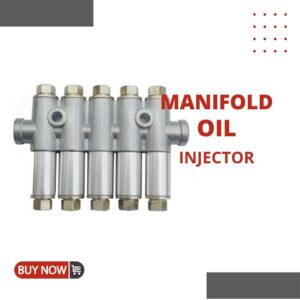
| DLX | Oil | Manifold block | Yes | Multi-point oil feed on production machinery |
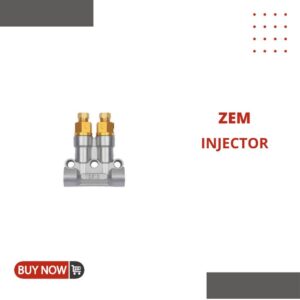
| ZEM | Oil or grease | Inline | Yes | General industrial metering points |
| FL33 | Grease | Inline | Yes | Heavy bearings, crushers, conveyors |
| CX-1 6-way | Grease | Six-outlet block | Yes | Compact multi-point grease distribution |
Output per cycle is set by each unit’s displacement — adjustable models are set once and locked, so shot counts stay repeatable when lubrication schedules are written per cycle.
Cataloged Injector Series
| Series | What it is | Catalog page |
|---|---|---|
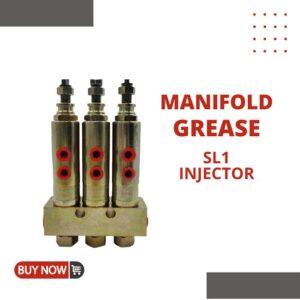
| SL-1 Injector | High-pressure single-line metering unit for oil and grease circuits | SL-1 Injector |
| DLX | Injectors ganged on one manifold for centralized oil feed | DLX manifold oil injectors |
| ZEM | Positive-displacement injectors for measured oil or grease delivery | ZEM injectors |
| FL33 | Grease-service metering for heavy machinery points | FL33 injectors |
| CX-1 6 Way | Item #02.940.1.G.06 — six outlets from one grease block | CX-1 Grease Injector 6 Way |
Injector FAQ
How is an injector different from a progressive divider block?
An injector meters independently: each unit fires its own shot when the line pressure cycles, and one blocked point does not starve the others. A progressive divider block moves lubricant in fixed sequence — a blocked outlet stops the whole chain. Single-line injector systems are chosen where points are many, spread out, or individually checked.
Oil or grease — which series do I need?
Follow the machine builder’s lubrication chart. DLX manifold units are oil service; FL33 and the CX-1 block are grease service; SL-1 and ZEM series cover oil and fluid grease. Where the chart calls fluid grease (NLGI 000 to 0 class), an oil-capable injector is normally specified; for stiff NLGI 2 grease, use a grease-service unit.
What does the cycle indicator show?
The indicator pin moves once per discharge cycle. On a walk-by, every pin at every point should have moved after the system cycle — a still pin means a blocked line, an empty reservoir, or a failed injector, and it pinpoints which point needs service before damage shows.
Can one injector feed several points?
Inline injectors feed one point each. Where several points sit close together, the CX-1 six-way block feeds six outlets from one unit, and DLX manifold injectors gang multiple outlets on a common block — fewer parts to mount, fewer to inspect.
How do I specify output per point?
Start from each bearing’s lubricant demand per cycle in the machine manual, then pick the model whose per-cycle output meets it at the number of cycles your shift schedule runs. Send the point list with demanded outputs through the contact page and IsoHiTech will map every point to a series and model.
How Injectors Meter Oil and Grease
A lubrication injector is a self-contained metering valve for single-line systems: line pressure rises, the injector’s internal piston trips past its threshold and dispenses a measured shot to its bearing, then the line vents and the injector recharges for the next cycle. That pressure-and-vent rhythm is the architecture’s signature — dispense on pressure, reset on vent, repeat on the pump’s timer. Because each injector meters independently, one line serves many points, and each point can still get its own dose: adjustable models set the shot with a screw or nut, fixed-output models take their dose from the metering hardware itself.
Two families cover the two media:
- Grease injectors are built for the thick side: models in this class handle grease up to NLGI 2, with pressure capability set by each model’s rating. The SL1 grease injector page decodes the most-cited series, including adjustment.
- Oil injectors in the same single-line architecture meter fluid for bearings, chains, and machine points — same cycle, thinner media, flow-oriented sizing.
This parallel, point-by-point metering is what separates injectors from progressive distributors: divider blocks stroke in sequence (one line blocks, all stop), while injectors fire independently during the pressure cycle. Choosing between the two architectures — and sizing the lines — is covered end to end in the single-line injector system guide.