



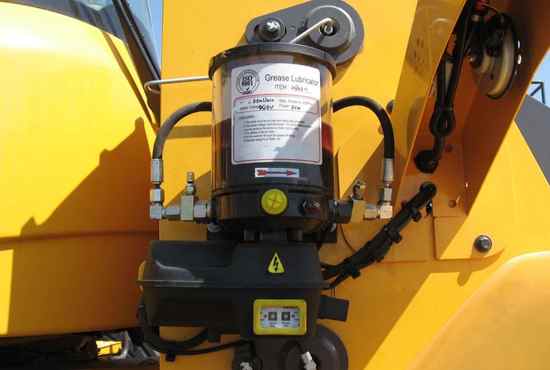
Why The Heavy Duty Equipment Need The Lubrication System?
A major cause of heavy-duty equipment downtime and unnecessary maintenance processes is bearing broken down caused by lack of or over grease.
An automatic lubrication system with self-monitoring for heavy-duty machinery could reduce wear and increases equipment reliability. IsoHiTech could provide flexible units or devices for your choice and help you avoid the repair cost.
These industry pages cover application-specific machine layouts. For centralized system design, ROI, and architecture, start with our centralized grease lubrication systems guide and automatic lubrication hub.
The Advantage Of The Lubrication System For The Heavy Duty Equipment
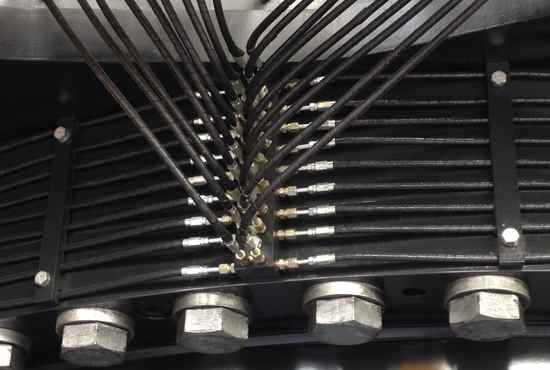
An automatic lubrication system could extend the life of and increase heavy-duty equipment operating efficiency and safety in the field. It increases productivity, reduces downtime, and increases operator safety. It could avoid over-lubricating by hand operation. The over-lubricating could cause the bearing to work in a high-pressure and dirty environment. IsoHiTech could provide the best price pump to let your heavy duty equipment work in good situation.
Vs. Manual Lubrication
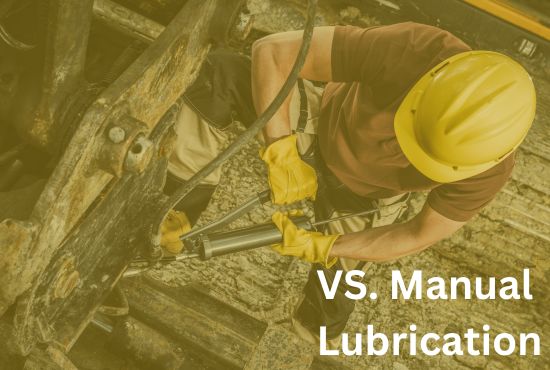
Manual systems require trained maintenance personnel to correctly apply grease, recognizing its importance. It typically takes an hour to lubricate each point, leading to bearing damage over time due to delayed maintenance. Manual lubrication is time-consuming for operators. In contrast, automatic lubrication systems supply oil at set intervals, increasing equipment lifespan, reducing downtime, minimizing human involvement, and potentially decreasing the need for part replacements.
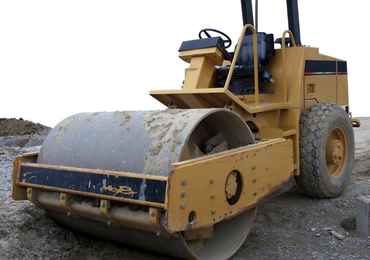
Wheel loaders mainly work on their front-middle part. Despite few lubrication points, frequent movements lead to overheating and wear. We recommend a small 2-4kg lubrication system for automatic lubrication.

Mining crushers, often used outdoors in harsh environments, suffer from bearing and transmission wear. Traditional manual pumps fail to ensure sufficient lubrication. Electric pumps solve this by providing timely and precise lubrication to transmission parts.

Port equipment, with intense workloads, suffers from transmission wear, making manual lubrication complex and unsafe. Routine maintenance fails to lubricate during operation. Our dual-line system addresses this, reducing regular maintenance frequency.
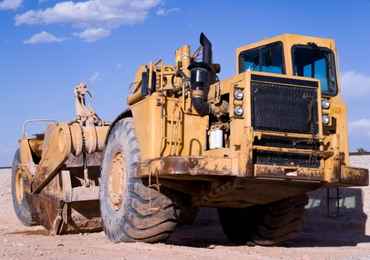
This system targets timely and precise lubrication of bearings and hydraulic cylinder joints, reducing malfunctions and ensuring smooth operation.
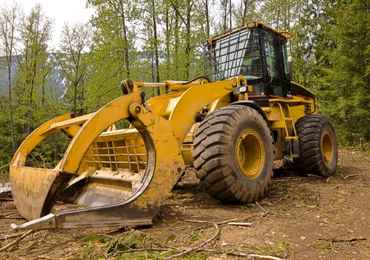
Used in remote and often sub-zero environments, it’s challenging to manually lubricate transmission parts. Automatic systems allow operators to monitor lubrication from the cabin.

Traditional logging machines use manual lubrication; more manufacturers are now equipping them with automatic lubrication devices.
LUBRICATION SYSTEM FOR THE HEAVY-DUTY MACHINERY (3)
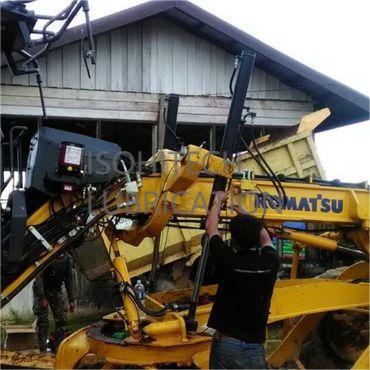
CSK electrical grease pump is specially designed for heavy-duty machinery. It has a high protection level and could work in very harsh environments. It maximum has 3 outlets with an internal control timer and has 2,4,6,8Kg reservoir could be choice.
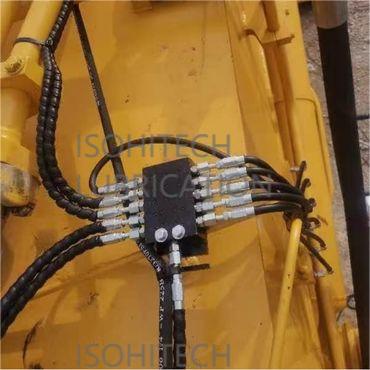
MONO series blocks are a special design for heavy-duty machinery, the operator could adjust the discharge vol. by plugging one of the outlets to 2X or 3X to increase the next outlet discharge. The option outlets is from 6 to 20.
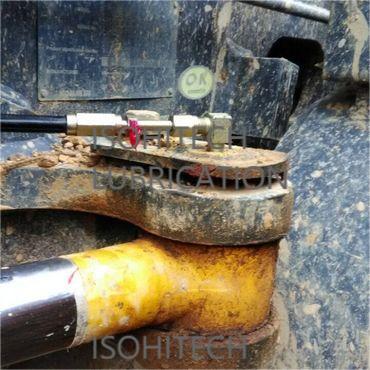
The operator could make the high-pressure hose kit in the field. It could be cut at any length, then fix the hose end to the hose. It’s very faster for the operator.IsoHiTech has enough fittings that are suitable for the grease nipple.
AUTOMATIC LUBRICATION SYSTEM EXPERIENCE (4)
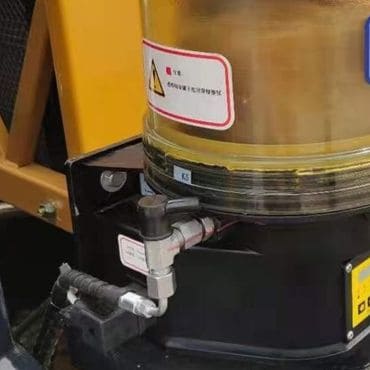
Your equipment manufacturer and you should select the proper grease for your equipment.

An automatic lubrication system supplies predetermined volumes of lubricating grease or oil to critical points Whether it is light-duty construction equipment or heavy-duty mining equipment, these lubrication systems are designed to perform well.
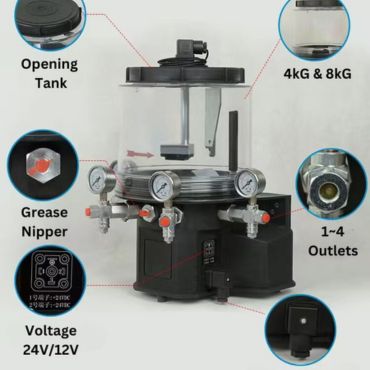
IsoHiTech system could work on the coast and subject to the harsh outside weather conditions.
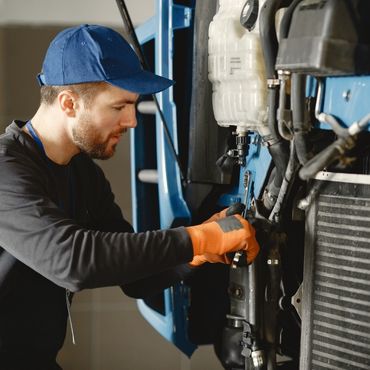
Investing in automatic lubrication systems can reduce or eliminate unplanned maintenance costs.
OUR PROJECT
Why Heavy Equipment Needs Lubrication Systems
The Challenging Operating Environment of Heavy Equipment
Extreme operating conditions faced by heavy machinery
High-temperature operations in various industrial settings
- Heavy equipment routinely operates in environments where temperatures can reach extreme levels. In mining, equipment often operates near blast furnaces or deep underground, where temperatures can reach over 120°F (49°C). Construction equipment often works in the hot sun of desert climates, where surface temperatures can hit 160°F (71°C). High temperatures stress lubricants. They thin out, oxidize quickly, and lose protection.
- Operating above the ideal temperature range can significantly shorten lubricant service life. In extreme cases, such as metal processing or mining, equipment can overheat. This heat can break down standard lubricants. When that happens, important parts are at risk. They may wear out quickly or even fail completely.
Heavy loads and continuous operation requirements
- Heavy machinery is built to handle large loads and can operate for long periods, unlike light-duty equipment. Excavators can exert digging forces exceeding 30,000 pounds, and haul trucks may carry payloads of over 400 tons. These massive forces create extreme pressure on bearings, gears, and hydraulic components.
- Many heavy equipment operations run around the clock. Machines need to work well for thousands of hours before maintenance. Lubricants must keep their protective qualities. This is important because they face constant mechanical stress, heat, and possible contamination. Heavy loads can cause parts to seize, wear out fast, and fail dramatically without strong lubrication systems.
Exposure to dust, dirt, water, and other contaminants
- One tough part of operating heavy equipment is dealing with environmental contaminants all the time. Construction sites generate substantial dust that can infiltrate even well-sealed components. Mining operations expose equipment to harsh mineral particles. Forestry equipment faces organic debris and moisture.
- Water contamination is a big issue. Heavy equipment often works in wet conditions. It may cross water obstacles and face rain or snow. Studies have shown that water contamination as low as 0.1% can reduce bearing life by up to 90%. Water and particle contamination mix to form a slurry. This slurry can behave like liquid sandpaper, damaging machinery parts.
- Chemical contaminants present additional challenges. Equipment in chemical plants, fertilizer facilities, or salty areas, like coastal regions and roads with de-icing salt, encounters corrosive substances. These can quickly damage the equipment and its lubricants.
How these conditions accelerate component wear and failure?
Heavy equipment works in tough conditions. This leads to faster wear and tear. High temperatures make lubricants oxidize faster. This creates sludge and varnish. These deposits block oil flow and lower heat dissipation. These deposits can block filters and oil paths. This can cause lubricant starvation and lead to major failures.
Heavy loads can squeeze the lubricant film between moving parts. This may lead to metal touching metal. When that happens, adhesive wear can occur. This means tiny bits of metal can weld together and tear apart. This process quickly wears down precision surfaces. It creates more wear particles that contaminate the system even more.
Particulate contamination leads to abrasive wear. Hard particles get stuck between moving surfaces, scratching and gouging the metal. Tiny particles, just 5-10 microns wide (too small to see), can cause serious damage. Studies show that about 70% of parts replaced in heavy equipment are due to surface wear. Contamination causes most of this abrasive damage.
Water contamination causes corrosion by allowing oxidation reactions to occur on metal surfaces. It also boosts microbial growth in some lubricants, which can cause biofilms and acids, which speed up corrosion. At high heat, water can quickly turn to steam, leading to cavitation damage and pressure spikes, which can strain seals and parts.
The cumulative effect of these wear mechanisms is dramatically reduced component life. Heavy equipment needs proper lubrication systems. Without them, components might only last 10-20% of their expected life in harsh conditions.
The unique lubrication challenges in construction and mining environments
Construction and mining environments have unique lubrication challenges, which are different from those in general industrial settings. Construction sites change often, equipment moves around, and working conditions can vary a lot each day. This variability makes it hard to keep manual lubrication consistent. So, automated systems are more important. They ensure proper lubrication no matter the operating conditions.
Mining operations, particularly underground mines, present extreme challenges for lubrication systems. Limited accessibility makes manual lubrication of equipment difficult and dangerous. High humidity in many mines speeds up water contamination. Also, abrasive mineral dust causes serious contamination problems. High temperatures, heavy loads, and constant use push lubricants to their limits.
Construction and mining equipment usually work in remote areas, where maintenance resources are often scarce. This remoteness makes reliable lubrication systems even more important. They need to work well for long periods without help. It also highlights the need for systems that protect equipment. This is important because delays in maintenance often happen during remote operations.
Safety considerations also impact lubrication practices in these environments. Manual lubrication often puts technicians in dangerous positions on machines, even when they are on. Automated lubrication systems lower safety risks by removing the need for workers to get close to running equipment for regular lubrication tasks.
Environmental regulations create additional challenges, particularly in environmentally sensitive areas. Lubricant leaks can lead to high fines and costly cleanup, so it’s crucial to contain and apply them carefully. Modern lubrication systems must deliver the right amount of lubricant to the right place and prevent spills that could harm the environment.
Critical Components Requiring Lubrication in Heavy Equipment
Engine and power transmission systems
The engine is the heart of heavy equipment. It changes fuel energy into the mechanical power needed to run. Modern heavy equipment engines work in tough conditions. Internal parts can get hotter than 300°F (149°C) and endure pressures of thousands of PSI during operation.
Proper engine lubrication is critical for several reasons:
- Friction reduction: Engine oils form a hydrodynamic film between moving parts. This includes pistons, cylinder walls, bearings, and valve train components. By doing so, they cut down friction. Less friction means less wear and lower energy losses.
- Heat management: Engine oils remove heat from combustion areas. This keeps components at their best operating temperatures.
- Contaminant suspension: Oils keep combustion byproducts, wear particles, and other contaminants suspended. They hold these materials until filtration removes them.
- Corrosion protection: Additives in engine oils stop acids from combustion. They help keep metal surfaces safe from corrosion.
Power transmission parts, such as transmissions, differentials, and final drives, transfer power from the engine to tools or drive systems. These parts have precision gears that work under heavy loads. They often exceed 100,000 PSI at the contact points of the teeth. Transmission fluids and gear oils need to keep enough film thickness under pressure. They also must provide:
- Extreme pressure (EP) protection: Special additives that prevent metal-to-metal contact under heavy loads
- Thermal stability: Resistance to breakdown at high operating temperatures
- Seal compatibility: Properties that maintain the integrity of seals and gaskets
- Friction modification: Characteristics that enable smooth clutch engagement in power shift transmissions
Most heavy equipment has advanced filtration systems. They also have monitoring features for engine and transmission lubricants. This is important due to the critical nature of these systems. Even small lubrication failures can lead to huge damage. This can cost tens of thousands of dollars and result in weeks of equipment downtime.
Hydraulic systems and components
Hydraulic systems act like the muscles in heavy equipment. They provide the strong force needed for lifting, digging, steering, and braking. Modern construction and mining equipment often have hydraulic systems. These systems can operate at pressures over 5,000 PSI. In some special cases, they may even reach 10,000 PSI or higher.
These high-pressure systems contain numerous critical components requiring proper lubrication:
- Pumps are the heart of hydraulic systems. They measure internal clearances in microns. Even small contamination can lead to quick wear and failure.
- Valves: Directional, pressure, and flow control valves have precision-machined spools and seats. They depend on hydraulic fluid for lubrication.
- Cylinders: Hydraulic cylinders have smooth surfaces and seals. They need proper lubrication to avoid scoring and leaks.
- Hydraulic motors turn fluid pressure into mechanical motion. They have internal parts like pumps.
Hydraulic fluids serve multiple critical functions beyond basic lubrication:
- Power transmission: The primary function is transferring force throughout the system
- Lubrication: Creating protective films on moving components
- Heat dissipation: Carrying heat away from working components
- Seal conditioning: Maintaining the pliability and function of system seals
- Contamination control: Transporting particles to filtration systems
Hydraulic system failures can be very expensive. They damage parts and can lead to environmental problems from fluid leaks. Modern equipment usually has several filtration stages. These can remove particles down to 3 microns and separate water to keep fluids clean. Even with these protections, keeping the hydraulic system well-maintained is crucial. Regular fluid analysis is recommended to spot contamination or degradation before damage happens.
Bearings, bushings, and pivot points
Heavy equipment has many bearings, bushings, and pivot points. These parts allow movement and support heavy loads. These components are found throughout the machine in applications including:
- Articulation joints: Allowing the machine to bend or pivot
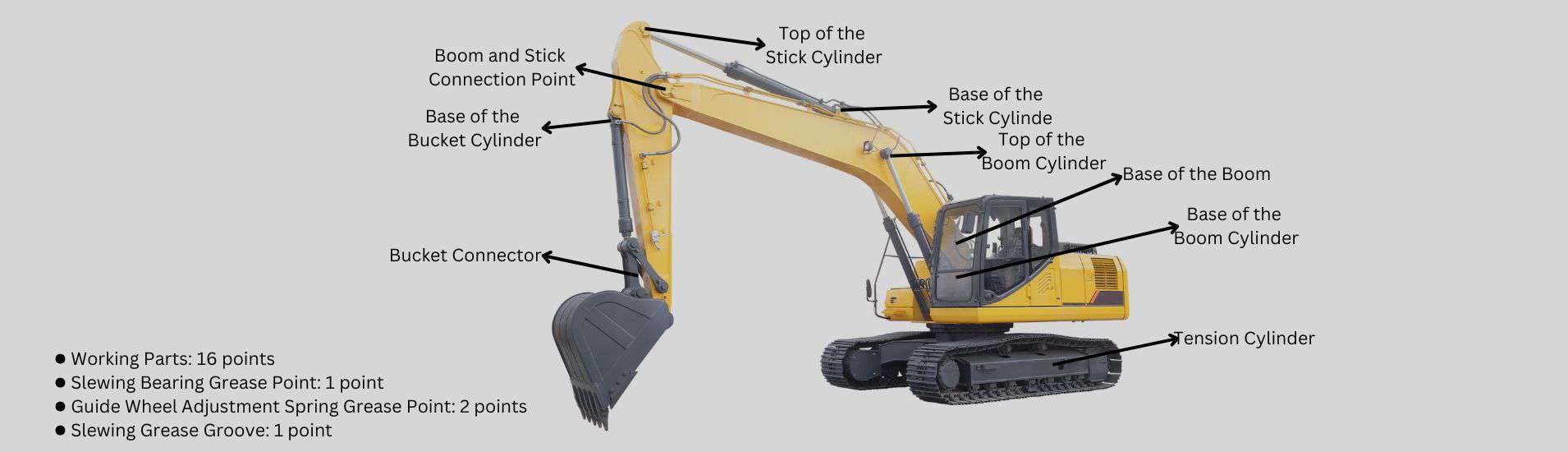
- Boom and arm connections: Supporting the working implements
- Wheel hubs and axles: Supporting the equipment weight and enabling movement
- Control linkages: Connecting operator inputs to machine functions
The lubrication needs for these parts can differ a lot depending on their use. However, they all face similar challenges:
- High loads: Many bearings support loads measured in tons
- Oscillating movement: Many bearings move back and forth. This makes it hard to keep a lubricant film.
- Environmental exposure: Many are directly exposed to contaminants
- Limited access: Many are located in hard-to-reach areas of the equipment
Bearing failures account for approximately 40% of non-engine-related downtime in heavy equipment. Good lubrication can make bearings last 2 to 10 times longer than poor lubrication. A critical bearing failure can have a huge economic impact. Downtime costs can exceed $10,000 per hour. This includes lost production, repair costs, and other related expenses.
Modern equipment often uses sealed and lubricated-for-life bearings. However, some applications still need regular lubrication. These applications are great for automatic lubrication systems. They can deliver the right amount of lubricant while equipment runs, keeping everything protected, even in tough conditions.
Tracks, chains, and undercarriage components
The undercarriage of tracked equipment represents one of the most challenging lubrication environments. Track systems usually make up 20-50% of total machine maintenance costs. Lubrication is key to controlling these expenses. Key components requiring lubrication include:
- Track pins and bushings: The articulating connections between track links
- Idlers and rollers: Supporting the track and distributing the machine weight
- Drive sprockets: Transferring power to the track system
- Tensioning systems: Maintaining proper track adjustment
These components operate under extreme conditions, including:
- Direct ground contact: Constant exposure to abrasive soil and rocks
- Impact loading: Shock loads as the equipment travels over uneven terrain
- Water exposure: Operation in wet conditions, streams, or mud
- Temperature extremes: From subfreezing to hot desert conditions
These components require specialized lubricants and application systems. Track pin lubricants must withstand extreme pressures while resisting water washout. Many modern systems use solid lubricants or composite bushings. This helps extend maintenance intervals. However, most systems still need regular lubrication for a good service life.
The economic impact of proper undercarriage lubrication is substantial. Proper lubrication can boost undercarriage part life by 30-50%. This may save you hundreds of thousands of dollars in parts and labor over the equipment’s life.
Boom, arm, and attachment mechanisms
The working end of heavy equipment has booms, arms, buckets, blades, and other tools. These parts have many important lubrication points. These parts bear the heaviest loads and toughest conditions. So, proper lubrication is key for reliability. Key areas requiring lubrication include:
- Pivot pins and bushings: Connecting the boom, arm, and attachment
- Cylinder mounting points: Where hydraulic cylinders attach to the structure
- Quick couplers: Allowing rapid attachment changes
- Specialized attachment mechanisms: Such as hammer pivots, auger bearings, or saw head components
These components present unique lubrication challenges:
- Extreme pressures: Often experiencing the highest loads on the equipment
- Shock loading: Sudden impact forces during operation
- Contamination exposure: Direct contact with the material being worked
- Frequent movement: Constant articulation that can displace lubricant
Not lubricating these parts correctly leads to faster wear, less precision, and possible serious failures. The consequences go beyond repair costs. They also include lower productivity from inefficient operations and safety risks from component failures.
Modern equipment often includes automatic lubrication systems. These systems protect high-stress parts, even in tough conditions. They often use thick, high-pressure greases, which have special additives to protect against shock and contamination.
Types of Lubrication Systems for Heavy Equipment
Manual lubrication approaches and their limitations
Manual lubrication is the traditional way to maintain heavy equipment. Technicians use hand-operated grease guns or oil cans to apply lubricants. While this method requires minimal initial investment, it presents significant limitations:
Inconsistent application: Manual lubrication varies. This results in different amounts and frequencies of lubricant use. Manual greasing often leads to problems. During busy times, maintenance may rush, causing under-lubrication. Sometimes, people apply too much grease just to be safe. Both issues can harm components.
Labor intensity: Lubricating heavy equipment can take technicians several hours each week. Skilled labor is becoming harder to find and more costly, creating a big ongoing expense.
Safety concerns: Technicians should lubricate hard-to-reach or dangerous parts of the equipment while it runs. This creates fall hazards and pinch points and exposes workers to moving parts, which can lead to serious injuries.
Downtime requirements: Many manual lubrication tasks require the equipment to stop, which leads to lost production time. In continuous processes, equipment downtime can cost thousands of dollars per hour because of lost productivity.
Documentation challenges: Manual lubrication makes it hard to keep accurate records. Tracking when parts were serviced is hard. It’s also tricky to note how much lubricant was used and other key maintenance details. This lack of documentation complicates troubleshooting and warranty claims.
Contamination issues: Manual lubrication can introduce contaminants into the system through open grease fittings, uncovered oil ports, or dirty lubricant containers. Even small amounts of contamination can significantly accelerate wear.
Due to these limitations, automated lubrication systems are replacing manual ones. This is especially true for critical equipment, where reliability is key and the operating conditions are tough.
Automatic lubrication systems
Automatic lubrication systems are a big step forward in equipment maintenance. They provide exact amounts of lubricant at set times, so operators don’t need to get involved. These systems provide key benefits compared to manual methods. They ensure consistent application, need less labor, improve safety, and boost documentation abilities.
Single-point lubricators
Single-point lubricators are the easiest type of automatic lubrication. They deliver lubricant directly to specific points. These systems typically consist of:
- Gas-generated units: Electrochemical reactions create pressure. This pressure pushes lubricant from a reservoir through one outlet. These self-contained units can operate for months without intervention.
- Spring-driven units use mechanical spring pressure to push lubricant from a reservoir. This happens at a set rate.
- Battery-powered units use small electric motors to dispense lubricant. They run on set schedules and often allow for adjustable delivery rates.
Advantages of single-point lubricators include:
- Simple installation with minimal modification to existing equipment
- Cost-effective for equipment with few lubrication points
- Ability to use different lubricants for different components
- No need for central pumping
Limitations include:
- Limited capacity and duration
- No central monitoring capabilities
- Inability to adjust to changing conditions
- Higher per-point cost for equipment with many lubrication points
Single-point lubricators are often used for isolated equipment. They are great for machines with few lubrication points or where it’s tough to run supply lines. They work well for equipment that runs on and off. They’re also great for remote areas where maintenance is hard to reach.
Multi-point systems
Multi-point lubrication systems build on the single-point idea. They link several lubrication points to one central reservoir and pump. These systems typically serve 2-12 points from a single pump unit and include:
- Series progressive systems: The lubricant flows through metering valves, which send precise amounts to each point in a specific order.
- Parallel systems: Lubricant flows to several points at the same time. Each point has its own meter.
Advantages of multi-point systems include:
- Centralized filling and monitoring
- Consistent lubrication across multiple points
- Reduced installation cost per point compared to multiple single-point units
- Ability to visually confirm system operation Limitations include:
- Limited distance capability (typically under 20 feet from pump to furthest point)
- Usually limited to a single type of lubricant
- More complex installation than single-point systems
Multi-point systems work great for compact machines with many lubrication points nearby. This includes skid-steer loaders, compact excavators, and special attachments.
Centralized lubrication systems
Centralized lubrication systems offer a complete solution. One pump station can service many lubrication points, even dozens or hundreds. These advanced systems are made for big machines that need a lot of lubrication, including excavators, haul trucks, dozers, and stationary processing equipment.
Key components of centralized systems include:
- Central pump and reservoir: Providing the lubricant supply and pressure
- Controller: Managing timing, pressure, and monitoring functions
- Primary and secondary distribution blocks: Dividing lubricant flow to various zones
- Metering devices: Ensuring precise delivery to each point
- Supply lines: Carrying lubricant throughout the system
- Monitoring devices: Confirming proper system operation
Centralized systems offer significant advantages for heavy equipment:
- Comprehensive coverage of all lubrication points
- Reduced labor requirements through automation
- Consistent lubrication, regardless of operating conditions
- Ability to lubricate hard-to-reach points without equipment stoppage
- Enhanced monitoring and documentation capabilities
- Reduced lubricant consumption through precise application
Modern centralized systems use features like electronic monitoring, pressure sensors, and telematics. These tools give real-time status updates and maintenance alerts.
Progressive distribution systems
- Progressive distribution systems are a type of centralized lubrication. They work well for heavy equipment. These systems have connected divider blocks. They spread lubricant to different points in a set order.
The operating principle involves:
- Lubricant enters the primary divider block, which distributes it to secondary blocks
- Each divider block has pistons. They move one after another, sending lubricant to each outlet.
- The system must finish the entire sequence before starting over. This way, all points get lubricant.
Key advantages of progressive systems for heavy equipment include:
- Built-in monitoring capability (if any point becomes blocked, the entire system stops)
- Ability to handle high back pressure, making them suitable for heavy grease applications
- Excellent performance in contaminated environments
- Modular design allowing system expansion or modification
- Visual operation confirmation through indicator pins Limitations include:
- Sequential operation means a blockage at any point stops the entire system
- Higher pressure requirements than some other distribution methods
- More complex troubleshooting when issues occur
Progressive systems are found in many machines. This includes excavators, wheel loaders, and articulated dump trucks. Their strong design works well in dirty environments, giving them a big advantage.
Oil circulation and filtration systems
Oil circulation systems are vital for heavy equipment. They provide lubrication and cooling for important components, move lots of oil around, cool parts, clean out dirt, and supply fresh lubricant to key surfaces.
Common applications include:
- Engine lubrication systems
- Hydraulic systems
- Transmission and differential cooling
- Gearbox lubrication in continuous-duty applications
Modern oil circulation systems incorporate sophisticated filtration capabilities to maintain oil cleanliness, including:
- Full-flow filters: Processing all oil before it reaches components
- Bypass filters: Processing a portion of the oil flow for fine filtration
- Water separators: Removing harmful moisture contamination
- Magnetic filters: Capturing ferrous wear particles
The integration of advanced filtration with circulation systems provides significant benefits:
- Extended oil service life (often 2-3 times longer than without advanced filtration)
- Reduced component wear through contaminant removal
- Early detection of developing problems through filter analysis
- Decreased environmental impact through reduced oil consumption
Heavy equipment for continuous-duty jobs may have extra features in oil circulation systems. These include oil cooling, heating for cold starts, and real-time oil condition monitoring.
Specialized systems for specific applications (high-temperature, high-pressure)
Heavy equipment needs more than standard lubrication. It often requires special systems for tough operating conditions.
High-temperature applications: Equipment close to heat, such as asphalt pavers and steel mill gear, requires special lubrication systems. These systems manage high temperatures effectively. These typically incorporate:
- Synthetic lubricants with temperature stability up to 500°F (260°C)
- Heat-resistant supply lines and components
- Increased application frequency to compensate for thermal degradation
- Thermal barriers to protect system components
High-pressure systems: Machines that handle heavy loads, such as rock crushers and mining gear, need lubrication systems. These systems must handle high back pressure to supply lubricant to compressed surfaces. These systems typically feature:
- High-output pumps generating pressures up to 6,000 PSI
- Reinforced high-pressure lines and fittings
- Specialized check valves to maintain pressure
- Extra-heavy-duty distribution blocks
Water-resistant systems: Equipment in wet areas needs special lubrication. This includes dredges, harbor machines, and underwater mining tools. These systems include:
- Sealed components to prevent water ingress
- Water-resistant greases that maintain adhesion when wet
- Positive pressure systems that prevent water intrusion
- Specialized seals and fittings designed for underwater use
Dusty Environment Systems: Equipment in dusty places, like cement plants, quarries, and deserts, needs special systems. These systems stop abrasive particles from causing contamination.
- Sealed reservoirs with filtered breathers
- Wiper seals to clean fittings before connection
- Positive pressure to prevent dust ingress
- Self-cleaning distribution blocks designed to expel contaminants
These specialized systems require a big investment. However, they offer vital protection for equipment. This is key in tough conditions that can quickly damage regular lubrication systems and their parts.
Benefits of Proper Lubrication Systems in Heavy Equipment
Reduction in friction and wear between components
Good lubrication systems cut friction between metal parts in heavy equipment. This reduces wear and provides other benefits. These systems form a liquid layer that separates moving surfaces. This changes metal-to-metal contact into fluid shear. As a result, friction coefficients drop by 10 to 100 times compared to when there is no lubrication.
This friction reduction delivers multiple benefits:
- Energy efficiency: Less friction means lower energy use. Well-lubricated equipment uses about 3-5% less fuel than poorly lubricated machines.
- Heat reduction: Less friction leads to lower heat. This keeps parts in their best temperature range and avoids thermal damage.
- Noise reduction: Well-lubricated equipment runs quietly, boosting operator comfort and helping to spot unusual sounds that may signal problems.
- Vibration dampening: Lubricant films soak up vibrations. This helps reduce wear on parts and makes it more comfortable for operators.
Proper lubrication also significantly reduces wear. Studies show that better lubrication can cut wear rates by 40-60%, much lower than rates seen with poor lubrication. This wear reduction directly impacts component life, maintenance requirements, and overall equipment reliability.
The mechanisms behind this wear reduction include:
- Hydrodynamic lubrication: Creating a complete fluid film that fully separates metal surfaces
- Elastohydrodynamic lubrication: Forming protective films that deform slightly under pressure while maintaining separation
- Boundary lubrication protection: Providing molecular-level protection even when fluid films can’t be maintained
- Anti-wear additives: Creating sacrificial chemical layers on metal surfaces that prevent direct contact
For heavy equipment in tough conditions, proper lubrication matters. It can determine if components last their full design life or fail early, often after only a few hours of use.
Extended equipment lifespan and reduced replacement costs
Good lubrication systems save money. They make components and equipment last longer. Good lubrication can make parts last 2 to 10 times longer than bad lubrication.
This life extension delivers substantial economic benefits:
- Lower capital costs: Doubling equipment life from 10,000 to 20,000 hours cuts the per-hour cost by half.
- Fewer parts used: Components that often need replacements can last longer in use.
- Lower labor costs: Fewer component replacements mean reduced maintenance labor requirements.
- Higher resale value: Well-maintained equipment with good lubrication records often sells for more.
The financial impact is particularly significant for components with high replacement costs. For example:
- A final drive assembly for a large excavator might cost $30,000-50,000 to replace
- A hydraulic pump for a wheel loader might cost $15,000-25,000
- An engine overhaul for a haul truck might exceed $100,000
Lubricating these parts properly can extend their life by 50-100%. This can save you hundreds of thousands of dollars over the equipment’s life. Fleet operators with many machines can save millions of dollars each year.
A longer component life reduces the environmental impact of making, moving, and disposing of parts, supporting important sustainability goals.
Heat dissipation in high-stress operations
Lubrication systems do more than reduce friction. They are vital for controlling heat in heavy equipment operations. In hydraulic systems, normal operation can convert up to 20% of input power into heat. Without proper heat management, this energy can quickly overheat fluids, causing damage.
Circulating lubrication systems serve as primary cooling mechanisms in many heavy equipment applications. A typical hydraulic system removes 10-20 kilowatts of heat, keeping temperatures under control, even with high power. This cooling function is vital. Many systems use oil coolers, temperature monitors, and warning systems, which help prevent overheating damage.
Lubrication systems cool off based on two factors: the circulation rate and the properties of the lubricant. Good lubricants keep the right thickness and strength, even when it’s hot. They protect parts by moving heat away from important areas. Advanced synthetic lubricants work well at high temperatures where regular mineral oils fail. They offer longer-lasting protection for tough heavy equipment tasks.
Water contamination is common in many heavy equipment settings. It creates specific challenges for heat dissipation. Water in oil forms insulating films. These films lower heat transfer efficiency and cause localized overheating. Advanced lubrication systems use water separation technologies and monitoring tools. These features help keep heat transfer at its best, even with challenges.
Protection against corrosion and contamination
Heavy equipment faces tough corrosion and contamination issues. Lubrication systems need to tackle these challenges to keep the equipment reliable. Heavy equipment operations face many corrosive conditions, including acidic soils, alkaline dust, and constant moisture.
Good lubricants form protective layers. These layers keep harmful substances away from metal surfaces. These formulations include additives that actively:
- Neutralize acids
- Displace water
- Form protective films on metal surfaces
- Suspend contaminants until they can be filtered out
The lubricant delivery systems ensure that these protective formulas reach all vulnerable spots, including areas that are hard to access with manual methods.
Contamination control represents another critical function of advanced lubrication systems in heavy equipment. Modern systems use multi-stage filtration, which removes particles, water, and contaminants and helps protect equipment from damage. Filtration systems focus on cleanliness based on their use. Hydraulic systems need the highest cleanliness, often ISO 16/14/11 or better. In contrast, open-gear applications can handle more contamination.
Water contamination is a big problem for heavy equipment. This happens because these machines often work in wet conditions. Advanced lubrication systems use water separation methods like coalescers, centrifuges, and vacuum dehydration. These technologies help keep oil dry, even with challenges. Lowering water contamination from 1000 ppm to 100 ppm can boost bearing life by 5 to 10 times in common applications. This shows how important these technologies are.
Improved fuel efficiency and reduced energy consumption
The energy savings from proper lubrication are substantial and directly impact operating costs. Optimized lubrication can cut fuel use by 3-5% in heavy equipment. Research backs this up. For machines using 10-50 gallons of fuel each hour, savings add up fast. They can reach thousands of dollars each year per machine.
The mechanisms behind these efficiency improvements include:
- Less mechanical friction means less energy wasted. This gives you more power for productive work.
- Improved hydraulic efficiency: Clean and well-made hydraulic fluids reduce leaks and flow problems.
- Improved thermal efficiency: Better heat dissipation maintains components at optimal operating temperatures
- Reduced parasitic losses: Properly lubricated auxiliary systems consume less power
Modern lubrication systems boost efficiency. They deliver the right amount of lubricant at the right time and place. This precision minimizes wasted lubricant from using too much and lowers friction from using too little.
The environmental impact of these efficiency improvements is equally significant. A fleet of 50 heavy equipment machines can save tens of thousands of gallons of fuel each year with a 3% reduction. This also cuts down on greenhouse gas emissions and other pollutants.
Noise and vibration reduction
Proper lubrication reduces noise in heavy equipment, which helps safety and the environment. When equipment runs low on lubrication, metal parts touch each other, creating a loud noise of over 100 dB. Such noise can harm hearing and make it hard to communicate.
Lubrication systems create a thin layer of lubricant between moving parts. This layer prevents metal from touching metal, which helps reduce noise. In poorly lubricated equipment, noise can drop by 10-15 dB, which means people hear a 50-70% reduction in noise.
Beyond the occupational safety benefits, noise reduction through proper lubrication creates operational advantages. Lower noise levels let operators hear sound changes more clearly. This helps them find problems early and act before a serious failure happens. Lower noise levels also reduce stress in the workplace, which can make operators happier and boost productivity.
Vibration reduction follows similar principles. Proper lubrication reduces vibrations in the equipment, helping lessen operator fatigue. It also prevents fasteners and components from loosening, which can cause structural failures.
Conclusion
Heavy equipment needs strong lubrication systems. It works in tough conditions, which can impact the reliability of its parts. Heavy machinery faces tough conditions, including crushing loads, high temperatures, and constant contamination. It must also operate continuously. Without proper lubrication, equipment failure is almost certain.
Equipment owners and operators often feel pressure to boost productivity and cut costs. Strong lubrication systems can help. They improve reliability and extend equipment life. They also boost efficiency, even in tough conditions.
Heavy Equipment Lubrication Guides & Industry Applications
Automatic lubrication for off-road and industrial machinery. Browse by equipment type or read technical guides.
Industry application pages
- Excavators Lubrication Systems
- Combines & Harvesters Lubrication
- Wheel Loader Lubrication
- Construction Equipment Lubrication
- Mining Lubrication
- Mix Trucks Lubrication
- Haul Trucks Lubrication
- Industry Lubrication Solutions by Application
Technical guides
- Excavator Grease Points Diagram
- Excavator Greasing & Maintenance Guide
- Excavator Lubrication System Selection Guide
- Construction Equipment Lubrication Guide
- Automatic Lubrication for Heavy-Duty Machinery
- How to Choose a Grease Pump for Heavy Equipment
Related system hubs:
centralized grease lubrication,
automatic lubrication systems,
grease pumps.
Before you buy: read our grease fitting types guide.
Frequently Asked Questions
For heavy load applications, it is important to use lubricants that can withstand high pressures and provide excellent protection against wear. Here are some commonly used lubricants for heavy load applications:
1. Extreme Pressure (EP) Grease: EP greases contain additives such as sulfur, phosphorus, or chlorinated compounds that provide exceptional protection under extreme pressure conditions. They form a protective film that prevents metal-to-metal contact and reduces friction.
2. Synthetic Grease: Synthetic greases are formulated with synthetic base oils and advanced additives that offer superior performance under heavy load conditions. They have excellent thermal stability, oxidation resistance, and can handle high temperatures and extreme pressures.
3. Molybdenum Disulfide (MoS2) Grease: MoS2 greases contain solid lubricants like molybdenum disulfide, which acts as a boundary lubricant between two metal surfaces. It provides an additional layer of protection during high load operations and helps reduce friction and wear.
4. Lithium Complex Grease: Lithium complex greases are versatile multi-purpose lubricants that can handle heavy loads and high temperatures. They offer excellent mechanical stability, water resistance, and oxidation resistance.
5. Calcium Sulfonate Complex Grease: Calcium sulfonate complex greases are known for their exceptional load-carrying capacity and resistance to water, corrosion, and extreme temperatures. They are suitable for heavy-load applications in various industries.
6. Synthetic Gear Oil: For heavy-load gear applications, synthetic gear oils are often used. These oils provide excellent protection against wear, micropitting, and scoring. They have high viscosity index, thermal stability, and can handle high shock loads.
It is important to consider the specific requirements of your application, including the load, speed, temperature, and environment, to select the most suitable lubricant. Consulting with a lubrication specialist or the equipment manufacturer can help ensure the right choice of lubricant for your heavy load application.
Heavy equipment, including construction machinery, mining equipment, agricultural machinery, and other large-scale machines, operate under extreme conditions and heavy loads. These conditions subject the equipment to significant friction, wear, and heat generation, which can lead to premature failure and costly downtime. A well-designed lubrication system is essential to ensure the efficient and reliable operation of heavy equipment. Here’s why heavy equipment needs a lubrication system:
1. Friction Reduction: Heavy equipment consists of various moving parts, such as gears, bearings, pistons, and joints. These components experience high levels of friction during operation, which can lead to increased wear and reduced efficiency. Lubricants reduce friction by forming a protective film between surfaces, allowing them to slide smoothly against each other.
2. Wear Protection: The high loads and harsh operating conditions experienced by heavy equipment can cause accelerated wear on critical components. A lubrication system delivers appropriate lubricants to lubrication points, ensuring proper coating and protection of surfaces. This prevents direct metal-to-metal contact and reduces wear, extending the lifespan of components and reducing maintenance costs.
3. Heat Dissipation: Heavy equipment generates substantial heat during operation due to internal friction and external working conditions. Proper lubrication helps dissipate this heat by carrying it away from critical components. Lubricants with good thermal conductivity and high viscosity index maintain stable operating temperatures, preventing excessive heat buildup and potential damage.
4. Contamination Protection: Heavy equipment often operates in dusty, dirty, or wet environments, making it susceptible to contamination by particles, moisture, and debris. A lubrication system helps protect equipment by delivering clean lubricants and creating a barrier against contaminants. This prevents abrasive particles from entering critical components, reducing the risk of damage and performance degradation.
5. Corrosion Prevention: Exposure to moisture, chemicals, and harsh environments can cause corrosion on heavy equipment surfaces. Lubrication systems provide a protective layer of lubricant that acts as a barrier, preventing the formation of rust and corrosion. This preserves the integrity of equipment and maintains operational efficiency.
6. Maintenance Efficiency: Heavy equipment typically has numerous lubrication points that require regular maintenance. A well-designed lubrication system simplifies the lubrication process by automating or streamlining the delivery of lubricants to multiple points. This reduces maintenance time, ensures consistent lubrication, and helps avoid missed or inadequate lubrication, which can lead to breakdowns.
Overall, a robust lubrication system for heavy equipment is crucial for maximizing equipment performance, minimizing downtime, and reducing maintenance costs. Proper lubrication ensures smooth operation, extends equipment life, decreases wear and tear, and enhances overall productivity. It is essential to follow manufacturer guidelines and consult with lubrication experts to select the right lubricants and lubrication system for specific heavy equipment applications.
IsoHiTech’s engineers have 20 years of experience in the lubrication industry. We are located in Nanjing, not far from Shanghai, China.
Our production line covers the most popular oil and grease system. We could provide the hand type and electrical driven and air driven pumps at a very good cost.
So if you have any inquire about the central lubrication,please give us a chance to quote you.
IsoHiTech could like to cooperate with customers from around the world, we could give you a discount on the later order.
The customer will pay the sample cost and delivery cost.
3-7 DAYS.
We usually choose UPS and FedEx as our cooperating carriers.