



Dual-Line Lubrication Systems
A dual-line lubrication system feeds grease or oil through two main lines that alternate under pressure: while one line supplies the metering valves, the other relieves, and a reversing valve swaps their roles each half-cycle. It suits large stationary machines with many spread-out points, long pipe runs, and wet or dusty surroundings. This page covers the components, the selection logic, and how to request a quote; the engineering guide carries the full technical depth.
- Two main lines alternate; one pressurizes while the other relieves.
- Metering valves and pumps rated up to 400 bar (5,800 psi).
- Oil and grease to NLGI 2 as standard; NLGI 3 on consultation.
- Add or remove metering valves later to resize the point count.
What Is a Dual-Line Lubrication System?
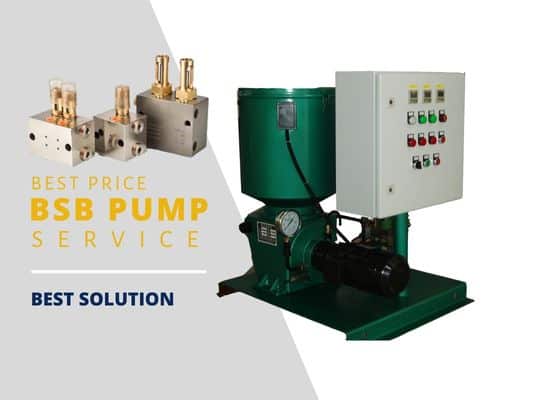
A dual-line system runs two main lines from a central pump unit, such as the BSB dual-line grease pump, out to metering valves mounted near the bearings. A reversing valve – here the DU-1 change-over valve – switches pressure from one line to the other at the end of every half-cycle: while line A is pressurized and feeding, line B relieves, then the roles swap. Each metering valve dispenses its adjusted quantity once per half-cycle, and an end-of-line valve confirms full pressure at the far end before the controller stops the pump. The complete component set is pump, reversing valve, metering valves, end-of-line valve, and controller. A blocked outlet stops only its own point; every other point keeps feeding.
Where Dual-Line Systems Fit Best
Choose dual-line when the machine is large and fixed, the points are many and spread out, the main and branch lines run long, and the site is wet, dirty, or dusty – typical in mining and cement plants, steel mills, and power stations. Scale stays flexible: systems run from a few dozen points to many hundreds by adding metering valves on the same lines. For a compact machine with a handful of points, single-line progressive or manual lubrication is usually simpler and cheaper; the dual-line vs single-line comparison covers that boundary. Dual-line is not universal: grease stiffer than NLGI 2, extreme cold, and very long lines all raise pressure loss, so review the dual-line limitations before committing to a layout.
- Many lubrication points spread across one large machine.
- Long main and branch lines from pump to bearings.
- Wet, dirty, or dusty installation areas.
- Plans to add or remove points after commissioning.



Dual Line Lubrication Systems Application (3)

The Cement Factory likely chose a dual-line lubrication system. Cement production uses large, heavy machinery that runs nonstop in harsh conditions. This equipment needs regular lubrication. It protects bearings and gears. A dual-line lubrication system provides a steady flow of lube to critical parts. This reduces wear and tear and extends equipment life. The system can prevent overheating and equipment failure. It does this by providing a steady supply of lubrication. A dual-line system improves reliability and safety. It can also reduce maintenance costs over time. The system can help reduce costly repairs and maintenance. It does this by ensuring that equipment is permanently lubricated.

A dual-line lubrication system in a mining plant has several advantages. It boosts reliability and productivity by keeping critical components well-lubricated always. This cuts maintenance costs. It does so by extending component life and reducing repairs. Dual-line systems enhance safety by preventing accidents through proper lubrication of mining machinery. Automatic delivery of lubricant keeps equipment lubricated. This works even during heavy use or long hours. The system boosts equipment performance. It cuts downtime and improves efficiency. This leads to better mining operations.

The dual-line system ensures proper lubrication in high-heat areas. It reduces the risk of equipment failures, which could cause accidents or downtime. Power plants have large equipment that needs adequate lubrication to work well. The dual-line system provides a steady flow of lubricant to these parts. Safety is a top priority in power plants. The dual-line system reduces risks. It prevents unplanned maintenance or equipment failures. Power plants run 24/7 and need high efficiency. The dual-line system optimizes performance, cuts costs, and boosts productivity.
Types Of Dual Line Lubrication Systems (3)
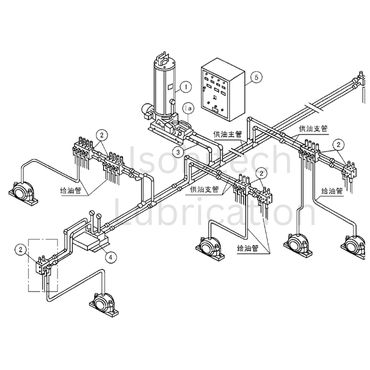
This system uses motor-driven dual-line valves. They provide a consistent flow of lubricant to equipment. The central station includes a pump, cycle switch, and reversing valve. The controller monitors and controls the system. It ensures each component gets the right amount of lubrication. The system boosts equipment reliability. It cuts maintenance costs. It improves safety and efficiency in the industry.

The manual dual-line lubrication system is centralized. It relies on manual operation to supply lubrication to equipment. It involves dual-line valves and lubricators with built-in reversing valves. It does not use a controller. This system is for equipment that is hard to reach or needs less frequent lubrication. Using the wrong amount of lubricant can cause over- or under-lubrication. The manual lubrication system delivers lubricant to components in alternating cycles. It can extend the life of critical parts. It does this by providing lubricant at regular intervals and preventing waste.

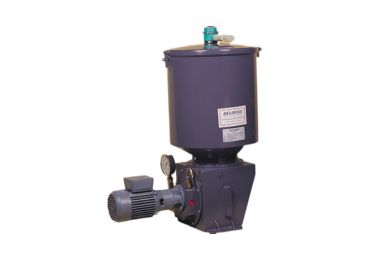
Another popular Dualine system includes an air-operated barrel pump. It delivers lubricant to the system’s Dualine valves. A reversing valve with a pressure gauge controls and monitors the system. A controller is also used. You can use the DD, DM, or DDM/SDM modular valves as part of this type of system.
Additionally, we need an air control panel. It will regulate the air supply to the barrel pump and the reversing valve. The air-operated Dualine system is a reliable, efficient lubricant for machinery and equipment. It works well in industrial settings with high lubrication demands.
Dual Line Metering (5)
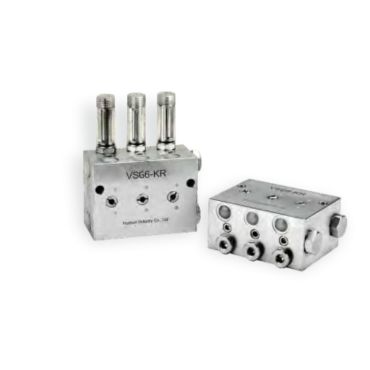
Model: VSG2/4/6/8-KR
Max.Pressure:40Mpa
Min. Pressure:3.5Mpa
Discharge:0~2.2ml/stroke
Adjust:0.14ml/turn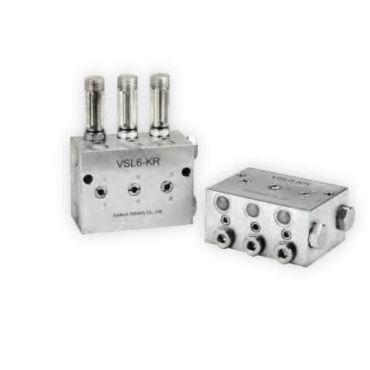
Model: VSL2/4/6/8-KR
Max.Pressure:40Mpa
Min. Pressure:3.5Mpa
Discharge:0~5ml/stroke
Adjust:0.15ml/turn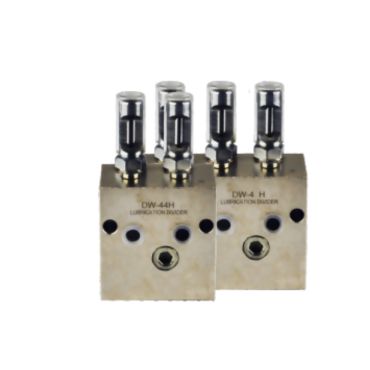
Outlets:2,4,6,8
Max.Pressure:20Mpa
Min. Pressure:1.5Mpa
Discharge:0.15~5ml/stroke
Adjust:0.04ml/turn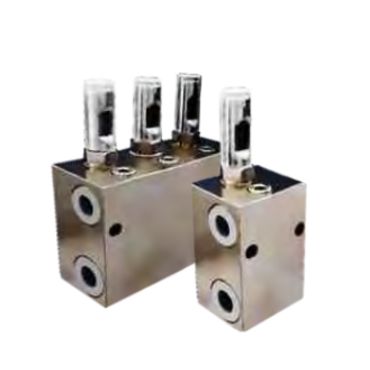
Outlets:1,2,3,4
Max.Pressure:20Mpa
Min. Pressure:1.5Mpa
Discharge:0.2~14ml/stroke
Adjust:0.06m/0.1/0.15/0.68l/turn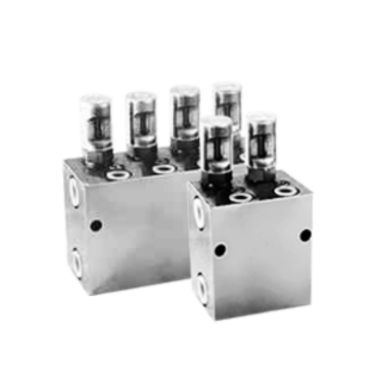
Outlets:1,2,3,4,5,6,7,8
Max.Pressure:40Mpa
Adjustable Turn
Indicator Pin
Directional Valve (2)

A DR4-5 series, as a reversing valve, is for dual-line lubrication. It has an electric controller. The lubrication pump transfers lubricant to the two main supply pipes. An automatic lubrication directional valve, DR4, has a pressure-regulating function. It changes the set pressure in a 0 to 20 mPa range. Its simple, reliable design ensures reliable operation.

The YKQ-SB pressure control is at the main pipe’s end for dual-line lubrication systems. It checks the working pressure in the pipeline. The control box can send signals if the central pipe pressure reaches the preset limit. It can control the directional valve or monitor the lubrication system. The options for pressure could be 10 MPa, 20 MPa, 31.5 MPa, or 40 MPa.
Why Install a Dual-Line System




- System Components
- Dual-Line Metering Valves
- Reversing and Directional Valves
- Lubricants and Operating Limits
- Workshop Video
Every dual-line system builds from five component groups. The pump unit stores and pushes the lubricant: electric units such as the BSB dual-line grease pump for automatic plants, pneumatic piston pumps where plant air is available, and hand pumps for small or standby systems. The reversing valve, for example the DU-1 change-over valve, switches pressure between the two main lines at each half-cycle boundary. Dual-line metering valves along the lines dispense their adjusted quantity to each point once per half-cycle. An end-of-line valve at the far end of each main line confirms that full pressure arrived, guarding against unnoticed line blockage. The controller sets cycle and pause times and raises an alarm when pressure does not build on schedule. Together these five groups form one pump station feeding both lines; sizing starts from the point list and the pipe lengths.
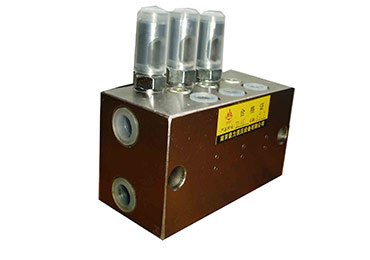
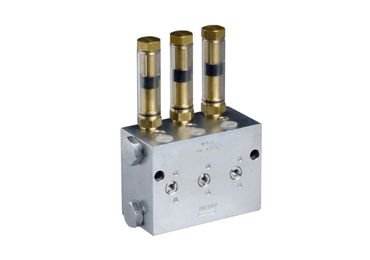
The metering valve family covers several block formats rated up to 400 bar (5,800 psi). ZVB (SSPQ) blocks and DW blocks mount along the main lines and feed two adjacent points per outlet pair, while VSG and VSL variants cover other outlet and mounting arrangements. Output per outlet is adjustable, so points with different grease needs can share one block; the ZVB divider valves page lists the standard outlet combinations, and the SDPQ valve offers adjustable output per outlet. For tight mounting spaces, the VSKV-KR, VSKH-KR, and VSG-KR variants come in vertical and horizontal forms. Where one bearing group needs many small doses, a progressive secondary divider can hang downstream of a dual-line outlet, multiplying point count without new main lines – see progressive lubrication systems for how the two architectures combine. Adding or removing valves later means re-balancing quantities, not redesigning the pipework.
The reversing valve is the traffic controller of a dual-line system. Driven by line pressure itself, it routes pump output to one main line while connecting the other to relief, then flips at the end of each half-cycle. This pressure-driven changeover lets a single-outlet pump feed two alternating lines. The DU-1 change-over valve is the standard choice for grease systems; DR4-5 and SA-V valves cover other pressure and mounting needs. A manual override lets the maintenance crew force a changeover during commissioning or fault-finding without running the full automatic sequence. Sizing matters: the valve must pass the pump’s full flow with little pressure drop, especially on long lines in cold weather.
Dual-line systems handle oil, semi-fluid grease, and hard grease up to NLGI 2 as standard. NLGI 3 is not approved for direct use – consult us first, because stiffness changes valve behavior and line pressure demand. Two factors push operating pressure up: low temperature and long pipe runs. Both raise the pressure loss between pump and metering valves, so the layout should hold margin below the 400 bar (5,800 psi) ceiling instead of sizing at the limit. Heavily filled or tacky greases can also slow piston movement inside metering valves. The dual-line limitations page lists the boundary conditions and is worth reading before finalizing lubricant choice and pipe sizing.
Dual line lubrication line in IsoHiTech workshop
Guides and Component Resources
Read the guides for engineering depth; use the component pages to specify hardware.
Guides and deep reading:
- Dual-line engineering guide – principles, sizing, operation, and maintenance in depth.
- Dual-line vs single-line progressive – choosing the right architecture for your machine.
- Limitations and trade-offs – where dual-line is the wrong choice entirely.
- Pressure-loss troubleshooting – localizing line blockages before they stop production.
- Steel-mill application note – dual-line lubrication on continuous casters.
Components and pumps (block pages first, product pages after):
- ZVB (SSPQ) metering block – the standard divider family in this catalog.
- VSG metering block – alternate outlet and mounting arrangement.
- DW metering block – compact block for grease service.
- ZVB divider valves – outlet combinations and ordering details.
- DU-1 change-over valve – main-line switching hardware.
- BSB dual-line grease pump – 40 MPa electric pump unit.
Ready to specify? Send your point list through the quote request page and we will size the system.
Frequently Asked Questions
A centralized lubrication system with two main lines. A pump pressurizes one line while the other relieves, and a reversing valve swaps their roles every half-cycle. Metering valves along the lines dispense a measured amount of grease or oil to each connected point once per half-cycle, so one pump station can serve a large machine.
They sit between the main lines and the lubrication points. On each half-cycle a valve moves a fixed, adjustable volume from the pressurized line to its outlet. Because the dose is set at the valve, points with different consumption can share one system, and a blocked outlet does not stop the others.
Many spread-out points, long pipe runs, and harsh surroundings point to dual-line. A compact machine with a modest point count points to single-line progressive, which is simpler and cheaper. The dual-line vs single-line progressive comparison walks through the decision criteria. If you are unsure, send the point list and we will recommend a layout.
No – not as a standard specification. The standard range is oil through NLGI 2 grease. NLGI 3 is possible only after checking valve type, pipe sizing, and temperature together, so send the grease data sheet before ordering. Specifying NLGI 3 without that check risks valves failing to complete their stroke.
No. A blocked or damaged outlet affects only its own point; the other metering valves keep dispensing normally. The exception is a blockage inside a main line itself, which stops the whole half-cycle – but then the end-of-line valve detects the missing pressure build-up and the controller raises an alarm. The pressure-loss troubleshooting guide shows how to localize such faults.
Yes. The point count scales from a few dozen to many hundreds by adding or removing metering valves on the existing main and branch lines, with no system redesign. Pump and reversing valve stay unchanged as long as total consumption per cycle remains within the pump’s capacity.
Send us your lubrication point list, the grease or oil specification, and the approximate pipe lengths from the pump location to the farthest points. We will propose pump, valve, and line sizing with a quotation. Start through the contact for a quote page.