



Positive Injector Systems
IsoHiTech positive injector lubrication systems combine precision metering, low maintenance, and flexible expansion for industrial machinery. We supply matched pumps, injectors, tubing, fittings, and brushes — not injectors alone — so your PDI circuit is balanced from reservoir to bearing.
Compared with restrictor-based single-line systems, PDI gives per-point dose control without drilling new orifice sizes. Compared with progressive blocks, PDI avoids block stall when one remote point blocks — only that branch is affected if plumbed correctly.
Why customers choose IsoHiTech PDI:
- Full range from 0.016 ml/cyc (BL) to 1.5 ml/cyc (ZEM) injectors
- Factory-tested pumps and progressive alternatives for upgrade paths
- OEM custom manifolds, stainless options, and export support
- Technical videos on lubrication system video library
What Is a Positive Injector Lubrication System?
Positive Injector Systems are lubrication systems. They deliver exact amounts of oil or grease to specific points in machines. The system usually operates at low or medium pressure. You can adjust it to provide different amounts of lubricant as needed. Systems’ injectors switch in alternating cycles at fixed times. This lets oil or grease discharge from them when the system reaches pressure.
Advantage of the Positive Injector Systems: Precise Lubrication Delivery:
- These systems deliver lubricants with high precision. This ensures that machinery gets the exact amount of lubrication it needs.
- Customizable Delivery: Some Positive Injector Systems are adjustable. A single manifold can deliver different amounts of lubricant to various friction points.
Positive Injector Systems Lubrication Pump
A positive injector lubrication pump supplies the main line on a timed or manual cycle. IsoHiTech offers hand pumps for maintenance routes, 2–4 kg automatic grease pumps with built-in controllers for small-to-medium machines, 1 kg DC/AC auto pumps for mobile equipment, and central power stations sized for 500+ injector points. All pumps use positive displacement — each stroke or revolution delivers a known volume so injector dosing stays repeatable.
Select pump pressure and reservoir to match your injector cracking pressure and total ml per cycle across the circuit. Undersized pumps cause incomplete injector strokes and dry bearings.
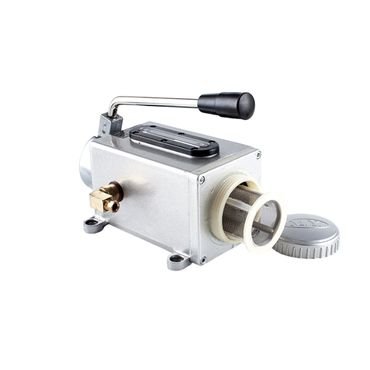
- Reservoir:0.6L
- Pressure:1.5Mpa-2Mpa
- Discharge:6ml/stroke
- Outlet:M8 or M10
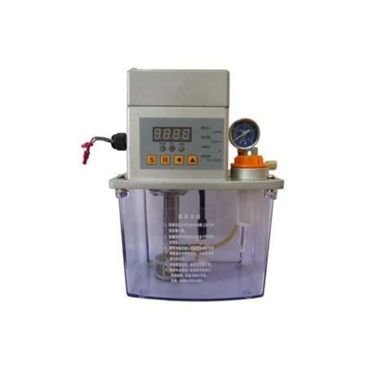


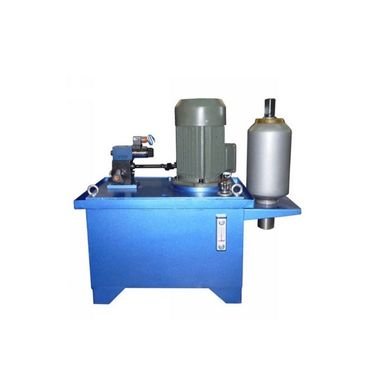
- For 500 points system
- Pressure:2.5Mpa-5Mpa
- Discharge:0.5L/min
- Reservoir:10L-20L-30L
- Timer: Equipped
Injector
Injectors are efficient, positive displacement valves. They dispense oil or grease. They are for lubrication circuits. They work with single, many, or high-pressure injectors. This allows for easy integration into existing lubrication systems.
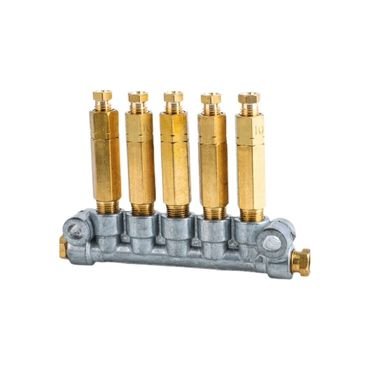
- Discharge:0.06-0.5ml/cyc
- Viscosity:20#-1500#
- Max. Pressure:34kgs
- Min. Pressure:14kgs
- Seals: Viton
- Thread: M8

- Discharge:0.06-1.5ml/cyc
- Oil Lubricant:#20~#1500
- Grease Lubricant: Soft grease, NLGI000#-00#
- Max.Pressure:45kgs
- Min.Pressure:15kgs
- Seals: Viton
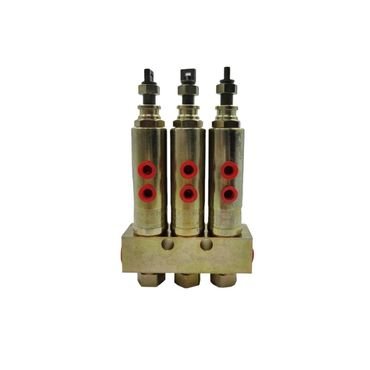
- Min. Operate Pressure:128kgs
- Max. Operate Pressure:240kgs
- Relief Pressure:40kgs
- Discharge:0.13-1.6 ml/cyc
- Material: Steel
- Lubricants: Up to NLGI#2
- Inlet: Npt3/8
- Outlet: Npt1/8

- Min. Pressure:80kgs
- Max. Pressure:240kgs
- Vent Pressure:14kgs
- Lubricant: Up to NLGI#2
- Discharge:0.016~0.131 ml/cyc
- Material: Steel
- Inlet: Npt1/4
- Outlet:6mm Hose
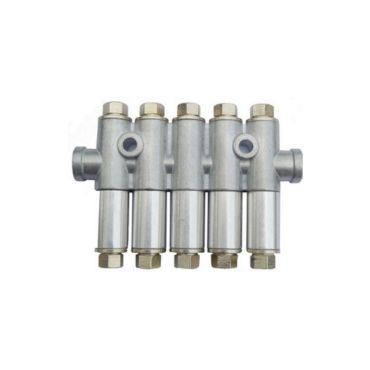 DLX Injector
- Discharge: 0.1-0.5 ml/cyc
- Oil Lubricant: #20 ~ #1500
- Max. Pressure: 45 kgs
- Min. Pressure: 12 kgs
- Seals: NTR
Accessories
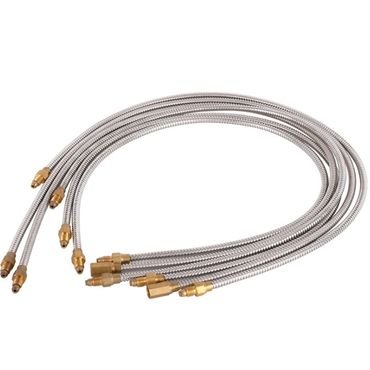
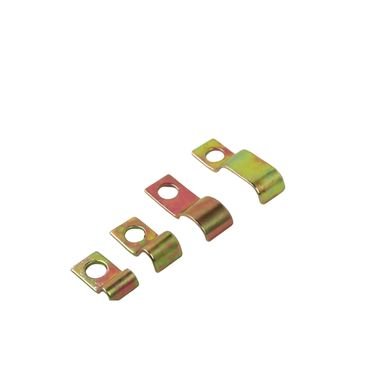
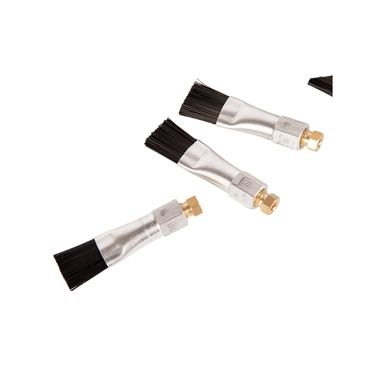
Tubes and adapters and brushes, etc.


What Is a Positive Injector Lubrication System?
A positive injector lubrication system (PDI — positive displacement injector) delivers a fixed volume of oil or soft grease to each bearing on every lubrication cycle. Unlike restrictor-based single-line systems, each injector is a small positive-displacement valve: when main-line pressure rises, internal pistons shift and discharge a metered dose; when pressure falls, injectors recharge from the supply line for the next cycle.
PDI systems typically operate at low to medium pressure (roughly 12–45 kgf class on common models, up to higher classes on SL1/BL series). They are ideal when different friction points need different ml/cycle on the same circuit — machine tool slides, packaging lines, injection molding tie bars, and conveyor bearings are typical applications.
How a PDI Cycle Works
- Pump starts — timer, PLC, or machine interlock energizes hand pump, auto reservoir pump, or central power station.
- Pressure builds — lubricant fills the main line; each injector charges until its cracking pressure is reached.
- Injectors fire — pistons stroke in sequence or parallel (layout-dependent), discharging the rated ml/cycle at each point.
- Pressure reliefs — pump stops or relief valve opens; line pressure drops and injectors reset.
- Idle interval — controller waits for the next cycle; bearing film carries load until the following dose.
Correct cycle time is critical: if the interval is too short, not all injectors complete; if too long, bearings may run dry between doses.
Key Advantages of Positive Injector Systems
- Precise lubrication delivery — repeatable dose per injector model, not dependent on line length alone
- Customizable per point — mix Single, ZEM, DLX, SL1, or BL injectors on one manifold for different ml/cycle
- Modular expansion — add injectors to the main line without replacing a progressive metering block
- Low to medium pressure — simpler tubing and fittings than 20–30 MPa progressive grease circuits
- Easy monitoring — visual pin movement or cycle indicators show which injectors are active
- Cost-effective — lower installed cost than dual-line for moderate point counts with variable dosing needs
PDI vs Single Line vs Progressive vs Dual-Line
| System | Metering method | Pressure class | Best for |
|---|---|---|---|
| Positive injector (PDI) | Individual injector pistons | Low–medium (model-dependent) | Variable ml/point, oil or soft grease |
| Single line (SLR) | Fixed orifice / restrictor | Low–medium | Simplest install, uniform dose logic |
| Progressive (SSV) | Sequential pistons in one block | High (to ~35 MPa) | Compact multi-point grease, 6–22 outlets |
| Dual-line (VSG) | Alternating main lines | High | Steel mills, mining, very large plants |
Deep dive: PDI vs single-line technical comparison.
Typical System Components
- Pump — high pressure hand pump (manual routes), 1–4 kg auto pumps (timed cycles), or power station for 500+ point class systems
- Main supply line — 6–10 mm nylon or copper; clip every 300–500 mm with lubrication pipe clips
- Injectors — see selection table below and product slider on this page
- Controller — built-in timer on auto pumps or external PLC; set minimum cycle time for full injector stroke
- Accessories — pipe & tubing, brass straight/elbow fittings, chain brushes, manifolds
Injector Model Selection Guide
| Model | Discharge | Lubricant | Pressure (typ.) | Notes |
|---|---|---|---|---|
| Single injector | 0.06–0.5 ml/cyc | Oil #20–1500 | 14–34 kgf | Viton seals; M8 thread; general purpose oil PDI |
| ZEM injector | 0.06–1.5 ml/cyc | Oil or soft grease NLGI 000–00 | 15–45 kgf | Higher dose range; flexible oil/grease |
| DLX injector | 0.1–0.5 ml/cyc | Oil #20–1500 | 12–45 kgf | NTR seals; compact oil circuits |
| SL1 injector | 0.13–1.6 ml/cyc | Grease to NLGI #2 | 128–240 kgf operate | NPT3/8 inlet; heavier grease class |
| BL injector | 0.016–0.131 ml/cyc | Grease to NLGI #2 | 80–240 kgf | Small precise grease doses; 6 mm hose outlet |
Pump Pairing Guide
| Application scale | Recommended pump | Typical specs |
|---|---|---|
| Manual / spot lubrication | High pressure hand pump | 0.6 L reservoir · 1.5–2 MPa · 6 ml/stroke · M8/M10 outlet |
| Small machine (5–30 points) | 2 kg / 3 kg / 4 kg auto pump | 2.5 MPa · M10 outlet · controller equipped |
| Mobile / DC equipment | 1 kg auto pump | 8 MPa · DC24V or AC220V · external controller |
| Large plant (100–500+ points) | Power station | 2.5–5 MPa · 0.5 L/min · 10–30 L reservoir · timer equipped |
When to Choose PDI — and When to Choose Something Else
Choose positive injector when:
- Points need different ml/cycle on the same pump circuit
- You lubricate with oil ISO #20–1500 or soft grease NLGI 000–00
- You want to add points later without resizing a progressive block
- Pressure class stays in low to medium range for most injectors
Consider Lincoln SSV progressive or VSG dual-line instead when:
- Chassis or heavy equipment needs NLGI #2 grease at 20–30 MPa
- Point count is high and sequential progressive metering is preferred over individual injectors
- Plant size requires alternating dual mains over long distances
Industry Applications
- Machine tools — way oils to slides, ball screws, and spindle bearings via oil PDI
- Injection molding — tie-bar and hinge points on 24/7 cycles with light grease injectors
- Packaging & conveyors — chain and roller bearings; pair with brush accessories where needed
- Textile & printing — many small oil points with adjustable ZEM/DLX injectors
- Food & beverage — stainless fittings and food-grade oil where required (specify on quote)
Installation & Commissioning Checklist
- Count active lube points and target ml/cycle per point.
- Select injector model per point; sum peak flow for pump sizing.
- Route main line with minimum bend radius and clips per pipe fittings guide.
- Set controller cycle interval long enough for all injectors to complete one stroke.
- Prime system — run 3–5 cycles; verify fresh lubricant at every point.
- Label injectors and lines with point ID matching maintenance records.
Troubleshooting Quick Reference
| Symptom | Likely cause | Action |
|---|---|---|
| One point dry | Blocked injector or line | Remove injector; flush branch; replace seals if hardened |
| All points dry | Pump fault, empty reservoir, timer off | Check power, grease level, controller program |
| Over-lubrication at one point | Wrong injector size or stuck piston | Verify ml/cyc rating; replace injector |
| Injector pin never moves | Cracking pressure not reached | Check pump pressure, line leaks, undersized pump |
| Grease too stiff in cold | NLGI grade too high for PDI model | Switch to softer grade or use SL1/BL grease injectors |
Maintenance Schedule
- Weekly: visual check — reservoir level, leaks at fittings, injector pin movement
- Monthly: verify cycle counter or timer; inspect clips and rub points on tubing
- Quarterly: sample one injector per circuit — disassemble, clean, replace Viton/NTR seals if cracked
- Annual: flush main line if oil oxidation or grease separation observed; recalibrate timer to production hours
Request a full bill of materials: contact IsoHiTech for a quote with point count, lubricant type, cycle interval, and environment (indoor, washdown, mobile).
Before you buy: read our grease fitting types guide.
Frequently Asked Questions
A centralized system where individual positive-displacement injectors meter fixed oil or grease doses to each bearing when main-line pressure cycles up and down.
Single-line systems use fixed restrictors per branch; PDI uses injector pistons so each point can have a different ml/cycle and model. See PDI vs SLR guide.
Most oil injectors run low to medium pressure (about 12–45 kgf). SL1 and BL grease injectors operate at higher pressure classes — confirm on the datasheet for your model.
Yes. ZEM, SL1, and BL models support soft to NLGI #2 grease, depending on rating. Heavy chassis grease may need progressive SSV instead
Hand pump for manual routes; 2–4 kg auto pump for 5–50 points; power station for large multi-hundred-point plants. Size by total ml/cycle and injector cracking pressure.
From a handful to 500+ points with a central power station, provided main line diameter and pump flow support peak simultaneous injector demand.
Many models have a visual pin that moves each cycle. No movement during pumping suggests blockage, low pressure, or wrong injector size.
Use progressive or dual-line for high-pressure NLGI #2 grease, large sequential blocks, or very long dual-main plant layouts.