

Product Overview
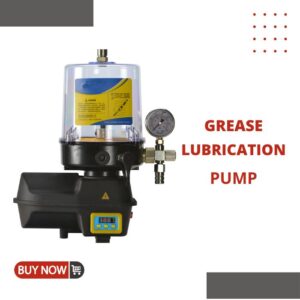
The Lincoln P203 is an electrically operated lubricant feed pump designed for progressive-type centralized lubrication systems. It delivers grease or oil from the reservoir through pump elements to progressive divider valves, which then distribute metered lubricant volumes to multiple bearings and friction points across industrial machinery, mobile equipment, and production lines.
Part number 644-46037-3 specifies the 8-liter reservoir configuration with AC power supply (100–260V, 50/60 Hz), 600-series outlet configuration, and standard accessory kit. The P203 is capable of supplying up to 150 lubrication points depending on the downstream progressive divider valve configuration and system design.
The pump housing contains the motor, electrical connections, filler nipple, pump elements, power supply board, and optional control and monitoring components. A stirring paddle homogenizes the lubricant during operation and directs it toward the pump element suction ports, improving suction characteristics—particularly with greases at lower ambient temperatures.
Technical Specifications
Performance Data
| Parameter | Specification |
|---|---|
| Operating Pressure (Maximum) | 350 bar (5,076 psi) |
| Pump Elements | Up to 3 independent elements |
| Direction of Rotation | Clockwise |
| Nominal Speed | 20 rpm |
| Sound Pressure Level | <70 dB(A) |
| Duty Cycle | S3 25% ON time over 120 minutes |
| Reservoir Capacity | 8 liters (2.1 gallons) |
| Approximate Empty Weight | ~8 kg (17.6 lbs) depending on configuration |
| Mounting Position | Upright, reservoir at top (vertical installation standard) |
Environmental Ratings
| Parameter | Specification |
|---|---|
| Ambient Temperature (DC Versions) | -40°C to +70°C (-40°F to +158°F) |
| Ambient Temperature (AC Versions) | -25°C to +70°C (-13°F to +158°F) |
| Enclosure Rating | IP69K per DIN 40050-9 (dust-tight, high-pressure washdown resistant) |
| Corrosion Resistance | C3 (Standard) |
Note on Temperature: The specified ambient temperature range requires that the lubricant used can be pumped at the given temperature. The upper limit is load-dependent and determined primarily by running time and operating pressure. For continuous operation at temperatures ≥60°C and heavy loading (higher pressure), the maximum ON time should be reduced. UL-certified pumps are limited to a maximum ambient temperature of 60°C regardless of loading.
Electrical Specifications
| Parameter | AC Version (644-46037-3) | DC Version (Optional) |
|---|---|---|
| Power Supply | 100–260 VAC, 50/60 Hz, single-phase | 12 VDC or 24 VDC |
| Motor Operating Voltage | 24 VDC (internal conversion) | 12 VDC or 24 VDC |
| Power Consumption (Typical) | 1.78 A at 110 VAC; 0.82 A at 260 VAC | 2.0 A at 24 VDC; 3.5 A at 12 VDC |
| Inrush Current (Cold Start) | <40 A peak at 25°C | — |
| Recommended Fuse | 6.0 A slow-blow | — |
| Output Signal | Dry contact, max 30 VDC / 700 mA | Dry contact (depending on configuration) |
Pump Element Options
| Element Type | Piston Diameter | Output per Element |
|---|---|---|
| K5 | 5 mm | 2.0 cm³/min |
| K6 | 6 mm | 2.8 cm³/min |
| K7 | 7 mm | 4.0 cm³/min |
| KR (Adjustable) | 7 mm | 0.7–3.0 cm³/min (adjustable range) |
Up to three pump elements can be installed in a single P203 pump head, allowing total system outputs from 2.0 to 12.0 cm³/min depending on element combination. Each element operates independently and can be replaced without disturbing adjacent elements or reservoir connections.
Lubricant Compatibility
- Grease: Lubricating greases up to and including NLGI Grade 2. The stirring paddle assists with homogenization and suction of thicker greases at low temperatures.
- Oil: Lubrication oils with a minimum kinematic viscosity of 40 mm²/s (cSt) at ambient temperature.
- Chisel Paste: Special configurations available for chisel paste applications (consult factory).
Reservoir and Filling
The 8-liter reservoir is manufactured from transparent plastic with a screw cap for visual level monitoring. Filling options depend on pump configuration:
- Reservoir Cover: Primary filling method for reservoirs without follower plate. Removes for direct filling and protects lubricant from contamination.
- Filler Nipple: Used for filling the pump from below. Once removed, accessories can connect external grease supply or pressure fill systems.
- Optional Fill Connection: Pumped refill connection for automated or remote filling systems.
The usable reservoir volume depends on configuration. For 8-liter reservoirs without follower plate, the usable fill is approximately 1.5 kg (3.3 lbs) of grease. For reservoirs with follower plate, usable fill increases to approximately 2.0 kg (4.4 lbs).
Control and Monitoring Options
The P203 is available with multiple control and monitoring configurations depending on part number suffix:
- Basic On/Off Controller: Integrated timer with rotary switch for interval setting. LED indicators display operational status and fault conditions.
- Push Button: Illuminated push button for manual additional lubrication cycles (additional lube function).
- Low-Level Monitoring: Ultrasonic sensor or float switch signals when reservoir lubricant level drops below the minimum threshold. Factory-set switching points vary by reservoir size.
- System Monitoring (M08–M23 PCB): Microprocessor-based control board with system monitoring capabilities, fault detection, and diagnostic outputs.
- Trailer/Semi-Trailer Control (H PCB): Specialized control for mobile applications triggered by brake light or operational signals.
Timer settings are adjustable for interval timing from minutes to hours, matching equipment duty cycles and lubrication requirements. The minimum interval between lube cycles is 4 minutes; maximum is 15 hours depending on controller configuration.
Connections and Installation
- Main Line Connection: G 1/4 or 1/8″ NPT(F) outlet thread for connection to progressive divider valve supply line.
- Electrical Connection: Rectangular connector (DIN 175301-803 Form A) or bayonet connector (DIN 72585-1, 7/6-pole or 4/3-pole) depending on model variant and application (industrial or mobile).
- Mounting: The pump must be installed upright with the reservoir at the top. Rotary installation is possible for pumps equipped with a follower plate (e.g., wind turbine applications); maximum speed and distance to rotational axis must be specified when ordering. For inclined installation without follower plate (construction or agricultural equipment), maximum fill level must be reduced below the MAX mark, and minimum fill level increased above the MIN mark if inclination exceeds 30°.
- Fastening: Two fastening points at the bottom of the pump housing plus fastening plates in the aluminum profile. M8 screws with T-slot nuts for profile mounting; M8 or M10 screws for direct machine mounting depending on reservoir size.
Available Configurations
The P203 series is available in multiple reservoir sizes, power supplies, and control options. Common configurations include:
| Part Number | Reservoir | Power | Key Features |
|---|---|---|---|
| 644-46037-3 | 8 liter | AC 100–260V | 8XNBO, 600 series, standard accessories |
| 644-46073-6 | 2 liter | AC 100–260V | 2XNBO, compact configuration |
| 644-40860-4 | 8 liter | 24 VDC | With control card, mobile/industrial DC |
| 644-47068-8 | 2 liter | 24 VDC | 2XNBO, timer, low-level signal |
Additional configurations with 4-liter and 15-liter reservoirs, follower plates, ultrasonic sensors, and custom control boards are available. Consult the factory or authorized distributor for specific application requirements.
Applications
- Manufacturing: Conveyor systems, packaging machinery, production lines with chain drives, automated assembly equipment
- Mobile Equipment: Truck trailers, construction machinery, agricultural equipment, mining vehicles (DC power configurations with brake-light triggering)
- Industrial Machinery: Large motors, gearboxes, pumps, compressors, material handling equipment, wind turbines (with follower plate for rotary mounting)
- Food and Beverage: Mixers, conveyors, ovens (stainless steel or food-grade configurations where applicable)
Frequently Asked Questions
What is the Lincoln P203 and what does it do?
The Lincoln P203 is an electrically operated lubricant feed pump for progressive-type centralized lubrication systems. It draws grease or oil from an integrated reservoir and delivers it under pressure (up to 350 bar) through one to three pump elements to progressive divider valves. The divider valves meter precise lubricant volumes to multiple bearings and friction points. The P203 is used in manufacturing, mobile equipment, and heavy industrial applications where manual lubrication is impractical or unreliable.
What is part number 644-46037-3?
Part number 644-46037-3 designates a Lincoln P203 pump with an 8-liter transparent plastic reservoir, AC power supply (100–260V, 50/60 Hz), 600-series outlet configuration, and standard accessory kit. The “8XNBO” code indicates an 8-liter reservoir for grease (X), standard design (N), filling from top (BO). This is a common industrial configuration for fixed installations with universal AC power input.
How many lubrication points can the P203 supply?
The P203 pump itself feeds progressive divider valves, which in turn supply individual lubrication points. Depending on the progressive divider valve configuration installed downstream, the system can supply up to approximately 150 lubrication points. The actual number is determined by the number and size of divider valves, the output of the pump elements, and the lubrication interval timing—not by the pump alone.
What lubricants are compatible with the P203?
The P203 is designed for lubricating greases up to and including NLGI Grade 2, and for lubrication oils with a minimum kinematic viscosity of 40 mm²/s (cSt) at ambient temperature. Special configurations are available for chisel paste. The stirring paddle in the reservoir assists with homogenization and improves suction characteristics, particularly with thicker greases or at lower temperatures. The lubricant must remain pumpable across the entire ambient temperature range of the installation.
What is the maximum operating pressure and duty cycle?
The maximum operating pressure is 350 bar (5,076 psi). The pump duty cycle is S3 25% ON time over a 120-minute period, meaning the pump can run for a maximum of 30 minutes within any 2-hour window under standard conditions (NLGI 2 grease, 60°C ambient, 160 bar mean back pressure). For continuous operation at higher temperatures or heavier loading (higher back pressure), the ON time must be reduced to prevent motor overheating. UL-certified variants are limited to 60°C ambient regardless of loading.
What pump element options are available and how do I select them?
The P203 accepts up to three pump elements with the following fixed or adjustable outputs: K5 (5 mm piston, 2.0 cm³/min), K6 (6 mm piston, 2.8 cm³/min), K7 (7 mm piston, 4.0 cm³/min), and KR (7 mm piston, adjustable 0.7–3.0 cm³/min). Selection depends on the total lubricant demand of the downstream system. Calculate the grease requirement of all lubrication points (cm³ per cycle) and divide by the pump cycle frequency to determine the required pump output. Multiple elements can be combined to increase total flow; for example, three K7 elements deliver 12.0 cm³/min total.
What is the difference between AC and DC power versions?
AC versions (such as 644-46037-3) accept a wide input range of 100–260 VAC, 50/60 Hz, and are suited for fixed industrial installations with standard mains power. DC versions operate on 12 VDC or 24 VDC and are designed for mobile equipment, vehicles, and applications without AC power availability. The ambient temperature range differs: DC versions operate from -40°C to +70°C, while AC versions are rated from -25°C to +70°C. DC versions also offer specialized control boards for trailer and mobile applications (H-series PCB).
How does the low-level monitoring work?
The P203 can be equipped with an ultrasonic sensor or float switch to monitor reservoir lubricant level. The ultrasonic sensor (standard on BIBO and BABO reservoir designs) uses two LEDs to indicate fill status: green for sufficient lubricant, red/orange for low level. Switching points are factory-set according to reservoir size. When a low-level signal is detected, the pump should be stopped within 4 minutes (4 pulses) to prevent dry running. The signal can be processed internally on pumps with integrated control boards, or externally via cable connection for customer monitoring systems.
What is IP69K and why does it matter?
IP69K is an enclosure rating per DIN 40050-9 indicating that the pump is dust-tight (IP6X) and resistant to high-pressure, high-temperature washdown from multiple angles (IPX9K). This rating is critical for food processing, mining, construction, and agricultural applications where equipment is regularly cleaned with high-pressure water jets or operates in dusty, contaminated environments. The rating applies only when IP69K-capable connection sockets and cables are used; lower-rated accessories will reduce the overall system protection level.
How is the P203 installed and mounted?
The P203 must be mounted upright with the reservoir at the top to ensure proper suction and venting. Two fastening points at the bottom of the pump housing and fastening plates in the aluminum profile accept M8 screws with T-slot nuts for rail mounting, or M8/M10 machine screws for direct surface mounting. The main lubricant outlet connects via G 1/4 or 1/8″ NPT(F) thread to the progressive divider valve supply line. Electrical connection is via rectangular (DIN 175301-803) or bayonet (DIN 72585-1) connector depending on model. For mobile or inclined applications, follower plate reservoirs are recommended; without a follower plate, fill levels must be adjusted to account for inclination angles exceeding 30°.
What maintenance is required for the P203?
Routine maintenance includes monitoring the reservoir lubricant level (visually or via the low-level sensor), inspecting electrical connections and cable integrity, verifying pump element output and divider valve cycling, and checking the pressure relief valve function. The stirring paddle should be inspected for damage if grease homogenization issues are suspected. There is no fixed calendar-based maintenance interval; frequency depends on operating hours, ambient conditions, lubricant type, and system cleanliness. Follow the Lincoln maintenance schedule for your specific application environment.
Related lubrication resources
Progressive lubrication systems · DJF2500 block · Dual-line systems
Before you buy: read our central lubrication system guide.